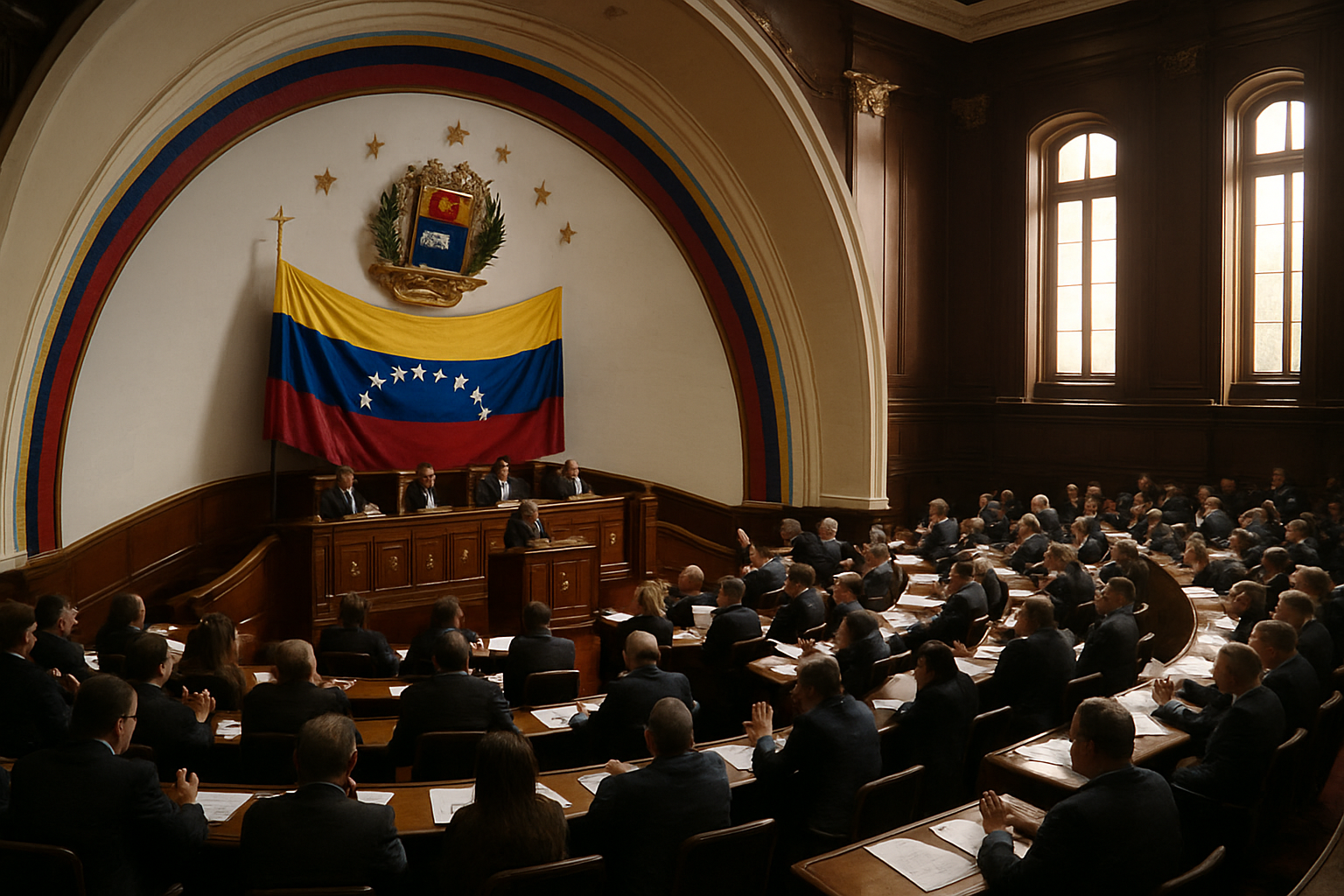
Venezuela's National Assembly has advanced a landmark amnesty bill through its first reading, marking a pivotal step toward political reconciliation that could lead to the release of hundreds of opposition figures, journalists, and human rights activists detained under the previous Maduro administration.
The legislation, proposed by Acting President Delcy Rodríguez and passed unanimously in the first of two required readings on February 5, 2026, represents the most significant political development in Venezuela's transition period following Nicolas Maduro's removal from power in January 2026.
Comprehensive Scope and Legislative Process
The amnesty bill covers political offenses committed between 1999 and 2026, encompassing nearly three decades of political conflict in Venezuela. Assembly President Jorge Rodríguez, who presided over the debate, made an emotional plea during the proceedings, stating: "We ask for forgiveness because I don't like prisoners," while referencing his personal history and calling for legislators to examine their conscience and ask whether they have "rectified."
According to multiple legislative sources, the 13-article law aims to establish a framework for "justice and coexistence among Venezuelans" as part of broader post-Maduro reconciliation efforts. The bill must undergo a second and final reading before implementation, with Assembly President Rodríguez emphasizing the urgency of the process.
International and Opposition Response
Human rights organizations and international observers have expressed cautious optimism while raising concerns about procedural transparency. Multiple NGOs have requested more detailed information about the bill's specific provisions, citing the lack of public consultation in the legislative process.
Opposition deputy Tomás Guanipa, whose brothers remain incarcerated, insisted that the legislation "must have all the guarantees and international standards" to ensure that detainees can be released and reintegrated into public life. Portuguese media reports indicate that opposition parliamentarians have proposed that the amnesty law include specific guarantees for the reintegration of freed political prisoners and the safe return of exiled Venezuelans.
Acting President Delcy Rodríguez praised the "high-level" nature of the initial debate and emphasized the importance of maintaining political discourse "among Venezuelans," calling for political maturity throughout the process.
Context of Ongoing Prisoner Releases
The amnesty bill builds upon an existing release program that has already freed 367 political prisoners since Venezuela's political transition began in January 2026. Notable releases include journalist Rory Branker, who had been detained for nearly a year, and Javier Tarazona, director of the human rights organization Fundaredes, who was freed on February 1 after more than four years in detention.
According to Foro Penal, a Venezuelan human rights organization that tracks political prisoners, 22 additional detainees were released on February 4-5, including releases at El Rodeo penitentiary in Miranda state. These releases represent part of the broader amnesty program that began under the interim government's reconciliation initiatives.
Constitutional Limitations and Legal Framework
While the amnesty law covers a broad range of political offenses, it explicitly excludes crimes forbidden by Venezuela's constitution, including hate crimes, though the scope of these exclusions has raised concerns among human rights advocates about potentially undefined parameters. The legislation appears designed to address cases of opposition figures, journalists, and activists who were detained on charges such as terrorism, treason, and other politically-motivated accusations under the previous regime.
International legal experts note that the amnesty framework could affect hundreds of individuals still in detention, representing one of the most comprehensive political prisoner releases in recent Latin American history.
Broader Political Reconciliation Efforts
The amnesty legislation occurs alongside Venezuela's broader political transformation under Acting President Delcy Rodríguez, who assumed power following January 2026 developments that led to Maduro's removal. The interim government has pursued high-level diplomatic engagement with the United States, including meetings with US Chargé d'Affaires Laura Dogu at Miraflores Presidential Palace, as part of Secretary of State Marco Rubio's three-phase reconstruction plan focusing on stabilization, economic recovery, and democratic transition.
Venezuela's oil exports have surged 60% since the transition, rising from 498,000 to 800,000 barrels daily, with the United States displacing China as Venezuela's top oil customer. This economic transformation provides a foundation for the political reconciliation efforts embodied in the amnesty law.
Regional and International Implications
The amnesty bill has garnered attention from regional powers and international organizations as a test of Venezuela's commitment to democratic transition. The Dominican Republic has announced the reopening of commercial relations with Venezuela, while Brazil and the European Union have expressed cautious support for the democratic reform process.
Human rights organizations across Finland, France, and Portugal have been monitoring the developments closely, with Yle reporting that rights groups want more detailed information about the legislation's provisions. The international community views the amnesty law as a critical indicator of whether Venezuela's political transition represents genuine democratic reform or cosmetic changes.
Challenges and Next Steps
Despite the unanimous first reading approval, significant challenges remain for the amnesty law's implementation. Civil society organizations have emphasized the need for adequate guarantees to ensure that released prisoners can safely reintegrate into society and that exiled Venezuelans can return without fear of persecution.
The legislation must navigate complex legal and practical considerations, including the establishment of monitoring mechanisms, reintegration support systems, and safeguards against future political persecution. The second reading debate will likely address these implementation details and could determine the law's ultimate effectiveness.
Opposition leader Andrés Velásquez has argued that an amnesty is unnecessary because political prisoners "are innocent," highlighting ongoing tensions about the characterization of detentions under the previous government. These debates reflect broader questions about accountability, justice, and reconciliation that Venezuela must address as it moves forward with its democratic transition.
The amnesty law represents a crucial milestone in Venezuela's post-Maduro era, offering hope for families of political prisoners while testing the interim government's commitment to human rights and democratic governance. Its successful implementation could set a precedent for political reconciliation in Latin America and provide a foundation for Venezuela's return to democratic institutions and international community engagement.