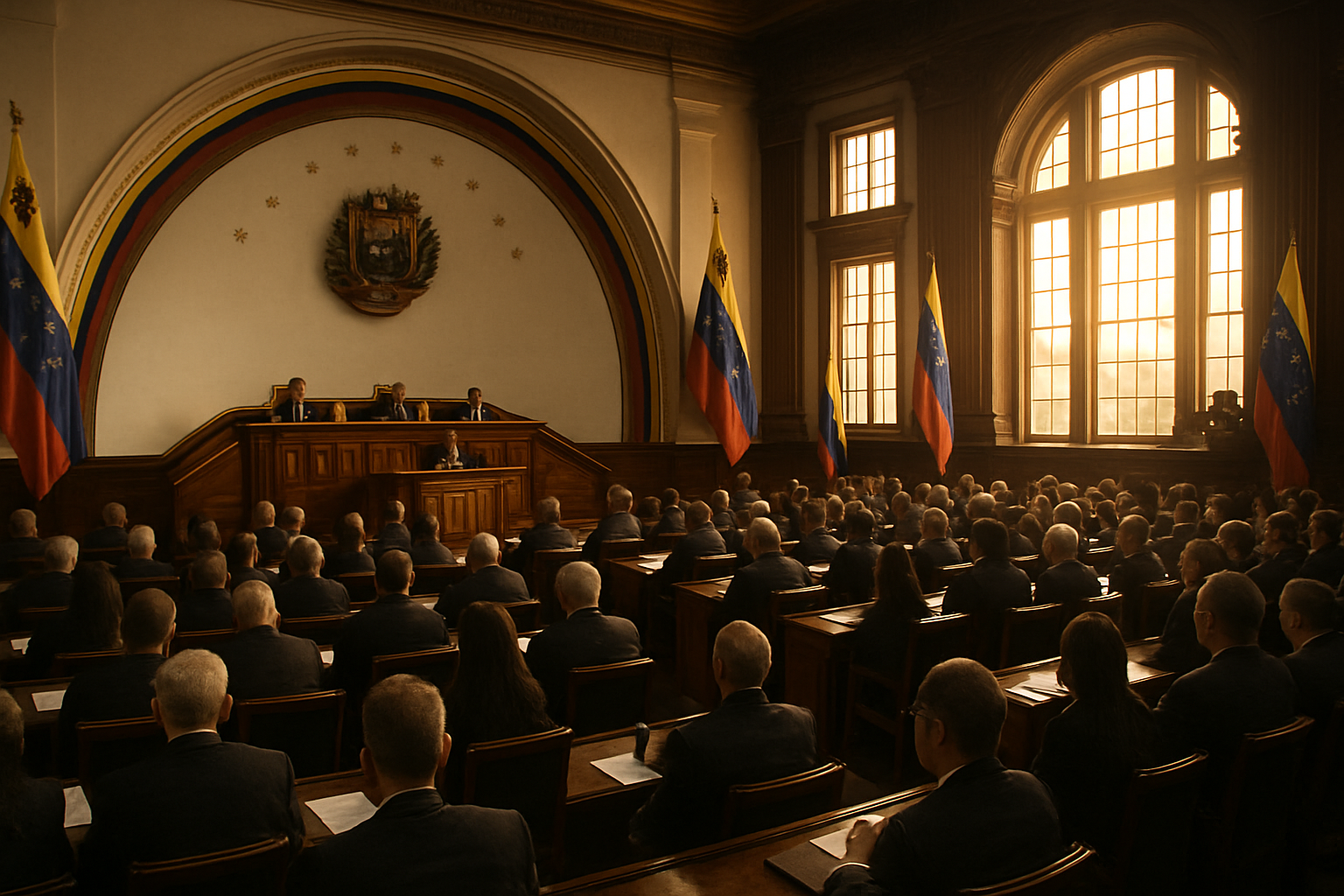
Venezuela's historic amnesty law is expected to benefit more than 11,000 people currently under conditional freedom measures, while over 1,500 new applications have been received for release from detention, National Assembly President Jorge Rodríguez announced Saturday.
The comprehensive amnesty legislation, covering political offenses from 1999-2026, represents the most ambitious political reconciliation effort in recent Latin American history. The law unanimously passed Venezuela's National Assembly without a single dissenting vote and was immediately signed into law by Acting President Delcy Rodríguez.
According to sources, Venezuelan courts have already ordered the release of 379 political prisoners within hours of the law's implementation, bringing total releases under the interim government to over 750 since January 2026.
Scope of Amnesty Benefits
Rodriguez explained that the 11,000 individuals had previously received "substitute measures for deprivation of liberty" from Venezuela's justice system, meaning they were under conditional freedom arrangements such as house arrest or regular reporting requirements.
"The law contemplates that these substitute measures be lifted so that people can enjoy full freedom," Rodriguez said during a press conference.
— Jorge Rodríguez, National Assembly President
The announcement comes as families of political prisoners maintained vigils outside detention centers for weeks, with some engaging in hunger strikes to pressure for complete releases. At least 80 additional prisoners were released on Saturday alone in Caracas, according to parliamentary sources.
Applications Surge Following Implementation
French diplomatic sources confirmed that at least 1,557 people - including opposition members, activists, human rights defenders, and journalists - are expected to be released after submitting applications under the new amnesty framework. The applications include individuals detained for political reasons during the previous administration.
Italian media reported that 80 political prisoners were released Saturday, marking an acceleration of the release process that began in January 2026 under Acting President Delcy Rodríguez's broader reconciliation program.
The 13-article legislation spans 27 years of political conflict, covering the entire Chávez-Maduro era and representing unprecedented temporal coverage for political reconciliation in Latin American history.
International Support and Civil Society Response
The amnesty process has received international backing, with former Spanish Prime Minister José Luis Rodríguez Zapatero mediating discussions in Caracas since February. Cardinal Baltazar Porras organized nationwide prayer vigils supporting the reconciliation efforts, adding religious legitimacy to the process.
However, civil society organizations have expressed mixed reactions. Cofavic, a prominent human rights organization, emphasized that releases represent "restitution of rights, not a State favor." Opposition leader Andrés Velásquez questioned the necessity of amnesty legislation, arguing that political prisoners "are innocent."
Spanish Foreign Minister José Manuel Albares announced that Spain would request the European Union lift sanctions against Acting President Delcy Rodríguez following the law's approval, signaling growing international recognition of Venezuela's democratic transition efforts.
Exclusions and Limitations
Despite its comprehensive scope, the amnesty law contains significant exclusions. Article 9 excludes those who "promoted attacks on national territory by foreign states or corporations," while the legislation covers peaceful political activities but excludes constitutionally forbidden crimes, including hate crimes.
Human rights groups have criticized these exclusions as potentially undermining the law's reconciliation objectives. The Committee for Liberation of Political Prisoners (CLIPP) has demanded "inclusive rather than selective" legislation covering all political detainees without arbitrary exclusions.
Venezuelan NGO Provea criticized what it termed "unjustifiable excess of exclusions," while families of excluded prisoners continue maintaining protests outside detention facilities.
Implementation Challenges and Progress
The law faced earlier delays over Article 7, which required prisoners to "present themselves to justice." Opposition groups rejected this provision, arguing it criminalized persecution victims, while Chavista party members initially demanded crime acknowledgment for release eligibility.
Despite these initial hurdles, implementation has proceeded rapidly. Juan Pablo Guanipa, a close ally of Nobel Peace Prize laureate María Corina Machado and former National Assembly vice-president, was among those released, though he was subsequently placed under house arrest with electronic monitoring.
Over 600 political prisoners remain detained according to human rights organization Foro Penal, despite the significant releases already achieved.
Economic and Diplomatic Context
The amnesty implementation occurs during Venezuela's broader transformation following the January 2026 change in government. Venezuelan oil exports have surged 60% to 800,000 barrels daily, with the United States displacing China as the country's top oil customer.
US Energy Secretary Chris Wright conducted a historic visit to Caracas in February, signing comprehensive energy cooperation agreements and formally ending the 2019 oil embargo. The Dominican Republic has reopened commercial relations with Venezuela, while Brazil and the European Union express cautious support for the democratic transition.
This diplomatic engagement provides crucial international legitimacy for the amnesty process, with multiple countries viewing Venezuela's political reconciliation as a test of genuine democratic commitment versus cosmetic reform.
Regional Significance and Future Implications
Venezuela's amnesty law serves as a potential template for post-authoritarian transitions throughout Latin America. The 27-year coverage spanning nearly three decades of political conflict represents the most comprehensive political prisoner amnesty in recent regional history.
International observers are closely monitoring implementation as an indicator of Venezuela's democratic transformation credibility and human rights progress under the interim government. Success could influence future democratic consolidation efforts regionally, while failure might highlight persistent challenges in building sustainable democratic institutions.
The law's effectiveness will ultimately depend on complete implementation, addressing remaining exclusions, providing reintegration guarantees for released prisoners, and establishing monitoring mechanisms to prevent future persecution cycles.
Looking Forward
As Venezuela continues implementing this historic amnesty, the international community watches closely for signs of genuine reconciliation versus temporary political maneuvering. The success of benefiting over 11,000 people with full freedom, combined with processing thousands of new applications, will serve as a crucial indicator of the country's commitment to democratic renewal and human rights restoration.
The coming weeks will prove decisive in determining whether this ambitious legislation can fulfill its promise of national healing and serve as a model for democratic transitions worldwide, or whether implementation challenges will limit its transformative potential for Venezuelan society and regional democratic development.