Venezuela's interim opposition leader Delcy Rodríguez has committed to conducting free and fair elections while the country's National Assembly postponed a critical vote on landmark amnesty legislation, triggering opposition demonstrations and heightened political tensions across the nation.
In a decisive interview with NBC News on Thursday, Acting President Delcy Rodríguez made an unequivocal commitment to democratic elections. When asked directly whether she would guarantee "honest and free elections in Venezuela," Rodríguez responded with a firm "Yes, absolutely," adding that such elections would signify "a free country where justice prevails, without sanctions, and not under international pressure."
Amnesty Law Faces Parliamentary Deadlock
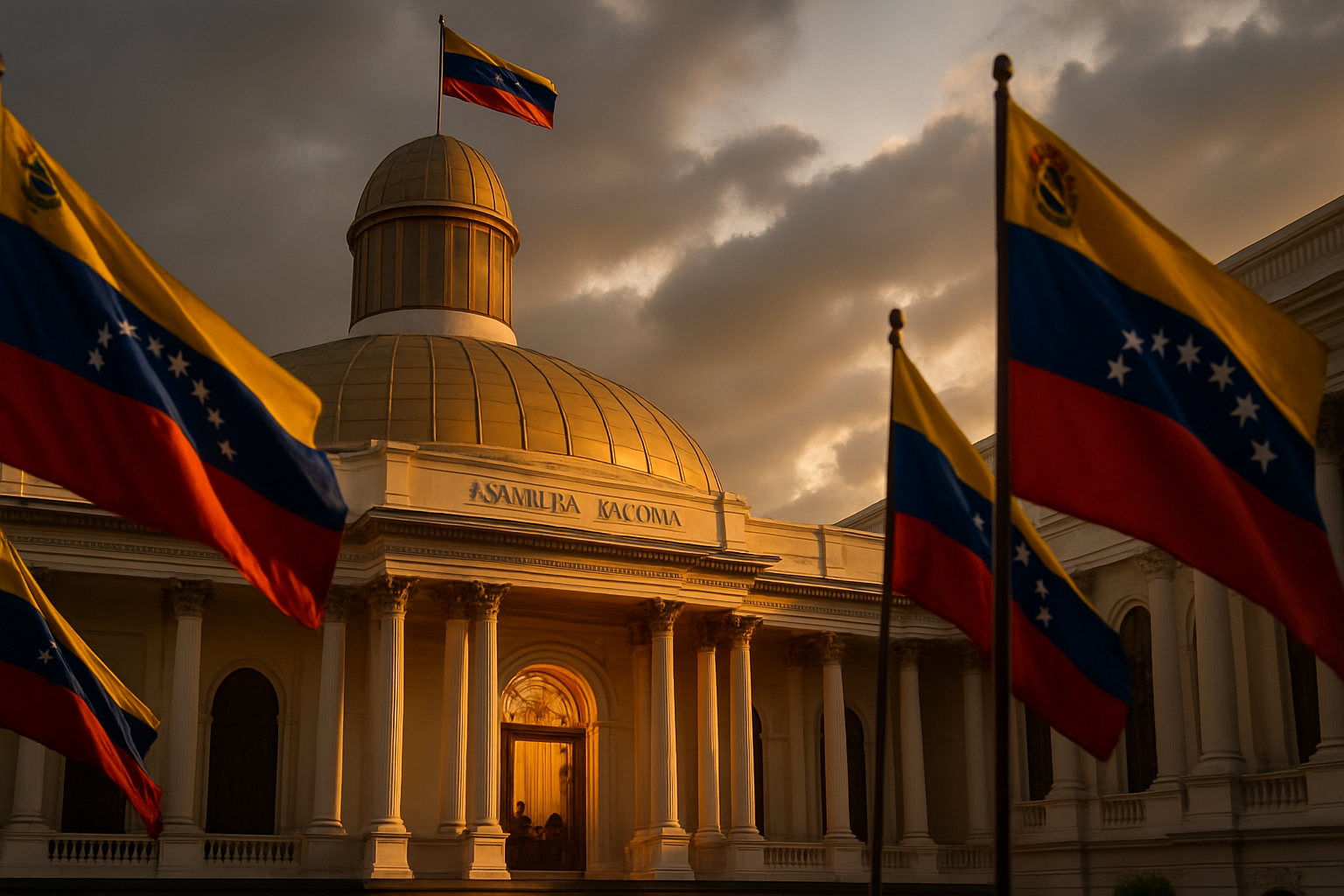
The commitment comes as Venezuela's National Assembly, controlled by the Chavista party, postponed the second and final debate on a comprehensive amnesty law covering political prisoners from 1999 to 2026. The delay centered on Article 7, which requires processed and convicted individuals to "present themselves to justice" or "come forward legally after the law takes effect."
Opposition Deputy Luis Florido of Un Nuevo Tiempo indicated that modifications to the controversial article were necessary, highlighting fundamental disagreements about the conditions under which political prisoners would receive amnesty. The Chavista party has demanded that political prisoners acknowledge alleged crimes as a condition for release, while the opposition firmly rejects such requirements, arguing that detainees are victims of persecution rather than legitimate criminals.
The proposed legislation represents the most ambitious political reconciliation effort in recent Latin American history, potentially affecting over 600 political prisoners who remain detained despite more than 400 releases since January 2026 under Rodríguez's amnesty program.
Opposition Takes to the Streets
The parliamentary delay coincided with significant opposition rallies in Caracas, marking the first major protests since the fall of Nicolás Maduro in January 2026. Thousands of Venezuelan protesters gathered on Youth Day, demanding complete freedom for political prisoners and democratic liberties under the slogan "¡No tenemos miedo!" (We are not afraid).
The student movement led peaceful demonstrations near Universidad Central de Venezuela, demonstrating renewed confidence after years of repression. The protests sought to "make visible the urgency of consolidating a full democracy and reinstitutionalizing the country, demanding absolute freedom for political prisoners and unconditional respect for civil and constitutional rights."
"The act sought to make visible the urgency of consolidating full democracy and reinstitutionalizing the country, demanding absolute freedom for political prisoners and unconditional respect for civil and constitutional rights."
— Student Movement, Universidad de Los Andes
Families Demand Action
In a dramatic escalation, families of political prisoners chained themselves in Caracas's Zona 7 area to protest the deferment of the amnesty debate. These desperate demonstrations underscore the human cost of the legislative deadlock, as hundreds of families continue to wait for the release of their loved ones.
According to Foro Penal, a Venezuelan human rights organization, over 600 political prisoners remain in detention despite the significant releases that have occurred since the democratic transition began. The majority of these detainees maintain their innocence, creating a complex legal and moral challenge for the interim government.
International Engagement Continues
The political developments occur against the backdrop of sustained international engagement with Venezuela's interim government. Former Spanish Prime Minister José Luis Rodríguez Zapatero continues his mediation efforts in Caracas, while Cardinal Baltazar Porras has organized nationwide prayer vigils to support the reconciliation process.
High-level U.S.-Venezuela diplomatic contact continues with meetings between Acting President Rodríguez and U.S. Chargé d'Affaires Laura Dogu at the Miraflores Palace. These represent the highest level of diplomatic engagement between the two countries since 2019.
The economic transformation accompanying the political transition has been remarkable, with oil exports surging 60% to 800,000 barrels daily. The United States has displaced China as Venezuela's top oil customer, while the Dominican Republic has reopened commercial relations and both Brazil and the European Union express cautious support for the transition.
Civil Society Divided
The amnesty debate has revealed divisions within Venezuelan civil society about the appropriate framework for addressing past political prosecutions. The human rights organization Cofavic has emphasized that releases represent "restitution of rights, not State favor," while opposition leader Andrés Velásquez has questioned the necessity of amnesty legislation, arguing that political prisoners "are innocent."
The Committee of Mothers for Truth has demanded family participation in the verification process, reflecting broader concerns about ensuring comprehensive accountability and preventing future persecution cycles.
Historical Context and Regional Significance
The current political moment represents the most significant democratic opening in Venezuela in over two decades. The comprehensive 27-year scope of the proposed amnesty law, covering the entire Chávez-Maduro era, would establish a landmark precedent for political reconciliation in Latin America.
However, the implementation challenges are substantial. Beyond the immediate question of prisoner releases, the process faces potential court challenges, the need for reintegration guarantees, monitoring mechanisms, and safeguards against future persecution. Success depends on genuine reconciliation rather than cosmetic reform, sustained international engagement, and domestic consensus-building that extends beyond the immediate transition.
Looking Forward
National Assembly President Jorge Rodríguez had previously promised that all remaining political prisoners would be freed "between Tuesday and Friday at latest" (February 11-14), but the parliamentary deadlock on Article 7 has created uncertainty about the timeline for remaining releases.
The resolution of this crisis will serve as a critical test of Venezuela's democratic transformation credibility. It could either serve as a regional template for conflict resolution and demonstrate the possibilities of meaningful reconciliation, or highlight the persistent challenges of building sustainable democratic institutions in post-authoritarian contexts.
As Venezuela navigates this crucial period, the international community continues to monitor developments as an indicator of the country's commitment to genuine democratic transformation and human rights progress. The coming weeks will be decisive in determining whether the country can successfully transition from its authoritarian past to a democratic future while addressing the legitimate grievances of all its citizens.