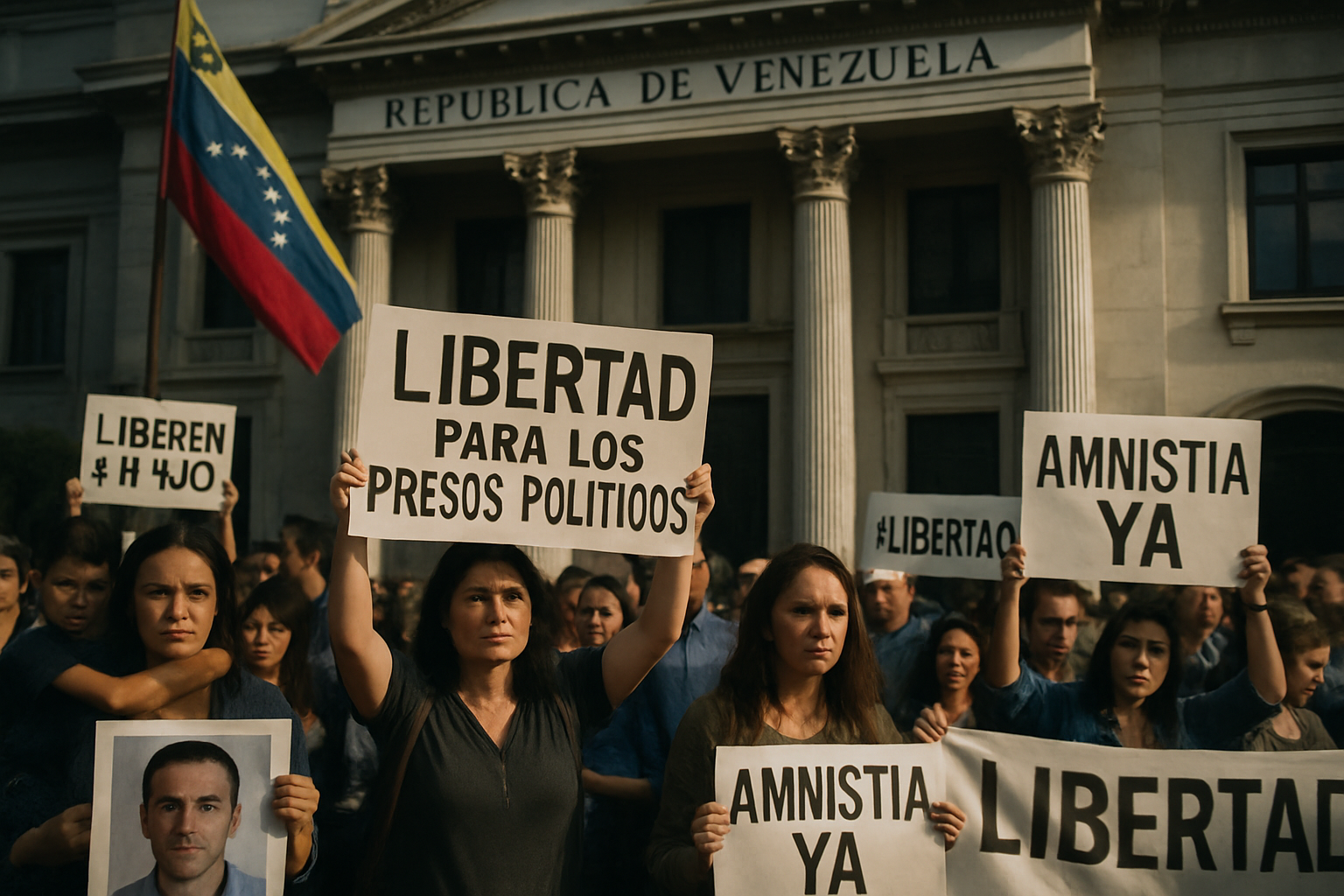
Venezuela's implementation of its historic amnesty law covering 1999-2026 political offenses has resulted in the release of over 179 political prisoners, according to the official monitoring commission, yet significant challenges remain in achieving comprehensive reconciliation.
The 13-article legislation, unanimously passed by Venezuela's National Assembly and signed by Acting President Delcy Rodríguez, represents the most comprehensive political prisoner amnesty in recent Latin American history. However, conflicting reports about the exact number of releases and ongoing exclusions highlight the complex reality of implementing such sweeping reconciliation measures.
Divergent Release Figures Reveal Implementation Complexity
While the official Commission for Monitoring Venezuela's Amnesty Law reports 179 people have been released from detention facilities, independent human rights organization Efecto Cocuyo verified 101 releases without definitive case closures. This discrepancy underscores the challenges in tracking and documenting the law's actual impact.
The releases have occurred at multiple facilities including the notorious Helicoide prison and El Rodeo detention centers. Former Mérida Governor Williams Dávila noted that the process faces unnecessary bureaucratic obstacles, emphasizing that the law is "of public order and general interest" and should not be hindered by "useless formalism."
"The law is of public order and general interest, and useless formalism that prevents its application cannot be imposed"
— Williams Dávila, Former Governor of Mérida
Exclusions and Legal Limitations
Despite the law's comprehensive scope covering nearly three decades of political offenses, Article 9 excludes those accused of "promoting attacks on national territory by foreign states or corporations." This provision has left some high-profile cases unresolved, including members of the PDVSA Workers case who remain outside the amnesty's protection.
Families of excluded prisoners have expressed frustration while acknowledging the law's limitations. Despite being left out of the current amnesty, they remain willing to appeal to the monitoring commission established under Article 15 to review individual cases and seek full freedom for detainees.
The exclusions have drawn criticism from civil society organizations. Provea called the limitations "unjustifiable excesses," while the Venezuelan Penal Forum (Foro Penal) continues to document over 600 political prisoners still in detention despite the ongoing releases.
Implementation Obstacles and Bureaucratic Challenges
Former prisoners and human rights advocates have denounced delays and obstacles in applying the amnesty law. Many releases have come with conditions rather than complete freedom, including house arrest, electronic monitoring, and restrictions on public statements.
The case of Juan Pablo Guanipa, a close ally of opposition leader María Corina Machado, exemplifies these challenges. Initially released after eight months in prison, he was quickly placed under house arrest with electronic monitoring, raising questions about the genuine nature of the amnesty.
Similarly, activist Perkins Rocha continues to wear an electronic ankle monitor despite his release. His wife, María Constanza Cipriani, stated that "the amnesty has not yet reached our home," highlighting the gap between legislative achievement and practical implementation.
Civil Society and Family Responses
The Committee for the Liberation of Political Prisoners (CLIPP) has maintained vigils at detention centers, some extending into their second month. These family demonstrations reflect both hope for continued releases and frustration with the pace of implementation.
The Venezuelan Red Cross has announced medical attention programs for released prisoners, emphasizing the humanitarian aspect of the reconciliation process. However, families continue to demand an "inclusive rather than selective" approach that covers all political detainees without arbitrary exclusions.
International Mediation and Support
The amnesty process has benefited from significant international mediation, particularly from former Spanish Prime Minister José Luis Rodríguez Zapatero, who has been facilitating dialogue since early February. Cardinal Baltazar Porras has also played a crucial role by organizing nationwide prayer vigils supporting the reconciliation efforts.
This international engagement occurs within the broader context of Venezuela's democratic transition, which has seen unprecedented U.S.-Venezuela diplomatic engagement and a 60% surge in oil exports to 800,000 barrels daily, with the United States displacing China as Venezuela's top customer.
Health and Humanitarian Concerns
Previous reports have documented severe conditions in Venezuelan detention facilities, with organizations like Laboratorio de Paz reporting cases of "severe malnutrition, physical weakening, cognitive disorientation, and psychological trauma" among prisoners. These health concerns add urgency to the release process and highlight the human cost of prolonged political detention.
The hunger strikes that occurred at the Rodeo I detention facility in February, involving over 200 political prisoners including Argentine gendarme Nahuel Gallo, demonstrated the desperate conditions and the inmates' demands for faster amnesty implementation.
Looking Forward: Challenges and Opportunities
The success of Venezuela's amnesty law will ultimately depend on addressing its current limitations while maintaining momentum for continued releases. The monitoring commission established under Article 15 represents a potential mechanism for reviewing excluded cases and ensuring broader application of the amnesty.
Civil society organizations emphasize that releases represent "rights restitution, not state favors," as stated by human rights group Cofavic. This perspective highlights the importance of framing the amnesty as a correction of past injustices rather than governmental generosity.
The law's implementation also requires addressing broader structural issues including reintegration guarantees, monitoring mechanisms to prevent future persecution, and safe return provisions for political exiles. These elements will be crucial for achieving genuine reconciliation beyond immediate prisoner releases.
As Venezuela continues its democratic transition under Acting President Delcy Rodríguez, the amnesty law serves as both a significant achievement and a test of the country's commitment to breaking cycles of political persecution. With hundreds of families still awaiting the freedom of their loved ones, the coming months will be decisive in determining whether this historic legislation fulfills its promise of comprehensive reconciliation.
The international community continues to monitor the process closely, viewing it as a potential template for post-authoritarian transitions throughout Latin America. Success in fully implementing the amnesty could provide a model for other countries seeking to address legacies of political repression through legislative means.