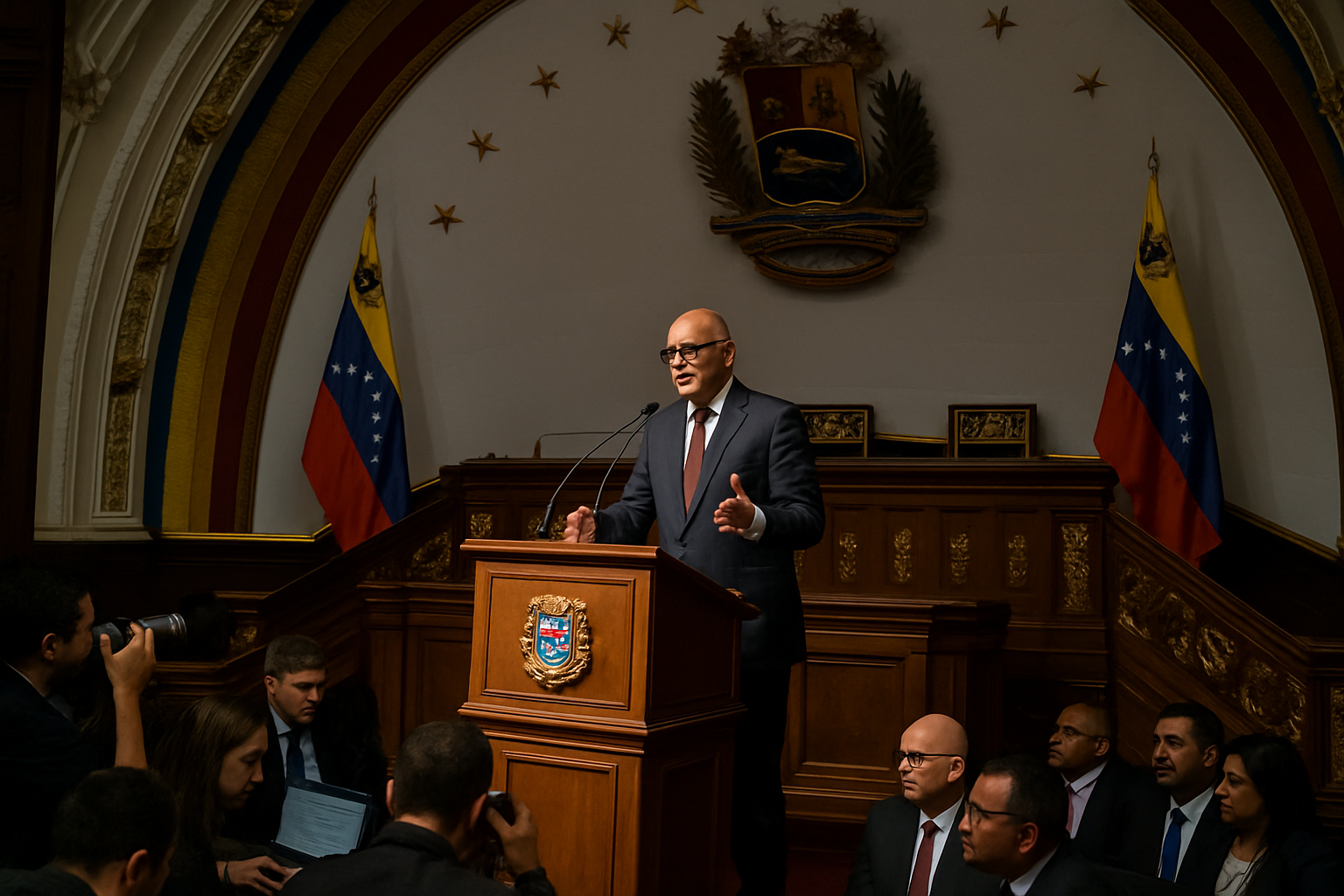
Venezuelan National Assembly President Jorge Rodríguez made an unprecedented promise to families of political prisoners on Friday evening, guaranteeing that all detainees will be released "by Tuesday at the latest, and no later than Friday" following the anticipated approval of a sweeping amnesty law in its second and final reading.
The dramatic pledge came during an emotional visit to the Boleíta police station in northeast Caracas, where Rodríguez met with families who have maintained a vigil since January 8, hoping for news about the release of their loved ones. The encounter, captured by Venezuelan media, represents a crucial moment in the country's post-Maduro democratic transition under Acting President Delcy Rodríguez.
"We aspire that between next Tuesday and at the latest Friday, everyone is free," Jorge Rodríguez, brother of the interim president, told the assembled families. "Tuesday we have to give the second discussion and it is approved definitively, and once that law is approved, everyone comes out."
Amnesty Law Advances Through Legislative Process
The comprehensive amnesty legislation, covering political offenses from 1999 to 2026, passed its first reading unanimously on Thursday and is now advancing toward its crucial second and final debate. According to Italian news sources, the accelerated parliamentary timeline excludes serious crimes and crimes against humanity, focusing specifically on political prisoners detained under the previous Maduro regime.
Former Spanish Prime Minister José Luis Rodríguez Zapatero, who arrived in Caracas on Friday to participate in the peace plan promoted by Acting President Delcy Rodríguez, expressed confidence in the process. "I have no doubt that this promise, this great promise of the broad, very broad amnesty law, is going to be fulfilled," Zapatero stated, also expressing "great confidence" in the interim president.
The law's full text was revealed on Friday, showing it encompasses 27 years of political conflict and aims to promote "justice and coexistence among Venezuelans." However, it explicitly excludes constitutionally forbidden crimes, including hate crimes, though the scope of these exclusions has raised concerns among human rights organizations.
Religious and Civil Society Support
The push for prisoner releases has garnered support from Venezuela's Catholic Church. Cardinal Baltazar Porras called for a "Saturday of prayers for political detainees," organizing vigils and ecumenical moments outside prisons throughout the country. This religious backing adds moral authority to the amnesty process and demonstrates broad societal support for reconciliation efforts.
However, human rights organization Cofavic emphasized that "the liberation of political prisoners is not a favor from the State, but the restitution of their rights," highlighting the perspective that these releases represent the correction of past injustices rather than acts of governmental mercy.
Context of Ongoing Releases
The amnesty law builds upon an already significant release program that has freed 367 political prisoners since January 2026, according to human rights monitoring organization Foro Penal. Recent releases include journalist Rory Branker, who was detained for nearly a year, and Javier Tarazona, director of NGO Fundaredes, who was freed on February 1 after more than four years in detention on terrorism and treason charges.
These releases occurred at multiple facilities, including the notorious El Rodeo penitentiary in Miranda state, where families have gathered hoping for news of their relatives. The systematic nature of these releases indicates a coordinated effort by the interim government to address human rights concerns that plagued the previous administration.
Political Opposition Perspectives
Opposition leader Andrés Velásquez has questioned the necessity of an amnesty law, arguing that political prisoners "are innocent" and therefore should not require pardoning. This perspective reflects ongoing debates about the nature of political prosecutions under the Maduro regime and whether amnesty implicitly acknowledges guilt.
Despite such concerns, the unanimous first reading approval in the National Assembly suggests broad political consensus around the need for reconciliation and prisoner releases as part of Venezuela's democratic transition.
International Implications
The amnesty law represents a critical test of Venezuela's commitment to democratic principles and human rights under the interim government. International observers, including human rights organizations in Finland, France, and Portugal, are monitoring the process closely, viewing it as an indicator of genuine democratic transition versus cosmetic reform.
The timing coincides with broader diplomatic engagement, including high-level U.S.-Venezuela meetings at Miraflores Palace and growing international support from regional powers like Brazil and the European Union. Economic indicators also show improvement, with oil exports increasing by 60% to 800,000 barrels daily, with the United States displacing China as Venezuela's top customer.
Implementation Challenges Ahead
While the promise of immediate releases has raised hopes among families, significant challenges remain in implementing a comprehensive amnesty program. Key concerns include ensuring reintegration guarantees, establishing monitoring mechanisms, and providing safeguards against future persecution.
The law must also address the needs of political exiles who may wish to return to Venezuela, with Portuguese sources indicating that opposition figures want specific guarantees for safe repatriation. The success of the amnesty will ultimately depend on creating conditions for genuine political reconciliation and preventing the cycles of persecution that have characterized Venezuelan politics for decades.
Looking Forward
As Venezuela continues its transition away from the Maduro era, the amnesty law represents both an opportunity for healing and a test of the interim government's commitment to democratic values. The promise to release all political prisoners by week's end, if fulfilled, would mark the most significant human rights development in Venezuela in years.
The international community will be watching closely to see whether this represents genuine democratic progress or temporary political maneuvering. For the families maintaining vigil outside detention centers, however, the focus remains immediate and personal: the return of their loved ones and the restoration of their rights after years of separation and uncertainty.
With the second reading scheduled for Tuesday, Venezuela stands at a crucial juncture where words must translate into action, and promises of freedom must become reality for hundreds of families across the nation.