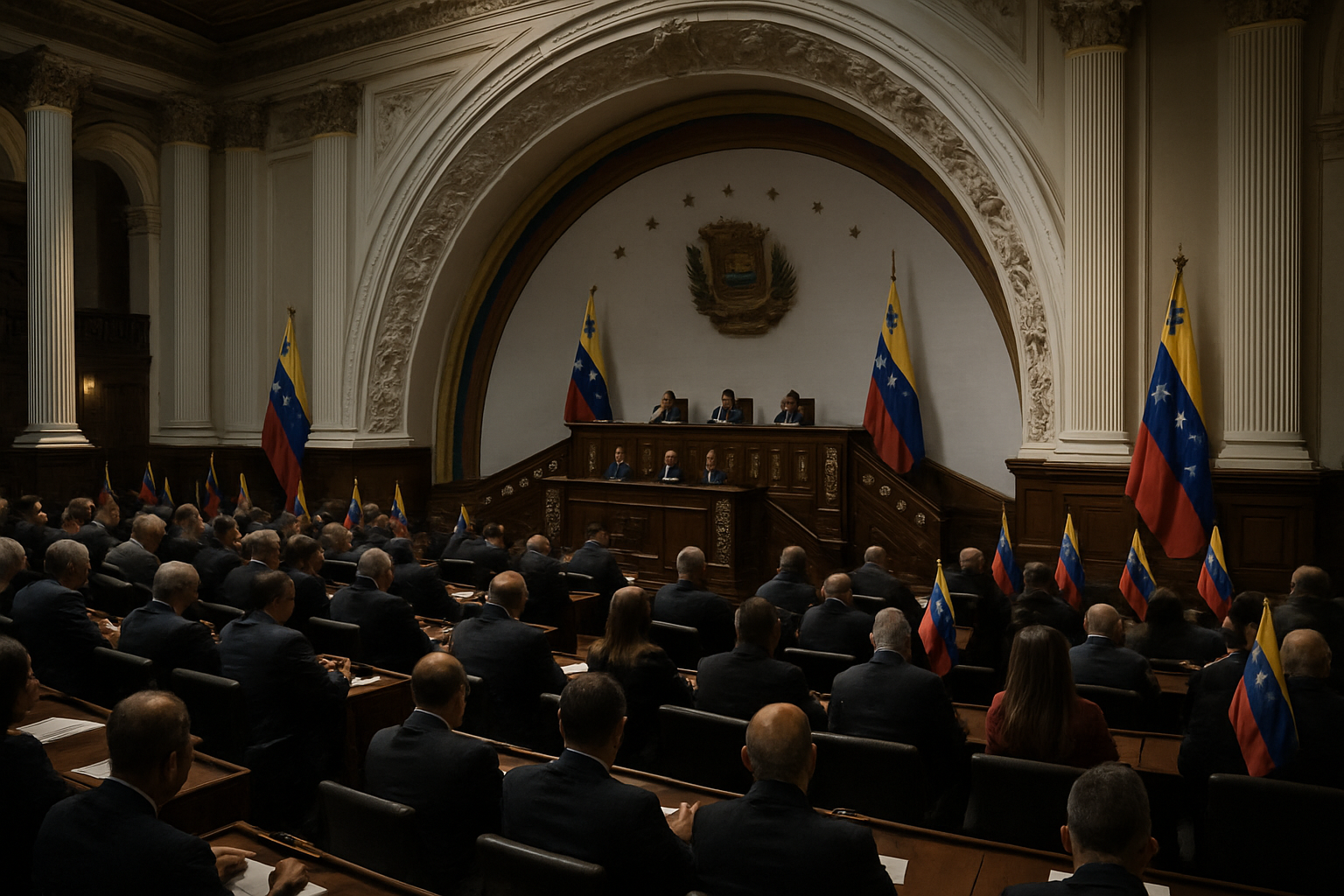
Venezuela's National Assembly unanimously passed a historic amnesty law Thursday that could lead to the release of hundreds of political prisoners, marking a pivotal moment in the country's democratic transition following the removal of Nicolás Maduro in January 2026.
The comprehensive legislation, covering political offenses from 1999 to 2026, represents the most ambitious reconciliation effort in recent Latin American history. Acting President Delcy Rodríguez, who proposed the law, immediately called for "maximum speed" in its implementation while acknowledging the painful process of national healing.
A Moment of National Reconciliation
Speaking after the vote, Vice President Delcy Rodríguez struck a conciliatory tone that would have been unimaginable during the Maduro era. "One must know how to ask for forgiveness and one must also know how to receive forgiveness, and this is the process that opens with this amnesty," she declared, flanked by National Assembly President Jorge Rodríguez and Interior Minister Diosdado Cabello.
The amnesty law passed its final reading without a single dissenting vote, a remarkable achievement in Venezuela's polarized political landscape. The legislation now awaits Rodriguez's signature before being published in the Official Gazette to take legal effect.
"We ask for forgiveness because I don't like prisoners. Today we are taking a decisive step toward peace."
— Jorge Rodríguez, National Assembly President
Scope and Limitations of the Amnesty
The 13-article law covers political offenses committed over nearly three decades of political conflict, spanning the entire Chávez-Maduro era. However, Article 9 specifically excludes from amnesty those who have "promoted attacks on national territory by foreign states or corporations," maintaining limits on the scope of forgiveness.
According to human rights organization Foro Penal, over 600 political prisoners remain detained despite the release of more than 400 individuals since January 2026 under the interim government's ongoing amnesty program. The new law could affect hundreds more opposition figures, journalists, and activists who were detained on terrorism and treason charges.
International Support and Mediation
The amnesty process has received significant international backing. Former Spanish Prime Minister José Luis Rodríguez Zapatero has been mediating in Caracas since early February, bringing his expertise in democratic transitions. Cardinal Baltazar Porras has organized nationwide prayer vigils, adding moral authority to the reconciliation efforts.
The United States has maintained unprecedented diplomatic engagement with the interim government, with high-level meetings between Acting President Rodríguez and US Chargé d'Affaires Laura Dogu at the Miraflores Presidential Palace. This diplomatic breakthrough has been accompanied by economic cooperation, with Venezuelan oil exports surging 60% to 800,000 barrels daily.
Human Rights Concerns and Civil Society Response
While supporting the goal of prisoner releases, human rights organizations have raised concerns about the process. Provea, Venezuela's oldest human rights NGO, criticized the law as "restrictive" with limited scope. Coordinator Oscar Murillo argued that the legislation lacks the breadth necessary for genuine reconciliation.
The Committee for Liberation of Political Prisoners (CLIPP) has demanded that the amnesty be "inclusive rather than selective," covering all political detainees without arbitrary exclusions. Families of prisoners have maintained vigils for weeks outside detention centers, with some resorting to hunger strikes to pressure for complete releases.
"Any amnesty must be comprehensive. We cannot have a selective process that leaves some of our loved ones behind."
— Sandra Rosales, wife of detained police officer
Previous Implementation Challenges
The path to Thursday's unanimous approval has not been smooth. Earlier versions of the amnesty law faced delays due to disagreement over Article 7, which would have required prisoners to "present themselves to justice." The Chavista party initially demanded that political prisoners acknowledge alleged crimes as a condition for release, while the opposition rejected this as criminalizing persecution victims.
This controversy led to the postponement of earlier votes and the failure to meet previous deadlines. National Assembly President Jorge Rodríguez had promised in February that all remaining prisoners would be freed "between Tuesday and Friday," but implementation stalled over these procedural disagreements.
Economic Context and Democratic Transition
The amnesty law comes as Venezuela experiences significant economic transformation under the interim government. The country has restored diplomatic relations with the United States after years of maximum pressure campaigns, leading to sanctions relief and increased international investment.
Oil production, while still below historical peaks, has stabilized at around 800,000 barrels per day with American companies like Chevron doubling their operations. The Dominican Republic has reopened commercial relations, while Brazil and the European Union have expressed cautious support for the democratic transition.
Regional and International Implications
The Venezuelan amnesty represents the most comprehensive political prisoner release in recent Latin American history. The success or failure of this reconciliation process could serve as a template for other countries facing similar challenges in transitioning from authoritarian rule.
International observers are closely monitoring the implementation to determine whether it represents genuine democratic reform or cosmetic changes. The credibility of Venezuela's democratic transition will largely depend on the complete and transparent execution of prisoner releases and the prevention of future persecution.
Looking Forward: Implementation and Challenges
Several challenges remain in implementing the amnesty effectively. These include establishing reintegration guarantees for released prisoners, creating monitoring mechanisms to prevent future persecution, and ensuring safe return conditions for political exiles living abroad.
The interim government must also address broader institutional reforms to prevent the cycles of political persecution that characterized the Maduro era. This includes reforming the justice system, strengthening press freedom, and establishing democratic norms that protect political opposition rights.
As Venezuela takes this historic step toward reconciliation, the international community continues to watch closely. The success of this amnesty process could mark a turning point not only for Venezuelan democracy but also provide a model for peaceful political transitions across Latin America and beyond.
With Acting President Rodríguez expected to sign the law imminently, hundreds of families across Venezuela await news of their loved ones' freedom, hoping that this unanimous vote truly represents the beginning of a new chapter in their country's troubled political history.