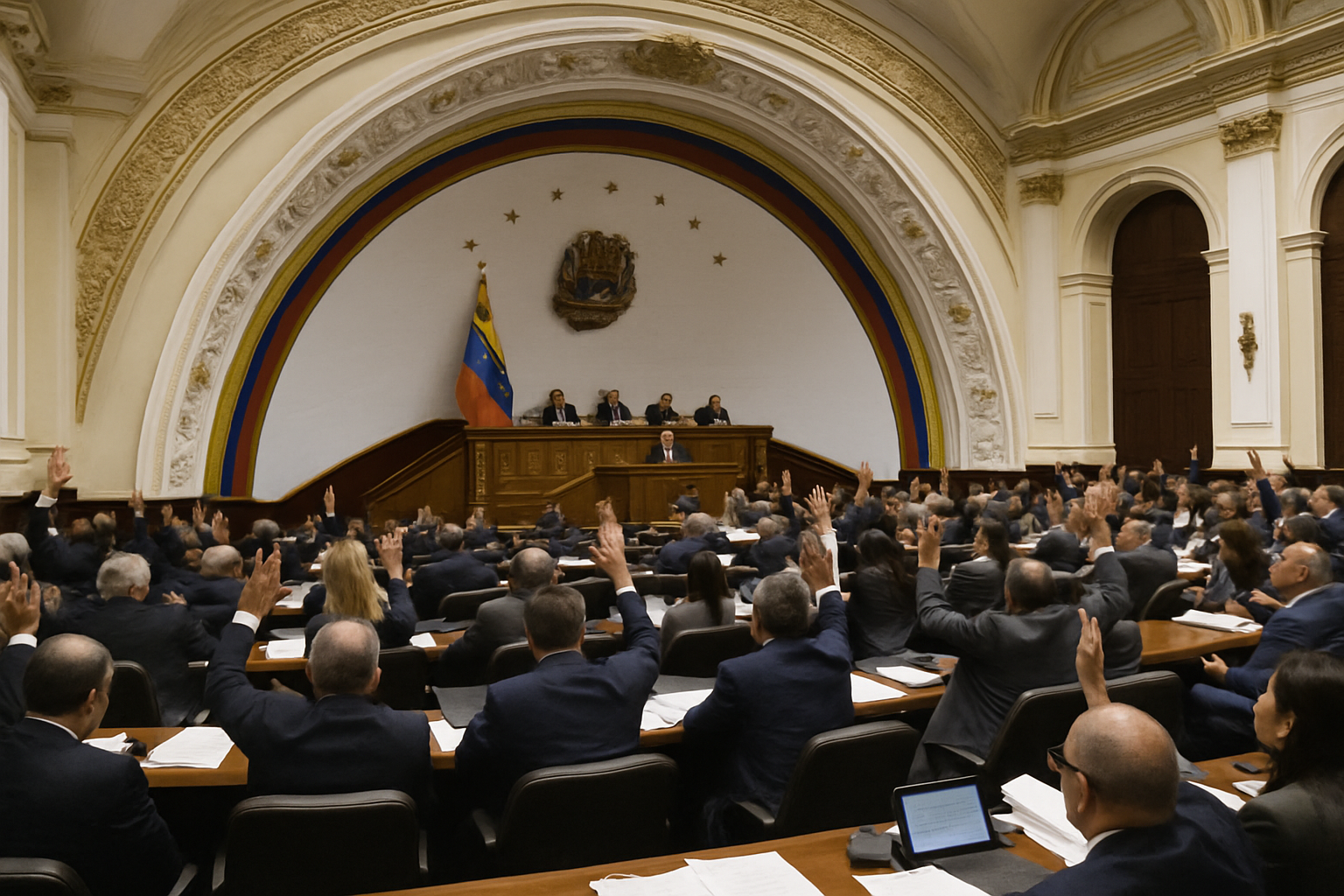
Venezuela's National Assembly has advanced a sweeping amnesty bill for political prisoners while former Spanish Prime Minister José Luis Rodríguez Zapatero arrived in Caracas to participate in a peace initiative promoted by Acting President Delcy Rodríguez, marking significant developments in the country's ongoing political transition.
The amnesty legislation, which could affect hundreds of political prisoners detained under the previous Maduro regime, represents one of the most comprehensive political reconciliation efforts in recent Latin American history. The bill excludes gross human rights violations under the Chávez and Maduro administrations but covers political offenses spanning from 1999 to 2026.
Parliamentary Progress on Amnesty Law
Venezuela's National Assembly approved the amnesty bill in its first reading on Thursday, with the legislation now proceeding to second and final debate. The initiative was proposed by Acting President Delcy Rodríguez as part of broader reconciliation efforts following the January 2026 political transition that saw Nicolás Maduro's removal from power.
Nicolás Maduro Guerra, son of the former president, defended the amnesty as a "gesture of humanity" to close the confrontation that has divided Venezuelan society. He emphasized that the legislation, approved in Parliament's first discussion last week, represents an important step toward national reconciliation.
"This amnesty is a gesture of humanity for closing the confrontation and moving toward a Venezuela of peace and coexistence."
— Nicolás Maduro Guerra
The legislation has drawn both support and criticism. While human rights organizations generally support prisoner releases, some have raised concerns about the lack of public consultation in the amnesty debate process, warning it violates international standards despite supporting reconciliation goals.
Civil Society Participation
The Committee of Mothers for Truth has formally submitted its own amnesty law proposal to the National Assembly, demanding broad and plural participation of family members in the discussion, implementation, and verification of any final legislation. The organization expects their proposal to be incorporated into the bill currently before Parliament.
The mothers' committee initiative highlights the deep personal stakes involved in the amnesty process, as families of political prisoners have endured years of separation and uncertainty under the previous administration's systematic detention policies.
Zapatero's Peace Mission
Former Spanish Prime Minister José Luis Rodríguez Zapatero arrived in Caracas on February 6 to participate in the peace plan promoted by Acting President Delcy Rodríguez. Zapatero received an invitation on January 30 to participate in the initiative and share his "opinions and experiences in promoting dialogue."
The involvement of the former Spanish leader, who served as Prime Minister from 2004 to 2011, adds international legitimacy to Venezuela's reconciliation efforts. Zapatero has previously served as a mediator in various Latin American political crises and brings extensive experience in democratic transition processes.
International Perspectives
Amnesty International has condemned both the unlawful use of force by the United States in Maduro's removal and the multiple crimes committed by Venezuelan authorities over the past decades. The organization's statement reflects the complex international perspective on Venezuela's situation, acknowledging both the problematic nature of foreign intervention and the serious human rights violations that occurred under the previous regime.
According to sources familiar with the situation, the amnesty law is being closely watched by international observers as a test of the new government's commitment to genuine democratic transition versus cosmetic reform.
Ongoing Prisoner Releases
The amnesty legislation builds on an existing release program that has already freed 367 political prisoners since January 2026. Recent releases include prominent figures such as journalist Rory Branker, who was detained for nearly a year, and Javier Tarazona, director of the NGO Fundaredes, who was freed on February 1 after more than four years in detention.
These releases have occurred at multiple facilities including the El Rodeo penitentiary in Miranda state, representing a major reversal from the Maduro era's systematic detention of opposition figures, journalists, and activists.
Political Reconciliation Challenges
The discussion of the amnesty law takes place while Venezuela still bears the wounds of prolonged political conflict. Critics argue that Rodríguez is bringing old scars into the discussion, while supporters view the legislation as essential for moving the country forward.
Opposition leader Andrés Velásquez has questioned whether an amnesty is even necessary, arguing that political prisoners "are innocent" and should simply be released without the need for amnesty legislation. This perspective reflects ongoing debates about the nature of political prosecutions under the previous regime.
International Response and Support
While support for the Venezuelan opposition remains strong among governments abroad, there are signs of cautious engagement with the current government under Delcy Rodríguez. The international community is carefully monitoring developments to assess whether genuine democratic transition is occurring or whether changes are merely cosmetic.
The arrival of international figures like Zapatero suggests growing diplomatic engagement with the new administration, though the international community remains divided on how to respond to Venezuela's complex political situation.
Constitutional Framework and Limitations
The amnesty law operates within constitutional constraints, covering political offenses while excluding constitutionally forbidden crimes including hate crimes. However, the scope of excluded offenses raises concerns among some rights groups about the breadth of coverage.
The legislation is designed to benefit opposition figures, journalists, and activists who were detained on terrorism, treason, and other political charges under the previous regime. The comprehensive nature of the law, covering offenses from 1999 to 2026, reflects the extended period of political conflict in Venezuela.
Looking Forward
As Venezuela moves forward with its political transition, the amnesty law represents both an opportunity for reconciliation and a test of the new government's democratic commitments. The success of this initiative could influence future democratic consolidation efforts and help determine whether Venezuela can move beyond decades of political polarization.
The involvement of international mediators like Zapatero, combined with ongoing diplomatic engagement with various countries, suggests that Venezuela's transition is being closely supported by the international community. However, the ultimate success of these efforts will depend on genuine commitment to democratic principles and human rights from all parties involved.
The second reading of the amnesty bill in the National Assembly will be crucial in determining the final scope and implementation mechanisms of this historic legislation. As families of political prisoners await news of their loved ones and the international community watches for signs of genuine democratic progress, Venezuela faces a critical moment in its political evolution.