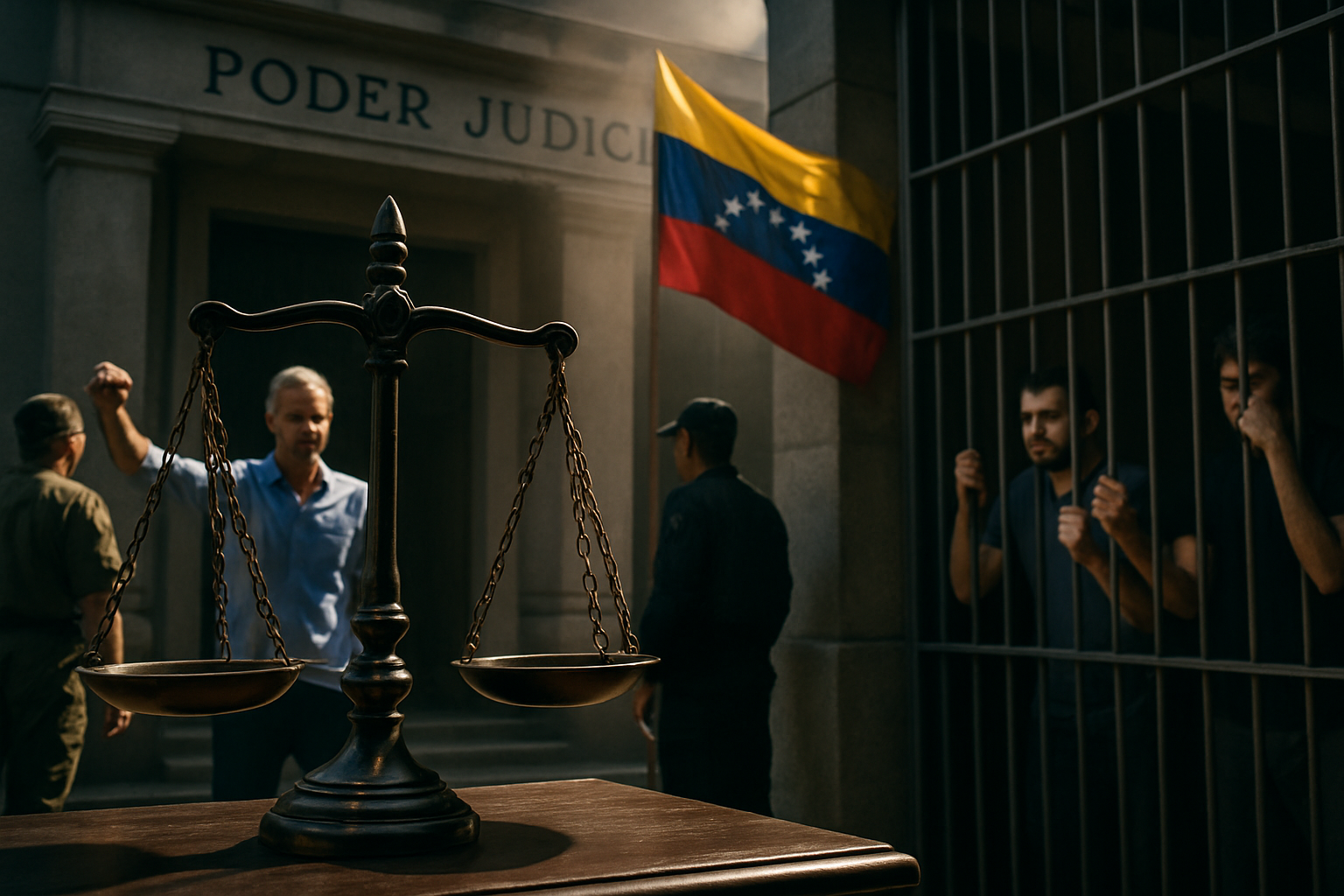
Venezuelan courts delivered contradictory rulings on political prisoner cases this week, granting full freedom to Súmate coordinator Nélida Sánchez while denying amnesty to a 16-year-old adolescent and a communications student, raising questions about the consistency and fairness of the country's ongoing reconciliation process.
The divergent court decisions represent the latest chapter in Venezuela's complex journey toward political reconciliation under Acting President Delcy Rodríguez's administration, which has overseen the release of over 750 political prisoners since January 2026 under the historic 1999-2026 amnesty program.
Breakthrough for Opposition Coordinator
In a significant development Tuesday evening, a Venezuelan tribunal granted full liberty to Nélida Sánchez, a coordinator with the civil society organization Súmate. The decision was announced by the organization, which called on "competent tribunals to continue responding to amnesty requests introduced under this legislation."
Súmate, a prominent electoral monitoring and democracy promotion organization, has faced systematic persecution under Venezuela's previous administrations. Sánchez's release marks a notable victory for civil society advocates who have worked to document electoral irregularities and promote democratic governance.
The organization's statement emphasized the importance of continued judicial responsiveness to amnesty applications, highlighting that hundreds of cases remain pending under the comprehensive amnesty law covering political offenses from 1999-2026.
Troubling Denials for Young Venezuelans
In stark contrast to Sánchez's liberation, Venezuelan courts denied amnesty to two young individuals whose cases have drawn particular concern from human rights organizations. A 16-year-old adolescent was refused amnesty despite meeting the legal criteria established under the reconciliation framework.
According to civil society organizations monitoring the case, the tribunal's ruling failed to examine power relations or assess possible improper treatment of the victim, raising serious questions about the legal process's integrity. Critics warn this could generate doubts about the procedure's legality and provoke "institutional victimization" of minors already subjected to political persecution.
Additionally, courts denied amnesty to a communications student, with human rights advocates warning that the case demonstrates "irregularities in the application of normative standards" and questioning the lack of procedural guarantees in the judicial process.
Broader Pattern of Inconsistent Implementation
These mixed decisions reflect ongoing challenges in implementing Venezuela's ambitious amnesty program, which represents the most comprehensive political reconciliation effort in recent Latin American history. Since February 2026, when the amnesty law received unanimous approval from the National Assembly, implementation has proven uneven and controversial.
The program has achieved remarkable success in certain areas, with over 750 political prisoners freed since January 2026. However, approximately 600 individuals remain detained according to human rights organization Foro Penal, and many releases have come with restrictive conditions rather than complete freedom.
Article 9 of the amnesty law excludes those who "promoted attacks on national territory by foreign states or corporations," while Article 7's requirement that prisoners "present themselves to justice" has created bureaucratic obstacles that particularly affect vulnerable populations, including minors and students with limited legal resources.
"The selective nature of these decisions undermines the reconciliation process and creates dangerous precedents for how justice is administered in our democratic transition."
— Human Rights Advocate, speaking on condition of anonymity
International Scrutiny Intensifies
The inconsistent court decisions come as Venezuela's democratic transition faces increasing international scrutiny. Former Spanish Prime Minister José Luis Rodríguez Zapatero continues his mediation efforts in Caracas, while Cardinal Baltazar Porras organizes nationwide prayer vigils supporting reconciliation.
The United States formally restored diplomatic relations with Venezuela in March 2026 after a seven-year break, with oil exports surging 60% to 800,000 barrels daily as American companies displaced China as Venezuela's top customer. However, this economic engagement has been conditioned on sustained progress in human rights and democratic governance.
European allies have emphasized the importance of consistent human rights commitments, with some expressing concern that selective amnesty implementation could undermine the broader democratic transition process.
Civil Society Demands Comprehensive Reform
Venezuelan civil society organizations have responded to the mixed court decisions with calls for more systematic and transparent amnesty implementation. Cofavic, a prominent human rights organization, continues to emphasize that prisoner releases represent "rights restitution, not state favor."
The Committee for the Liberation of Political Prisoners (CLIPP) has maintained vigils at detention centers, demanding "inclusive rather than selective" amnesty coverage for all political detainees. Families of those denied amnesty have expressed particular frustration with bureaucratic obstacles that appear to disproportionately affect young people and students.
The Venezuelan Red Cross has announced medical attention programs for released prisoners, recognizing the physical and psychological trauma many have experienced during detention. However, advocates argue that addressing past abuses requires consistent application of amnesty provisions without arbitrary exclusions.
Economic Progress Amid Political Challenges
Venezuela's political reconciliation process occurs amid significant economic transformation. The country's oil exports have reached 800,000 barrels daily, though this remains below the historical peak of 3 million barrels. Infrastructure challenges persist, with power outages and hyperinflation continuing to affect millions of citizens.
The Dominican Republic reopened full diplomatic and commercial relations with Venezuela, while Brazil and European Union nations maintain cautious support for the democratic transition. American Airlines has resumed direct flights between Miami and Caracas for the first time since 2019, signaling growing confidence in Venezuela's stability.
Looking Ahead: Tests of Democratic Commitment
The contradictory court decisions on political prisoner cases represent a critical test of Venezuela's commitment to genuine democratic reform versus cosmetic changes. María Corina Machado, the 2025 Nobel Peace Prize laureate who announced plans to return to Venezuela "within weeks," has called for consistent application of amnesty provisions.
Opposition leaders argue that the selective nature of recent decisions undermines confidence in judicial independence and the rule of law. The denial of amnesty to a minor, in particular, has drawn sharp criticism from international human rights organizations monitoring Venezuela's transition.
As Venezuela continues its most promising democratic opening in over two decades, the consistency and fairness of judicial decisions on political prisoners will serve as a crucial indicator of the country's commitment to reconciliation and democratic governance. The international community, including key partners like the United States and Spain, will be closely watching how these cases evolve in the coming weeks and months.
The success of Venezuela's democratic transition depends not only on the number of prisoners released but on ensuring that the amnesty process is applied fairly and consistently across all cases, particularly those involving vulnerable populations like minors and students who represent the country's future.