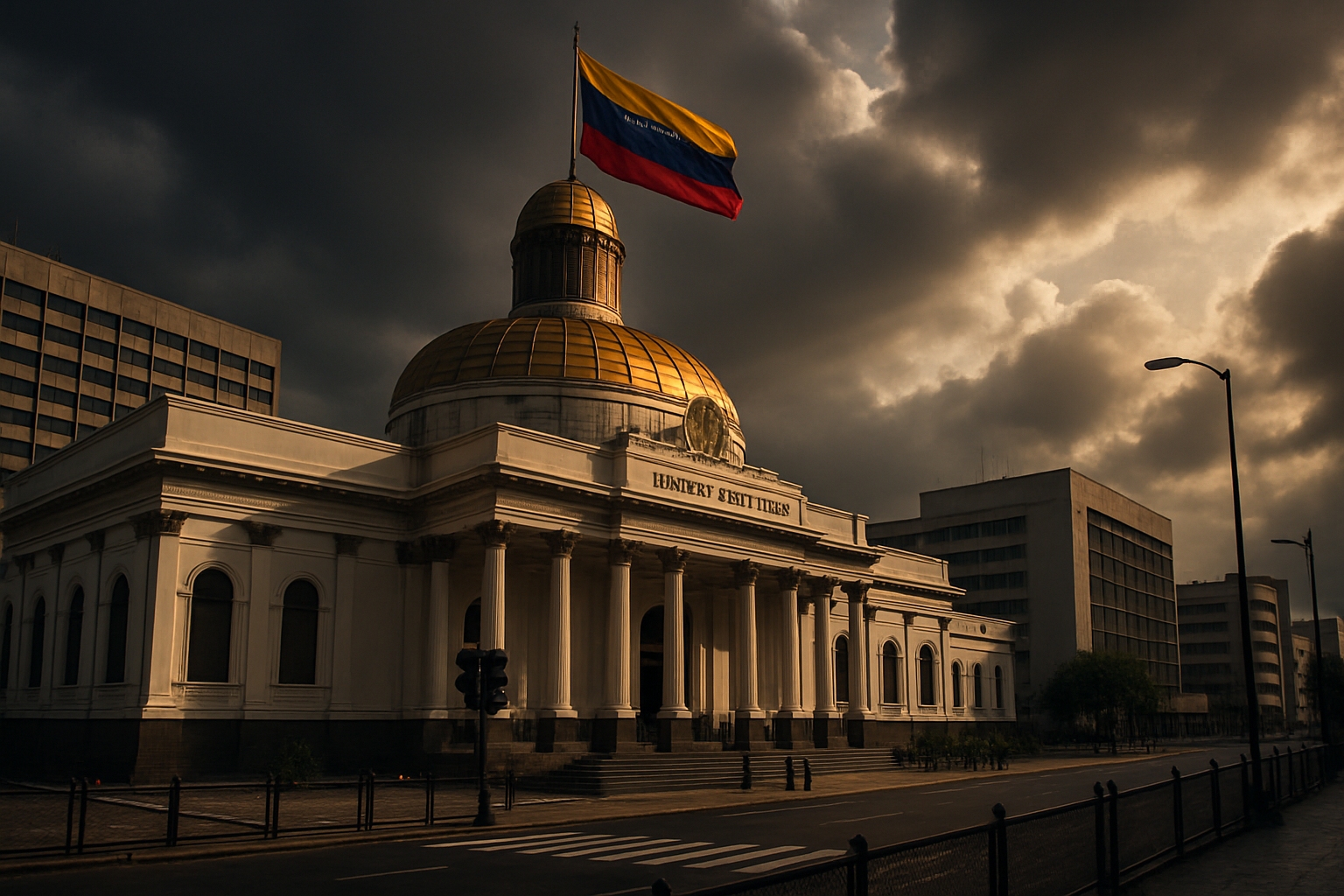
Venezuela is experiencing a pivotal moment in its post-Maduro political transformation as Acting President Delcy Rodríguez orchestrates significant military leadership changes while new polling data reveals overwhelming public demand for democratic elections, highlighting the complex dynamics of the country's ongoing transition.
The most dramatic development came with the removal of Defense Minister Vladimir Padrino López, who had served in the position since July 2014, spanning over 11 years and five months. Acting President Rodríguez appointed General Gustavo González López as his replacement, marking the end of an era for one of the Chavista movement's most enduring military figures.
Military Leadership Transformation
Padrino López's departure represents more than a simple personnel change—it symbolizes the broader governmental restructuring taking place under Venezuela's interim leadership. The outgoing defense minister was instrumental in maintaining armed forces loyalty during the Maduro administration's most challenging periods, including the economic crisis and international sanctions that plagued the country for years.
Acting President Rodríguez thanked Padrino López "for loyalty to Homeland" and acknowledged his service as "first soldier in defense of our country." His replacement, General González López, brings a controversial background to the position. The new defense minister has been sanctioned by both the United States and European Union for alleged human rights violations.
A 2020 United Nations mission found "reasonable grounds to believe" González López "had knowledge, participated and contributed to commission of serious violations and crimes against political opponents." This appointment has drawn criticism from human rights organizations, with Provea characterizing it as "recycling of impunity" and arguing it maintains repressive structures while obstructing genuine institutional reform.
Public Demands for Democratic Process
As the government implements these leadership changes, new polling data reveals the Venezuelan public's strong appetite for democratic progress. A comprehensive survey conducted between March 23-29, 2026, involving 1,040 valid household interviews across the country, found that 64% of respondents demand presidential elections be held this year.
This polling data underscores the public expectation that Venezuela's political transition must include meaningful electoral competition. The demand for elections reflects both hope for democratic renewal and skepticism about the sustainability of change without formal electoral validation.
"Any process must transit through recognition of electoral results and legality of political forces. Reconciliation starts from the truth."
— Juan Pablo Guanipa, Opposition Leader
Infrastructure and Economic Challenges
Amid these political developments, Venezuela continues grappling with significant infrastructure challenges that have persisted since the Maduro era. International companies Siemens and General Electric are currently evaluating comprehensive plans to recover the country's electrical system, which has suffered from years of inadequate maintenance and lack of specialized technical support.
According to diagnostic reports, multiple generating units among Venezuela's 48 power generation facilities require immediate intervention. The electrical crisis has been a persistent challenge affecting millions of Venezuelans, with regular blackouts disrupting daily life and economic activity across the country.
Despite these ongoing challenges, Venezuela has experienced some positive economic indicators since the political transition began. Oil exports have surged 60% to 800,000 barrels daily, with the United States displacing China as the country's top customer following the restoration of diplomatic relations and sanctions relief.
Political Prisoner Releases and International Relations
The interim government has implemented one of the most comprehensive political prisoner amnesty programs in recent Latin American history, with over 750 individuals released since January 2026 under the 1999-2026 amnesty law. However, approximately 600 political prisoners remain detained according to human rights groups, and some releases have come with restrictive conditions such as house arrest and electronic monitoring.
The pace of democratic reform has become a critical factor in Venezuela's international rehabilitation. The Dominican Republic has reopened full diplomatic relations, while Brazil and the European Union maintain cautious support for the transition process. Former Spanish Prime Minister José Luis Rodríguez Zapatero continues mediation efforts, and Cardinal Baltazar Porras has organized prayer vigils supporting the reconciliation process.
Regional and International Implications
Venezuela's transformation is being closely monitored as a potential template for democratic transitions in Latin America. The success or failure of this process could influence approaches to similar challenges throughout the hemisphere. The appointment of González López as defense minister serves as a test of the interim government's commitment to genuine reform versus cosmetic changes.
The United States has formally restored diplomatic relations with Venezuela after a seven-year break, marking a dramatic shift from "maximum pressure" policies to strategic partnership. Energy Secretary Chris Wright's February visit to Caracas resulted in comprehensive cooperation agreements, while Interior Secretary Doug Burgum's March visit focused on mining code reforms providing new opportunities for American companies.
Challenges Ahead
Despite progress in some areas, Venezuela faces substantial obstacles in its democratic transition. Oil production remains at approximately 700,000 barrels daily compared to the historical peak of 3 million barrels. The country still experiences a 475% inflation rate—the world's highest in 2025 according to Central Bank data—along with infrastructure decay and power outages affecting millions of citizens.
The international community continues monitoring Venezuela's commitment to democratic governance, particularly regarding the treatment of political opposition and the credibility of future electoral processes. María Corina Machado, the Nobel laureate opposition leader, has announced her intention to return "within weeks," which will serve as a crucial test of the government's democratic commitments.
Looking Forward
As Venezuela navigates this critical transition period, the tension between continuity and change remains apparent. While the government has made significant strides in prisoner releases and international engagement, appointments like González López's raise questions about the depth of institutional reform.
The strong public demand for presidential elections, as evidenced by the recent polling data, suggests that democratic legitimacy will ultimately require electoral validation of the ongoing changes. The success of Venezuela's transformation will depend on balancing stability with genuine reform, addressing economic challenges while building democratic institutions, and ensuring that political changes translate into improved conditions for the Venezuelan people.
The coming months will be decisive in determining whether Venezuela's transition represents a genuine democratic opening or a more limited political adjustment. With international attention focused on the country's progress, the stakes extend far beyond Venezuela's borders, potentially influencing approaches to democratic transition throughout Latin America and beyond.