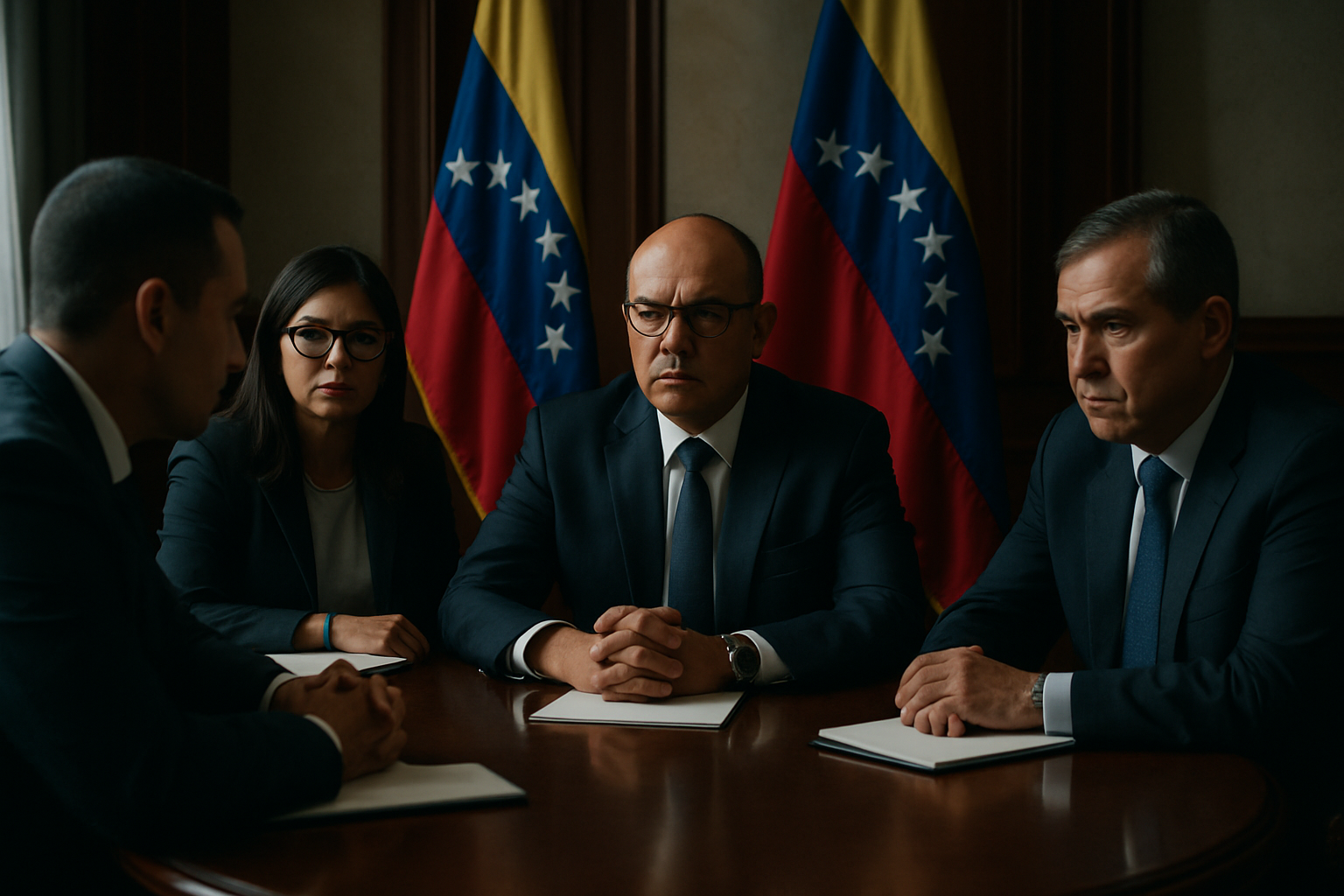
Acting President Delcy Rodríguez announced the dismissal of Defense Minister Vladimir Padrino López on March 18, 2026, ending his more than decade-long tenure as one of Venezuela's most powerful military figures and appointing General Gustavo González López as his replacement.
The announcement, made via Rodríguez's social media channels, represents a significant reshuffling of Venezuela's government structure two months after the dramatic capture of former President Nicolás Maduro by U.S. forces in January 2026. "I inform the country that today I have designated General Gustavo González López as Minister of Popular Power for Defense," Rodríguez declared.
Padrino López's removal marks the end of an era for Venezuela's military establishment. Having served as Defense Minister since July 2014 under both Maduro and previously under Hugo Chávez, he was considered one of the key pillars supporting the former regime's military structure and had been instrumental in maintaining the armed forces' loyalty during Venezuela's prolonged political and economic crisis.
A Controversial Figure Steps Down
Vladimir Padrino López's tenure as Defense Minister was marked by both loyalty to the Chavista movement and significant international controversy. Throughout his 11-year service, he was seen as Maduro's most trusted military ally, playing a crucial role in suppressing opposition movements and maintaining military support for the government during periods of intense political upheaval.
His departure comes at a time when Venezuela's interim government under Rodríguez has been working to establish diplomatic relations with the United States and implement political reforms. In her announcement, Rodríguez thanked Padrino López "for his loyalty to the Homeland, and for having been, during all these years, the first soldier in the defense of our country."
However, Padrino López's legacy remains contentious. International human rights organizations have long criticized his role in what they describe as systematic repression of political opposition. The man was among the first members of the Chavista government to appear publicly during the confusion that followed the January 3, 2026 U.S. military operation that resulted in Maduro's capture.
The New Defense Minister's Controversial Background
The appointment of General Gustavo González López as the new Defense Minister has raised significant concerns among human rights organizations and international observers. González López comes to the position with a controversial record that includes sanctions from both the United States and the European Union.
According to Venezuelan media reports, González López has been sanctioned by both the U.S. and EU for his alleged involvement in human rights violations. In 2020, a United Nations mission stated it found "reasonable grounds to believe" that the military officer "had knowledge, participated and contributed to the commission of serious violations and crimes against political opponents."
The human rights organization Provea (Venezuelan Program of Education-Action on Human Rights) criticized the appointment, describing it as a "recycling of impunity." The NGO argues that González López's incorporation into the cabinet maintains the repressive structure intact and obstructs any real attempt at institutional reform that might have been expected under the new interim government.
Context of Political Transformation
This ministerial change occurs within the broader context of Venezuela's dramatic political transformation following Maduro's capture. Under Acting President Delcy Rodríguez's leadership, Venezuela has undergone significant policy shifts, including the restoration of diplomatic relations with the United States and the implementation of a comprehensive political amnesty program.
The interim government has released over 750 political prisoners under a 1999-2026 amnesty program, representing one of the most ambitious Latin American political reconciliation efforts in recent history. Venezuelan oil exports have surged 60% to 800,000 barrels daily, with the United States displacing China as Venezuela's top customer following the lifting of economic sanctions.
Energy Secretary Chris Wright's historic February visit to Caracas resulted in comprehensive cooperation agreements between the two nations, marking a complete reversal from the "maximum pressure" campaign of previous years to what officials now term a "strategic partnership."
International Reactions and Implications
The appointment has drawn mixed reactions from international observers and Venezuelan civil society. While some view the change as necessary for modernizing Venezuela's military leadership, others express concern about the new minister's background and what it might signal about the depth of institutional reform under the interim government.
The timing of the announcement is particularly significant, coming as Venezuela continues to navigate its relationship with the international community. The Dominican Republic has reopened full diplomatic relations with Venezuela, while Brazil and European Union nations have expressed cautious support for the transition process.
"This appointment demonstrates that despite political changes, the structural elements of the previous system remain in place, raising questions about the genuine nature of democratic reform."
— Provea Human Rights Organization
Critics argue that appointing a figure with González López's background sends mixed signals about Venezuela's commitment to human rights and institutional reform. However, supporters of the change suggest that military continuity may be necessary during this transitional period to maintain stability within the armed forces.
The End of the Padrino López Era
Padrino López's departure represents more than just a personnel change; it symbolizes the end of an era in Venezuelan politics. As one of the longest-serving members of the Chavista government, his removal signals a significant shift in the country's military hierarchy and potentially its approach to civil-military relations.
Throughout his tenure, Padrino López was considered the "unconditional soldier" of Maduro, maintaining military loyalty through some of Venezuela's most challenging periods, including widespread protests, economic collapse, and international isolation. His role in suppressing opposition movements and maintaining regime stability made him both a crucial figure for the former government and a target of international criticism.
The decision to remove him more than two months after Maduro's capture suggests careful consideration by the interim government about timing and political sensitivities surrounding such changes in military leadership.
Looking Forward: Challenges and Opportunities
As Venezuela continues its transition under Acting President Rodríguez, the appointment of González López as Defense Minister presents both challenges and opportunities. While his controversial background raises concerns about continuity with past practices, supporters argue that military experience and institutional knowledge may be valuable during this period of political transition.
The interim government faces the complex task of balancing the need for stability within military ranks with demands for institutional reform and accountability. The international community, particularly the United States, will likely monitor closely how this appointment affects Venezuela's ongoing democratic transition and human rights record.
With over 600 political prisoners still detained despite the amnesty program's success in releasing hundreds of others, the role of the Defense Ministry in implementing further reforms will be crucial. The appointment of González López will be seen as a test of whether Venezuela's new government is committed to genuine institutional change or merely cosmetic adjustments to appease international pressure.
As Venezuela continues to reintegrate into the international community and work toward eventual elections, the performance of its new Defense Minister will be closely watched as an indicator of the country's commitment to democratic governance and respect for human rights.