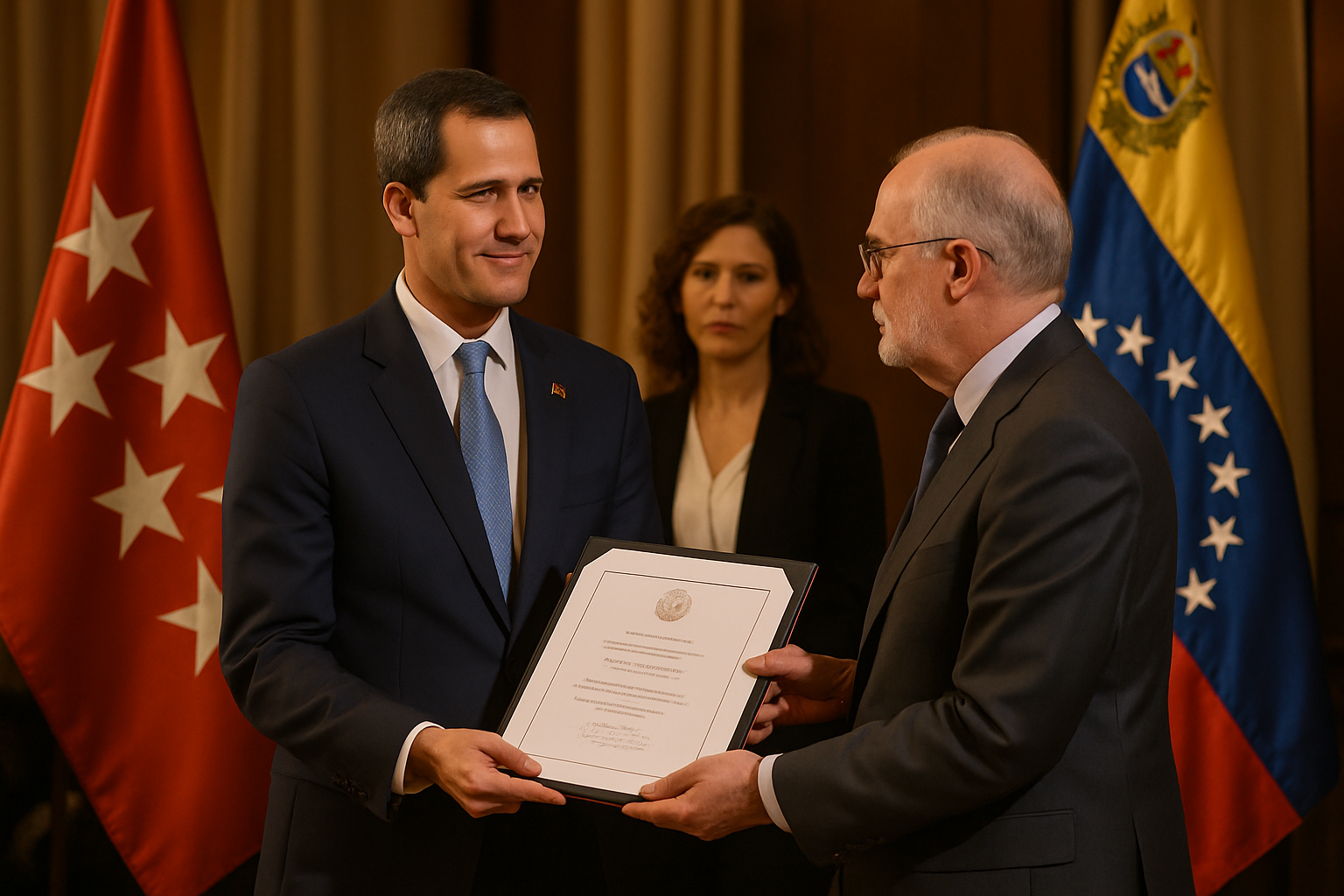
Venezuelan opposition leader Edmundo González has received international recognition from Madrid authorities while the country continues to grapple with a complex political transition marked by infrastructure failures, sanctions adjustments, and mounting pressure for democratic elections.
González, who claims victory in the disputed 2024 presidential election, was awarded the Madrid Community Gold Medal by regional president Isabel Díaz Ayuso, marking the highest honor bestowed by the Spanish capital. The ceremony represents a significant diplomatic gesture of support for the Venezuelan opposition during a critical period of political uncertainty.
International Recognition and Diaspora Support
Speaking from his exile location, González expressed gratitude for Spain's "generous and human" reception of Venezuelan migrants, emphasizing that the distinction recognizes "the struggle of the Venezuelan people." The award ceremony comes as thousands of Venezuelan exiles in Madrid continue to organize demonstrations demanding free elections and democratic transition in their homeland.
The recognition from Madrid authorities carries particular weight given Spain's historical ties to Venezuela and its role as host to one of the largest Venezuelan diaspora communities in Europe. González's acknowledgment of Spanish hospitality toward Venezuelan refugees highlights the international dimension of the country's political crisis.
Government Mobilization and Electoral Pressure
Meanwhile, in Caracas, government officials have launched a counter-mobilization effort. Ernesto Villegas, a prominent government figure, has advocated for elections but stipulated they must be "free of sanctions," reflecting the administration's position that international sanctions must be lifted before any electoral process can be considered legitimate.
This stance comes as the government mobilizes its political base in demonstrations toward Caracas, pressuring for the removal of economic blockades. The mobilization represents a strategic response to growing international pressure for transparent electoral processes.
US Sanctions Adjustments and Economic Impact
In a significant development, the US Treasury Department's Office of Foreign Assets Control (OFAC) has partially lifted sanctions against Venezuela's Central Bank and three other state financial institutions. The sanctions, originally imposed in 2017, have been a cornerstone of international pressure on the Venezuelan government.
Economic analysts suggest this partial sanctions relief could provide crucial breathing room for Venezuela's struggling financial system, which has been largely isolated from international banking networks for years. However, the limited nature of the relief indicates continued US concerns about the political situation in Venezuela.
The timing of this sanctions adjustment coincides with ongoing discussions about Venezuela's economic recovery and the role international financial institutions might play in stabilizing the country's monetary system.
Infrastructure Crisis Worsens
Adding to the country's challenges, Venezuela continues to experience severe infrastructure problems, particularly in the electrical grid. The Venezuelan Prison Observatory (OVP) has reported that power outages in detention facilities in Aragua, Carabobo, and Lara states are exacerbating humanitarian crises in police holding cells.
According to the OVP, inmates endure eight-hour periods of electrical rationing, plunging facilities into darkness that "triggers levels of anxiety and desperation." This infrastructure failure affects not only detention centers but broader swaths of the Venezuelan population, highlighting the systemic nature of the country's economic and administrative challenges.
The electrical crisis represents a continuation of problems that have plagued Venezuela for over a decade, with power outages becoming increasingly frequent and prolonged. These infrastructure failures compound existing humanitarian concerns and limit the government's ability to provide basic services to its population.
Political Opposition Strategy
The opposition, led by figures like González and María Corina Machado, continues to maintain pressure for democratic change while operating largely from exile. Their strategy appears focused on maintaining international legitimacy and support while documenting electoral irregularities and human rights concerns.
"This distinction recognizes the struggle of the Venezuelan people"
— Edmundo González, Opposition Leader
The international recognition González has received serves multiple strategic purposes: it maintains the opposition's profile on the global stage, provides moral authority to their claims of electoral victory, and keeps international attention focused on Venezuela's political situation.
Regional and International Implications
The current Venezuelan political crisis has broader implications for Latin American democracy and international relations. Regional powers continue to watch developments closely, with many maintaining cautious positions that avoid taking definitive stances on the legitimacy of either the government or opposition claims.
The partial US sanctions relief suggests a potential shift in international strategy, moving from maximum pressure toward more nuanced approaches that might encourage dialogue while maintaining leverage for democratic reforms. However, the conditional nature of this relief indicates that substantive political progress remains a prerequisite for further normalization.
Humanitarian Concerns Mount
The deteriorating infrastructure situation, combined with ongoing political uncertainty, continues to affect millions of Venezuelans. The prison conditions highlighted by the OVP represent just one aspect of a broader humanitarian challenge that includes healthcare, education, and basic service delivery.
International humanitarian organizations have consistently called for improved conditions and access to Venezuelan facilities, but political tensions have often complicated these efforts. The current transition period presents both opportunities and challenges for addressing these longstanding concerns.
Looking Forward: Electoral Prospects and Democratic Transition
The demand for "elections free of sanctions" from government supporters, contrasted with opposition calls for immediate transparent elections, illustrates the complex negotiations that would be required for any electoral solution to the current crisis.
Both sides appear to recognize that elections represent the most legitimate path forward, but disagreement over conditions and timelines continues to prevent concrete progress. International mediation efforts may become increasingly important in bridging these gaps and establishing mutually acceptable frameworks for democratic competition.
The coming months will likely prove crucial in determining whether Venezuela can navigate toward a peaceful democratic transition or whether the current political stalemate will persist, with continued humanitarian and economic costs for the Venezuelan people.