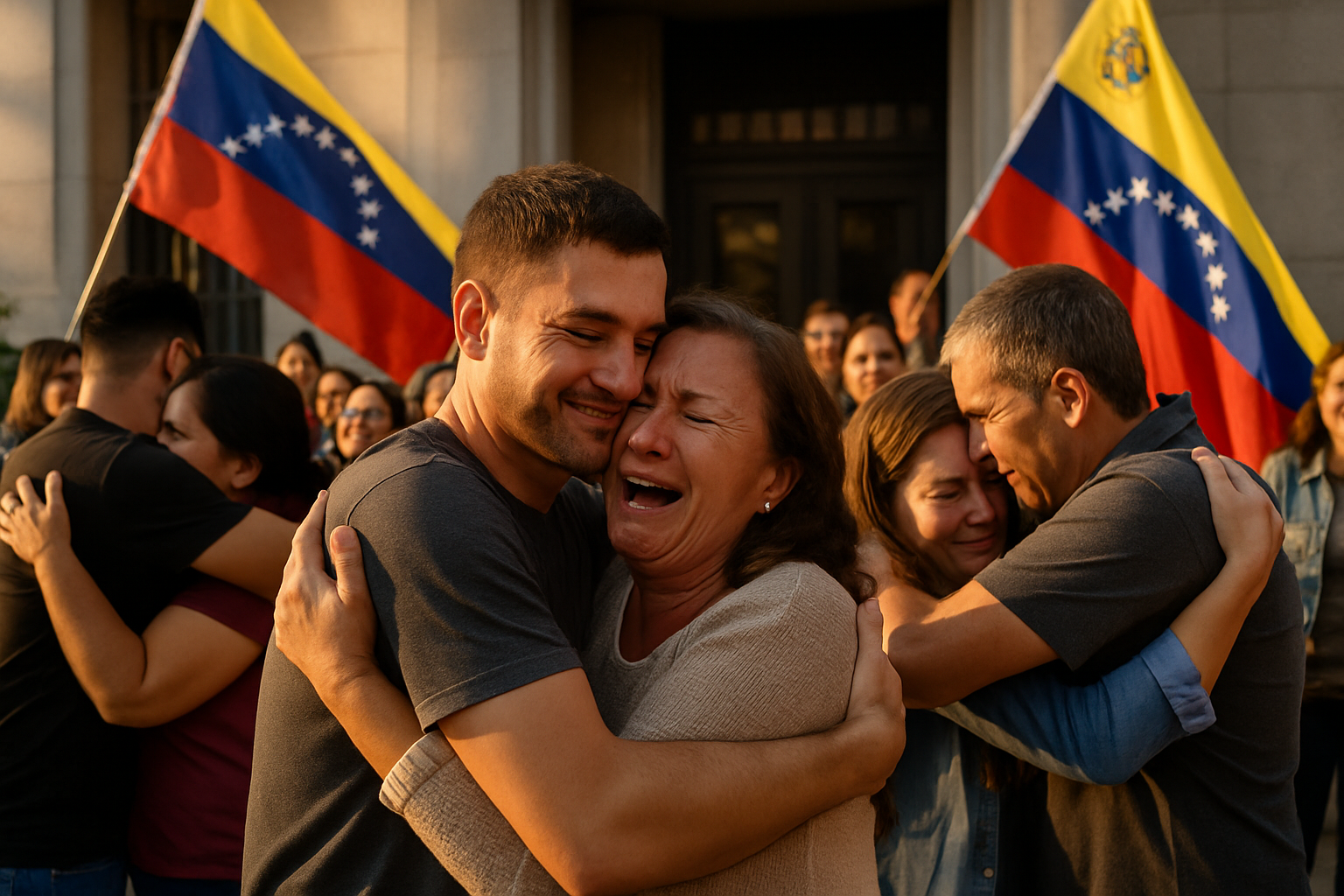
Venezuela released 379 political prisoners following the immediate implementation of a historic amnesty law signed by Acting President Delcy Rodríguez on Friday, marking the most comprehensive political reconciliation effort in recent Latin American history.
The 13-article amnesty law, which covers political offenses committed between 1999 and 2026, received unanimous approval from the National Assembly without a single dissenting vote. The legislation spans nearly three decades of political conflict throughout the entire Chávez-Maduro era and represents a dramatic shift toward reconciliation under Venezuela's interim government.
Immediate Implementation and Scope
According to Al Jazeera reporting, the releases occurred within hours of Rodríguez signing the legislation, with Venezuelan courts moving swiftly to process cases. The measure establishes that the period covered by the amnesty encompasses the years 1999 until 2026, though it delimits specific political circumstances and excludes certain categories of crimes.
The law provides hope to numerous others imprisoned over alleged plots to oust the government, though opposition groups have criticized its limitations. The total number of political prisoner releases under Rodríguez's administration since January 2026 now exceeds 750, representing the largest political prisoner release program in Venezuelan history.
Opposition Criticism and Excluded Cases
Despite the widespread releases, opposition groups and civil society organizations have raised concerns about the law's restrictive nature. The Citizens' Alliance for the Freedom of Venezuela, which includes organizations such as the Movement Against Intolerance (MCI) and Ayuda Venezuela, issued a statement demanding "the immediate and unconditional release of all political prisoners and prisoners of conscience currently detained in Venezuela."
A particularly controversial aspect of the amnesty involves specific exclusions that have left some prominent cases unresolved. Venezuelan sources report that John Hader Betancourt, who has been imprisoned for almost 7 years at the Sebin headquarters located at El Helicoide, remains excluded from the amnesty law. Betancourt was sentenced to 30 years in prison for photographing himself with opposition leader Leopoldo López, highlighting concerns about the selective nature of the releases.
"The amnesty law does not leave all prisoners free"
— Opposition Alliance in Spain
Historical Context and Democratic Transition
The amnesty law represents a cornerstone of Venezuela's democratic transition following the removal of Nicolás Maduro in January 2026. Under Rodríguez's interim government, the country has pursued an ambitious reconciliation agenda while simultaneously engaging in unprecedented diplomatic cooperation with the United States and other international partners.
The legislation builds upon previous release programs that had already freed over 400 political prisoners since the beginning of 2026. Notable early releases included journalist Rory Branker, who was detained for nearly a year, and Javier Tarazona, director of the NGO Fundaredes, who was freed on February 1 after more than four years in detention.
International Mediation and Support
The amnesty process has benefited from significant international mediation efforts. Former Spanish Prime Minister José Luis Rodríguez Zapatero has been actively mediating in Caracas since February, while Cardinal Baltazar Porras has organized nationwide prayer vigils to support the reconciliation process. This international involvement has lent credibility to the democratic transition and provided moral authority to the prisoner release program.
The unanimous passage of the amnesty law is particularly remarkable given Venezuela's historically polarized political landscape. The broad consensus reflects a genuine desire across the political spectrum to move beyond decades of political persecution and toward national reconciliation.
Implementation Challenges and Concerns
Despite the law's passage, significant implementation challenges remain. Article 9 of the legislation excludes those who "promoted attacks on national territory by foreign states or corporations," a provision that has drawn criticism from human rights organizations for its potentially broad interpretation.
The case of Juan Pablo Guanipa, a close ally of opposition leader María Corina Machado, illustrates the complexity of the transition. While Guanipa was released as part of the amnesty program, he was subsequently placed under house arrest with electronic monitoring, raising questions about the sustainability of the releases and the genuine nature of the reconciliation process.
Civil society organizations have maintained a cautious stance toward the developments. Cofavic, a prominent human rights organization, has emphasized that the releases represent "rights restitution, not State favor," while opposition leader Andrés Velásquez has questioned the necessity of an amnesty law, arguing that the political prisoners "are innocent."
Broader Economic and Diplomatic Context
The amnesty law implementation occurs against the backdrop of Venezuela's broader economic and diplomatic transformation. Oil exports have surged 60% to 800,000 barrels daily, with the United States displacing China as Venezuela's top customer. This economic recovery, combined with the restoration of diplomatic relations with several countries including the Dominican Republic, provides a favorable context for the reconciliation process.
Energy Secretary Chris Wright's historic February visit to Caracas resulted in comprehensive cooperation agreements, formally ending the Trump administration's 2019 oil embargo on Venezuela. This diplomatic breakthrough has created momentum for democratic reforms and provided international legitimacy to the interim government's efforts.
Regional and International Implications
The Venezuelan amnesty law serves as a potential template for political reconciliation in Latin America and beyond. As the most comprehensive political prisoner amnesty in recent regional history, its success or failure could influence similar reconciliation efforts in other post-authoritarian contexts throughout the hemisphere.
International observers are closely monitoring the implementation to determine whether the changes represent genuine democratic reform or merely cosmetic adjustments. The European Union, Brazil, and other regional powers have expressed cautious support for the transition while emphasizing the need for sustained commitment to democratic principles and human rights.
Ongoing Challenges and Future Prospects
While the amnesty law represents a significant milestone, substantial challenges remain. According to Foro Penal, over 600 political prisoners still remain detained despite the recent releases, indicating that the reconciliation process is far from complete. The need for reintegration guarantees, monitoring mechanisms, and safeguards against future persecution continues to be a primary concern for human rights advocates.
The success of Venezuela's democratic transition will ultimately depend on the ability to establish sustainable institutions that protect opposition rights and prevent the return of political persecution. The amnesty law, while historic in scope, is just one component of the broader institutional reforms needed to consolidate democratic governance.
As Venezuela continues its transition away from authoritarianism, the international community remains watchful of whether this legislative achievement will translate into meaningful, lasting change for the hundreds of families who have waited years for their loved ones' freedom. The coming months will be decisive in determining whether Venezuela's amnesty law becomes a model for regional reconciliation or another unfulfilled promise in the country's long struggle for democracy.