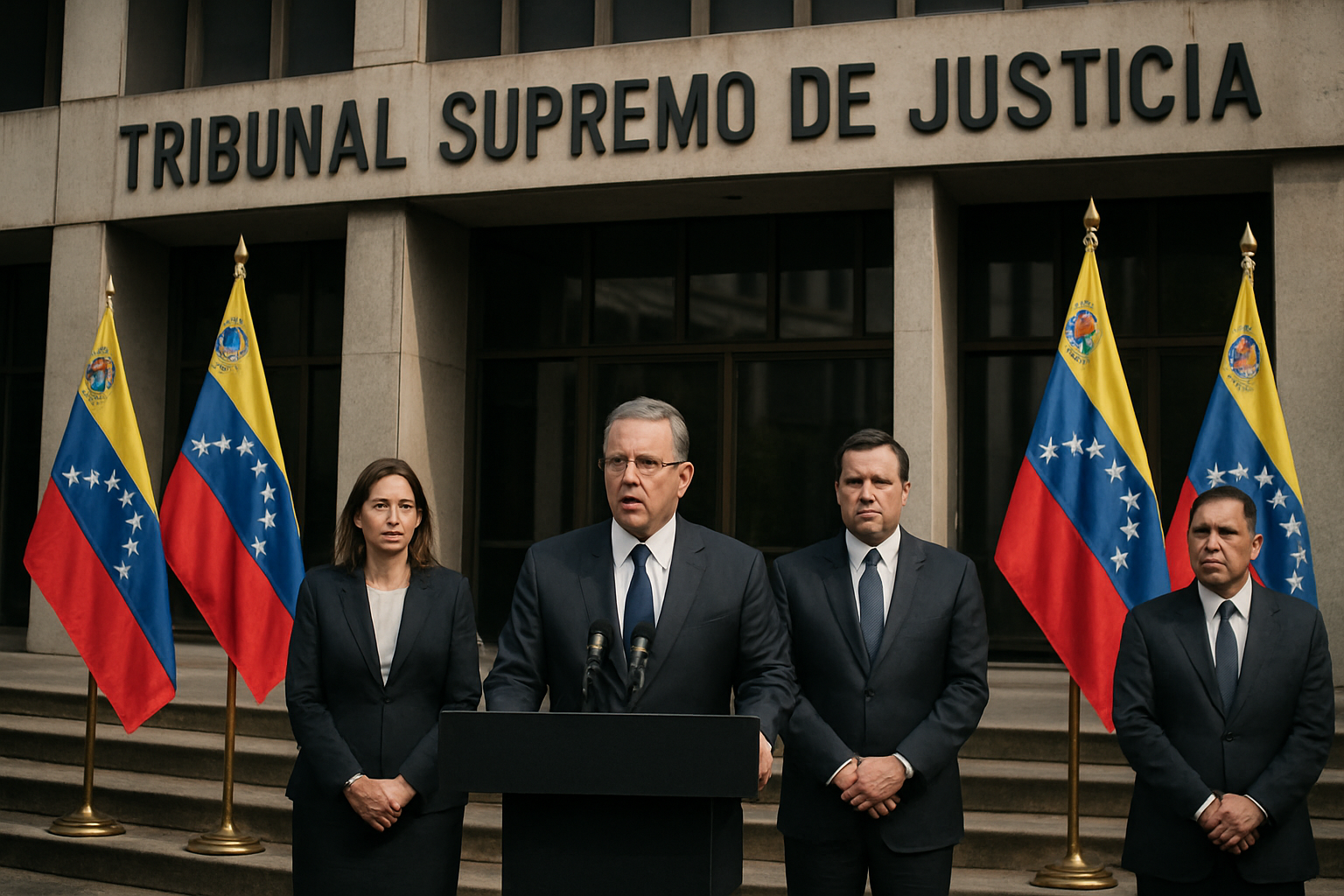
Venezuela's interim President Delcy Rodríguez announced Friday a proposed general amnesty law covering political prisoners, marking a potential turning point in the South American nation's human rights crisis following weeks of incremental prisoner releases.
Speaking at an event held at Venezuela's Supreme Court of Justice (Tribunal Supremo de Justicia), Rodríguez instructed that the draft legislation be sent to the National Assembly, where it is expected to be debated and approved next week, according to reports from Spanish daily El País.
The announcement comes as the first concrete policy initiative from Rodríguez, who assumed interim leadership after the dramatic removal of Nicolás Maduro from power earlier this month following U.S. military intervention that included the bombing of Caracas on January 3.
First Releases Already Underway
The amnesty announcement coincided with the high-profile release of prominent human rights activist Javier Tarazona, who was freed Sunday after spending more than four years in detention. Tarazona, director of the NGO Fundaredes, had been held on charges of "treason, terrorism, and incitement to hatred."
"After 1675 days, 4 years and 7 months, this long-awaited day has arrived. My brother Javier Tarazona is free. One person's freedom is everyone's hope."
— José Rafael Tarazona, brother of the released activist
Opposition leader María Corina Machado celebrated Tarazona's release on social media, stating that "Venezuela admires and respects your courage." The activist's freedom represents one of the most significant prisoner releases in recent Venezuelan history.
Scope and Implications of the Amnesty
While specific details of the proposed amnesty law remain limited, the legislation is expected to cover hundreds of political prisoners currently detained in Venezuelan facilities. The measure represents a dramatic departure from the policies of the Maduro administration, which had maintained harsh crackdowns on political opposition and civil society organizations.
The timing of the announcement appears strategically significant, coming as Rodríguez seeks to consolidate legitimacy following the unprecedented circumstances of her rise to power. The interim leader has been working to gain support from both domestic opposition groups and international partners, particularly the United States, which backed the military intervention that removed Maduro.
International Context and Support
The proposed amnesty has drawn immediate attention from international human rights organizations and foreign governments that have long criticized Venezuela's treatment of political dissidents. For years, groups including Human Rights Watch and Amnesty International have documented systematic persecution of opposition figures, journalists, and civil society leaders under the Maduro regime.
Venezuela's military and police forces have already pledged loyalty to Rodríguez's interim government, providing a foundation for implementing such sweeping policy changes. The support from security forces was considered crucial for any meaningful prisoner release program, given their previous role in maintaining the repressive apparatus.
Challenges Ahead
Despite the promising announcement, significant challenges remain in implementing a comprehensive amnesty program. Venezuela's judicial system, which operated under heavy political influence during the Maduro era, will need substantial reforms to ensure fair and transparent processes.
The definition of "political prisoner" itself may prove contentious, as the previous government often charged dissidents with common crimes such as terrorism or conspiracy rather than explicitly political offenses. Legal experts suggest that determining eligibility for amnesty could require case-by-case reviews of hundreds of detentions.
Additionally, the interim government must navigate complex relationships with various opposition factions, some of which have called for broader accountability measures beyond simple prisoner releases. Balancing demands for justice with the practical needs of national reconciliation represents a delicate political challenge.
Looking Forward
The proposed amnesty law represents the most significant human rights development in Venezuela in years, potentially affecting hundreds of families who have endured years of separation and uncertainty. If successfully implemented, it could mark the beginning of a broader process of democratic restoration in the oil-rich nation.
As the National Assembly prepares to debate the legislation next week, international observers will be watching closely to see whether this initiative represents genuine reform or merely symbolic gestures. For the families of political prisoners like the Tarazonas, however, each individual release brings concrete hope for reunion and justice.
The success of this amnesty program may well determine the trajectory of Venezuela's political future and Rodríguez's ability to lead the country toward stability after years of authoritarian rule and international isolation.