One month after the unprecedented U.S. military operation that captured President Nicolás Maduro, Venezuela is experiencing its most significant political and economic transformation in decades, with oil exports surging 60% and diplomatic relations with Washington rapidly normalizing under interim President Delcy Rodríguez.
February 3, 2026, marks exactly one month since U.S. forces bombarded Caracas and surrounding areas, capturing Maduro and his wife Cilia Flores and transporting them to New York to face federal charges. The operation, ordered by President Donald Trump, has fundamentally altered Venezuela's trajectory and regional dynamics.
Oil Industry Renaissance Under U.S. Oversight
Venezuela's oil exports have jumped dramatically from 498,000 to 800,000 barrels per day in January, following the lifting of a blockade that had trapped 40 million barrels in storage. The United States has displaced China as Venezuela's top oil customer, with Chevron more than doubling its shipments from the South American nation.
The interim government swiftly approved comprehensive reforms to the oil industry, described by analysts as legislation heavily influenced by Washington's strategic interests. These changes represent a complete reversal from Maduro's anti-American energy policies and mark the beginning of what experts call a new chapter in Venezuelan-U.S. energy cooperation.
"We are witnessing the most rapid and profound changes in Venezuelan politics and economics in over two decades. The oil sector transformation alone represents a geopolitical earthquake in the region."
— Benigno Alarcón, Venezuelan Political Analyst
Diplomatic Breakthrough with Washington
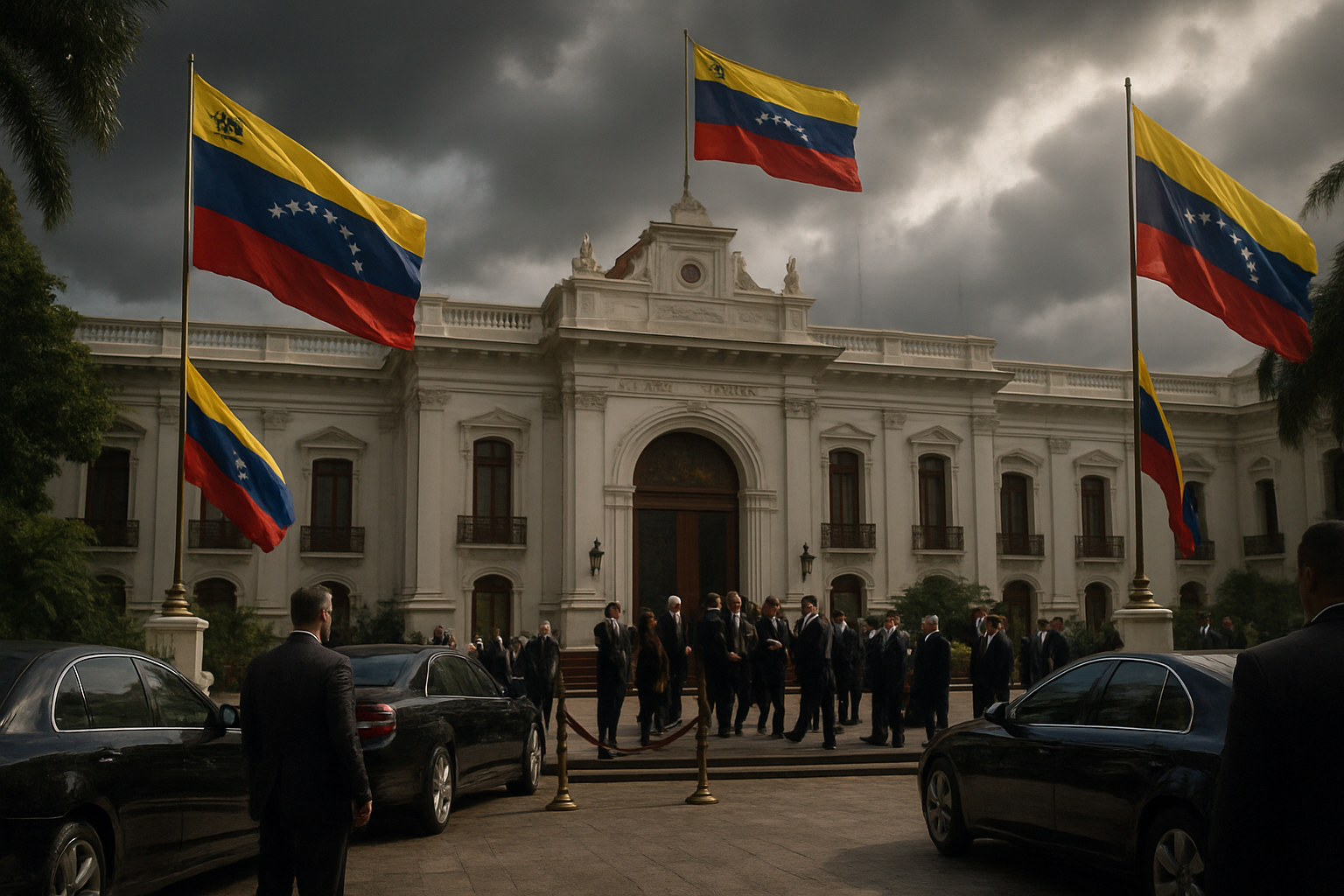
Interim President Delcy Rodríguez met with U.S. envoy Laura Dogu at the Miraflores Presidential Palace on Monday, marking the highest-level diplomatic contact between the two nations since relations were severed in 2019. The meeting focused on implementing Secretary of State Marco Rubio's three-phase reconstruction plan: stabilization, economic recovery, and democratic transition.
During the talks, Venezuela announced the appointment of former foreign minister Felix Plasencia as the country's diplomatic representative in Washington, reciprocating the U.S. gesture of establishing direct diplomatic channels. Foreign Minister Yvan Gil emphasized that discussions covered energy cooperation, trade relationships, and political reconciliation.
"The governments of Venezuela and the United States have set out to advance on a roadmap to address matters of bilateral interest, through diplomatic dialogue and on the basis of mutual respect and international law," stated the Venezuelan government in an official communiqué.
Regional Implications and International Response
The dramatic shift in Venezuela's international alignment has sent shockwaves throughout Latin America. China, which had emerged as Venezuela's primary economic partner under Maduro, is now scrambling to protect its investments in the oil-rich nation. Venezuelan envoy to Beijing Remigio Ceballos has been working to reassure Chinese officials that existing energy and trade agreements will be honored.
"China and Venezuela are trusted partners who share mutual trust. Both nations are sovereign states, and their bilateral relationship will continue based on mutual respect," Ceballos stated, amid growing Beijing concerns about the unprecedented U.S. intervention's impact on Chinese interests in the region.
Political Prisoners Released Under Amnesty Program
One of the interim government's most significant early actions has been implementing a political amnesty program. Javier Tarazona, director of human rights NGO Fundaredes, was released on February 1 after more than four years in detention on terrorism and treason charges. His release represents the first in what is expected to be a broader amnesty affecting hundreds of political prisoners detained under the Maduro regime.
Opposition leader María Corina Machado celebrated the releases, calling them "a crucial step toward national reconciliation." The Supreme Court of Justice has received the amnesty draft legislation for review before National Assembly consideration, signaling the interim government's commitment to addressing human rights concerns that had drawn international condemnation.
Economic Challenges Remain Despite Oil Surge
While oil export increases provide immediate revenue, Venezuela continues facing massive economic challenges accumulated over years of mismanagement. The country still struggles with hyperinflation, infrastructure decay, and oil production that remains far below historical levels—currently at 700,000 barrels daily compared to 3 million barrels at its peak.
Power outages, fuel shortages, and food insecurity continue affecting millions of Venezuelans, requiring substantial international investment and technical assistance for meaningful recovery. Economic analysts emphasize that sustainable reconstruction will require not just sanctions relief but comprehensive institutional reforms and massive infrastructure investment.
International Support Growing
Regional powers including Brazil and European Union member states have expressed cautious support for Venezuela's democratic transition process. The Dominican Republic has announced the reopening of commercial relations, air traffic, and consular services with Venezuela, signaling growing international confidence in the interim government's legitimacy.
Maduro and Wife Face Federal Charges in New York
Meanwhile, Nicolás Maduro and Cilia Flores remain in federal custody in New York, confined to 2x3 meter cells with steel beds as they await trial on charges including drug trafficking and corruption. A newly unsealed indictment from the U.S. Justice Department alleges that Maduro led what prosecutors describe as a corrupt and illegitimate government supported by large-scale narcotics operations.
The detention conditions and legal proceedings have become a symbol of the dramatic reversal of fortune for the former Venezuelan leader, who just months ago appeared firmly entrenched in power despite years of international pressure and sanctions.
Future Challenges and Uncertainties
Political analyst Benigno Alarcón noted that Venezuela appears to be in "a preparatory phase of a transition," but emphasized that significant challenges remain ahead. The interim government must balance implementing U.S.-backed reforms while maintaining domestic legitimacy and addressing the immediate humanitarian needs of its population.
The success of this transition will ultimately depend on whether the interim administration can deliver tangible improvements in living conditions for ordinary Venezuelans while navigating complex international relationships and preparing for eventual democratic elections. The next few months will be crucial in determining whether Venezuela's post-Maduro transformation can achieve lasting stability and prosperity.
"This represents a historic opportunity for Venezuelan renewal, but the path forward remains fraught with political, economic, and social challenges that will require careful navigation and sustained international support."
— Dr. Laura Dogu, U.S. Envoy to Venezuela
As Venezuela enters its second month without Maduro, the nation stands at a critical crossroads between its troubled past and an uncertain but potentially promising future. The success of this transformation will have implications not just for Venezuela's 30 million citizens, but for regional stability and global energy markets for years to come.