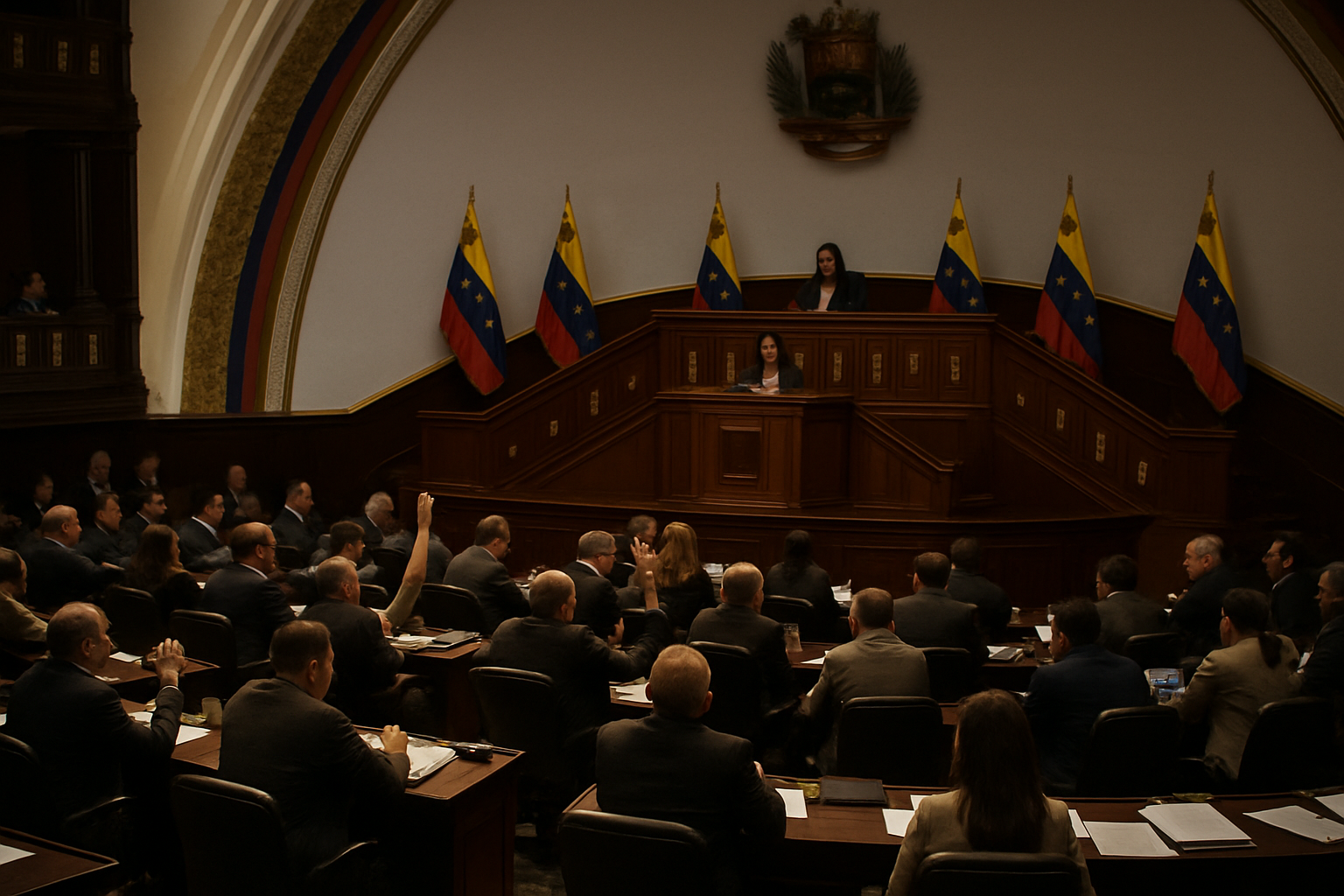
Venezuela's opposition unveiled a comprehensive transition roadmap to the international community as the historic amnesty law for political prisoners advances toward final approval, with National Assembly President Jorge Rodríguez promising all remaining detainees will be freed by February 14, 2026.
Opposition leader María Corina Machado presented the transition framework to international partners on February 7, emphasizing fundamental consensus areas including electoral system reconstruction, legal security guarantees, facilitating the return of exiles, and securing the liberation of political prisoners. The presentation comes as Venezuela's National Assembly prepares for the crucial second reading of the amnesty legislation on Tuesday, February 11.
Historic Amnesty Law Nears Final Approval
The 13-article amnesty law, which passed its first reading unanimously on February 5, covers political offenses committed between January 1, 1999, and the law's enactment. The legislation represents the most comprehensive political prisoner amnesty in recent Latin American history and could affect hundreds of opposition figures, journalists, and activists still detained.
Assembly President Jorge Rodríguez made an unprecedented promise to families at Boleíta police station that all political prisoners would be freed "between Tuesday and Friday at latest" following the second reading approval. The commitment represents the most specific timeline yet provided for complete political prisoner release under Acting President Delcy Rodríguez's interim government.
"The moment exactly when the releases will happen depends on the ratification of the new legal framework,"
— Jorge Rodríguez, National Assembly President
International Community Engagement
The transition efforts have gained significant international legitimacy with the arrival of former Spanish Prime Minister José Luis Rodríguez Zapatero in Caracas on February 6 to participate in Delcy Rodríguez's peace plan. Cardinal Baltazar Porras has organized nationwide "Saturday of prayers" with vigils outside prisons, adding moral authority to the reconciliation process.
Zapatero's involvement brings extensive democratic transition experience from his tenure as Spanish PM from 2004-2011, when he previously mediated Latin American political crises. His presence suggests growing diplomatic engagement with the interim government following Maduro's January 2026 removal.
Opposition's Transition Framework
Machado's roadmap emphasizes four fundamental pillars for Venezuela's democratic transition:
- Electoral System Reconstruction: Complete overhaul of voting mechanisms to ensure transparent, credible elections
- Legal Security Guarantees: Establishment of robust judicial protections for all political actors
- Exile Return Facilitation: Safe passage and reintegration programs for thousands of Venezuelans in political exile
- Political Prisoner Liberation: Immediate release and rehabilitation support for all detained opposition figures
Legal Experts Raise Scope Concerns
While supporting the amnesty's goals, legal expert Joel García has questioned the draft legislation's temporal limitations. García argues the law's restriction to specific dates "excludes the entire history of persecution" and represents a selective measure that ignores the full scope of political criminalization over recent decades.
The amnesty covers peaceful political activities and includes provisions for those with health concerns, but excludes constitutionally forbidden crimes including hate crimes. Critics worry about the undefined scope of these exclusions and their potential for restrictive interpretation.
"This is a selective measure that ignores the real scope of the criminalization of dissent in recent decades."
— Joel García, Legal Expert
Current Release Progress
The amnesty program has already freed 367 political prisoners since January 2026, representing a dramatic reversal from systematic detention policies under the previous regime. Recent releases include journalist Rory Branker, who was detained for nearly a year, and Fundaredes director Javier Tarazona, freed on February 1 after more than four years in custody.
These releases have occurred at multiple facilities including El Rodeo penitentiary in Miranda state, with human rights organization Foro Penal confirming the progressive implementation of the broader amnesty framework even before final legislative approval.
International Diplomatic Context
The transition efforts occur alongside unprecedented US-Venezuela diplomatic engagement, with Acting President Delcy Rodríguez meeting US Chargé d'Affaires Laura Dogu at Miraflores Palace. Secretary of State Marco Rubio has outlined a three-phase reconstruction plan encompassing stabilization, economic recovery, and democratic transition.
Venezuela's oil exports have surged 60% to 800,000 barrels daily since the transition began, with the United States displacing China as the top customer. The Dominican Republic has reopened commercial relations, while Brazil and the European Union have expressed cautious support for the democratic transition process.
Civil Society Perspectives
Human rights organizations have presented mixed responses to the amnesty process. Cofavic emphasized that releases represent "restitution of rights, not State favor," while some opposition figures like Andrés Velásquez have questioned the amnesty's necessity, arguing that political prisoners "are innocent" and should not require pardoning.
The Committee of Mothers for Truth has demanded family participation in implementation and verification processes, reflecting broader calls for transparent oversight of the amnesty's execution and effectiveness.
Implementation Challenges Ahead
The success of Venezuela's transition will depend on several critical factors beyond legislative approval of the amnesty law. These include establishing reintegration guarantees for released prisoners, creating monitoring mechanisms to prevent future persecution, and ensuring safe return provisions for political exiles abroad.
International observers view the process as a crucial test of genuine democratic commitment versus cosmetic reform. The comprehensive nature of the proposed transition, spanning judicial, electoral, and social reconciliation elements, represents unprecedented complexity in regional democratic transitions.
Regional Significance
Venezuela's transition process, if successful, could serve as a model for democratic restoration and political reconciliation throughout Latin America. The 27-year coverage period of the amnesty law reflects the extended nature of political conflict spanning the Chávez-Maduro era.
The integration of international mediation, civil society participation, and structured prisoner releases provides a comprehensive framework that could influence future democratic consolidation efforts across the region and serve as a template for peaceful political transitions.
As the National Assembly prepares for the decisive second reading vote on Tuesday, the convergence of opposition transition planning, international diplomatic support, and ongoing prisoner releases creates the most comprehensive opportunity for Venezuelan democratic restoration in over two decades. The coming days will determine whether this ambitious framework can translate into lasting democratic transformation.