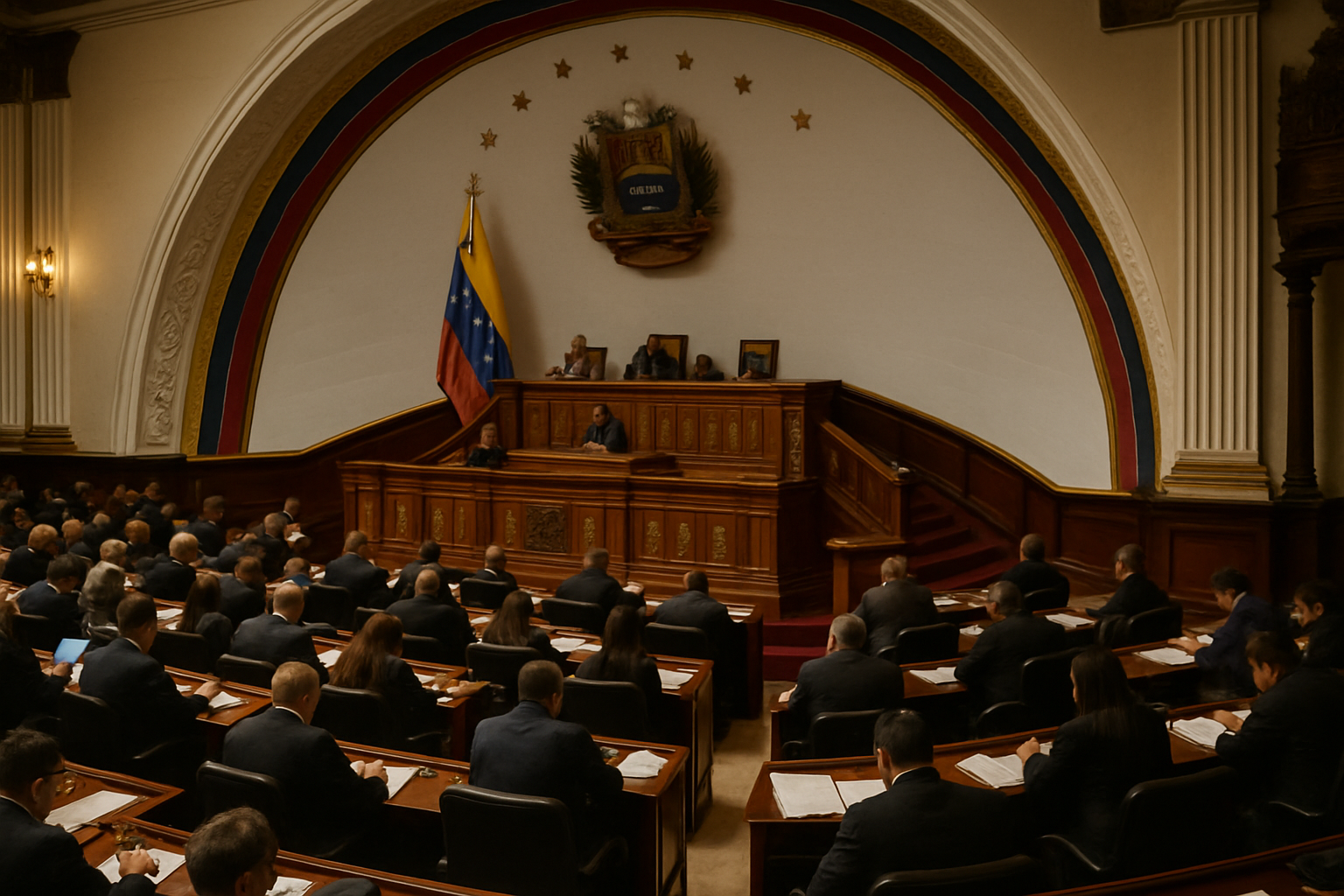
Venezuela's National Assembly announced an extension of the nomination deadline for key judicial positions while former parliamentarian Américo De Grazia received full amnesty under the country's comprehensive reconciliation program, highlighting ongoing institutional transitions under Acting President Delcy Rodríguez.
Deputy Giuseppe Alessandrello confirmed Tuesday that nominations for prosecutor general and public defender positions will remain open until Friday, March 13, following numerous requests for additional time to complete application requirements. The announcement comes as Venezuela continues implementing sweeping political reforms two months after Nicolás Maduro's removal from power.
Amnesty Program Reaches Opposition Figure
In a parallel development, Américo De Grazia, a former opposition parliamentarian, received full amnesty as part of the government's comprehensive 1999-2026 reconciliation program. De Grazia, who has been granted amnesty three times across different administrations, offered a pointed critique of the process.
"I have been amnestied by Chávez, by Maduro and now by Delcy Rodríguez. This does not make me proud; on the contrary, what this demonstrates is that amnesty laws are instruments at the service of the discretionary power of government."
— Américo De Grazia, Former Parliamentarian
De Grazia's comments reflect broader tensions within Venezuela's opposition regarding the nature and scope of the current amnesty process, which has already resulted in over 750 political prisoner releases since January 2026.
Legislative Activity and Institutional Reforms
The National Assembly also approved in first reading a new Mining Law, though the Libertad parliamentary group cast a dissenting vote. The legislation represents part of broader economic reforms undertaken by the interim government to attract international investment, particularly from American companies following the restoration of US-Venezuela diplomatic relations.
The extension of judicial nominations reflects what Deputy Alessandrello described as overwhelming interest in the positions, with candidates seeking additional time to prepare comprehensive applications. This judicial transition follows the February resignation of Attorney General Tarek William Saab and Public Defender Alfredo Ruiz Angulo, who switched roles within the justice system during the broader governmental reorganization.
Broader Context of Political Transformation
These developments occur within Venezuela's most significant political transformation in over two decades. The interim government has achieved unprecedented diplomatic breakthroughs, including the restoration of relations with the United States after a seven-year break, leading to a 60% surge in oil exports to 800,000 barrels daily.
The comprehensive amnesty program covering political offenses from 1999-2026 represents the most ambitious reconciliation effort in recent Latin American history. However, implementation challenges persist, with human rights organizations reporting that approximately 600 political prisoners remain detained despite the historic releases.
International Mediation and Support
Former Spanish Prime Minister José Luis Rodríguez Zapatero continues his mediation efforts in Caracas, while Cardinal Baltazar Porras has organized nationwide prayer vigils supporting the reconciliation process. The Dominican Republic has reopened full diplomatic and commercial relations, while Brazil and the European Union maintain cautious but supportive positions toward the transition.
The international community views Venezuela's transition as a potential template for peaceful democratic change in Latin America. However, observers emphasize that sustained progress requires genuine institutional reforms beyond prisoner releases and symbolic gestures.
Challenges and Criticisms
Despite significant progress, the transition faces ongoing challenges. Many prisoner releases have involved restrictive conditions rather than complete freedom, with some opposition figures placed under house arrest with electronic monitoring. Civil society organizations continue to emphasize that prisoner releases represent "rights restitution, not state favor."
The deadline extension for judicial nominations, while procedurally routine, reflects the complexity of rebuilding institutions following decades of authoritarian rule. The quality and independence of eventual appointees will serve as crucial indicators of the interim government's commitment to genuine democratic reform versus cosmetic changes.
Looking Forward
As Venezuela approaches the March 13 deadline for judicial nominations, the country continues navigating its most promising democratic opening in over two decades. The success of these institutional transitions will significantly influence both Venezuela's democratic future and serve as a model for similar transitions throughout Latin America.
The extension of the nominations deadline demonstrates the interim government's commitment to thorough vetting processes for critical judicial positions. However, the ultimate test will be whether these appointments enhance judicial independence and democratic governance or merely replace one form of institutional control with another.