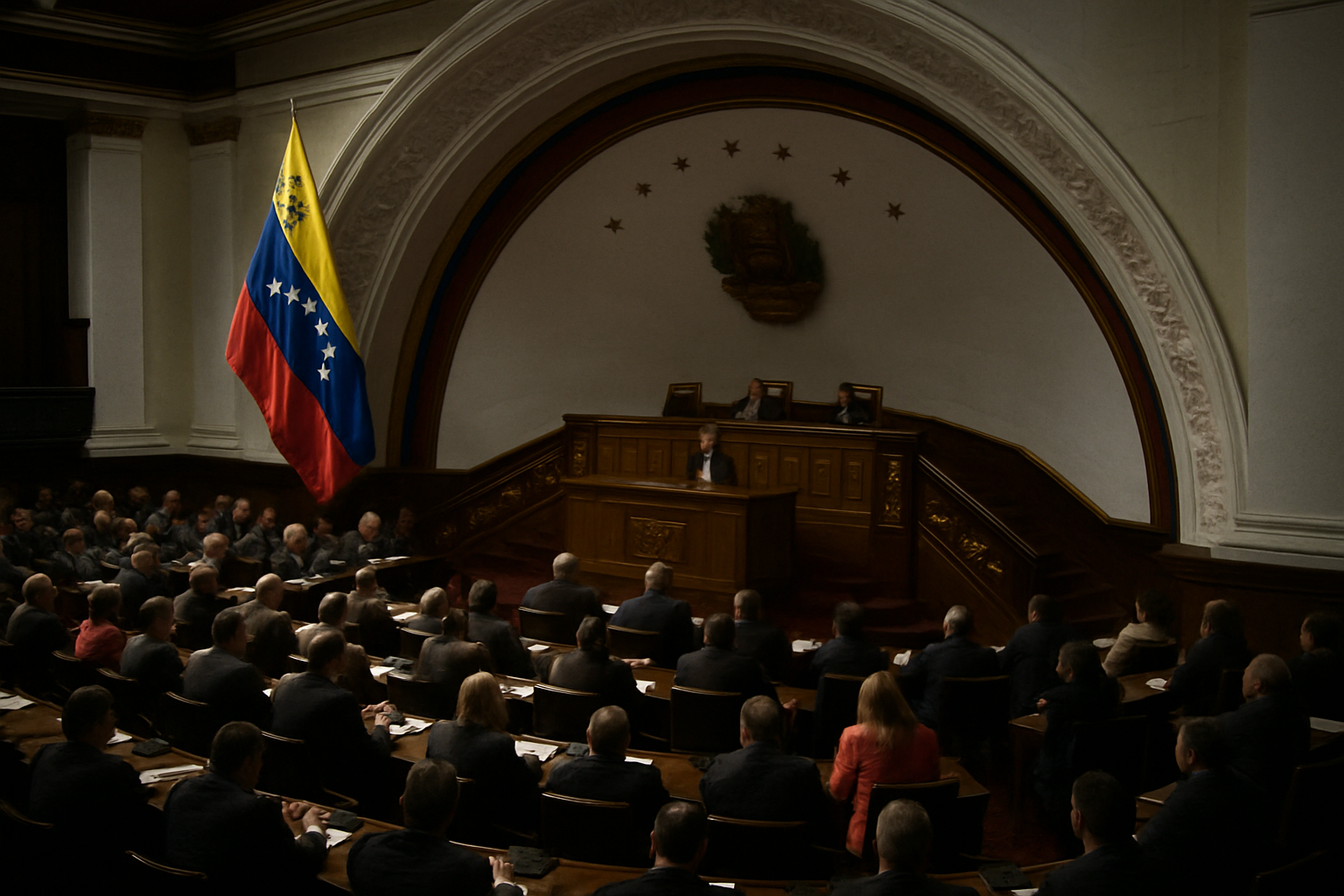
Venezuela's National Assembly has unanimously passed a historic amnesty law that could release hundreds of political prisoners, marking the most comprehensive political reconciliation effort in recent Latin American history and a critical test of the country's democratic transition under Acting President Delcy Rodríguez.
The groundbreaking legislation, covering political offenses from 1999 to 2026, represents an unprecedented 27-year scope spanning the entire Chávez-Maduro era. The unanimous vote in parliament demonstrates remarkable cross-party consensus in Venezuela's traditionally polarized political landscape.
Breakthrough in Democratic Transition
Acting President Delcy Rodríguez has called for "maximum speed" implementation of the law, acknowledging the national healing process ahead. "One must know how to ask for forgiveness and one must also know how to receive forgiveness, and this is the process that opens with this amnesty," Rodríguez stated following the vote.
The comprehensive 13-article legislation passed its final reading without a single dissenting vote, building on months of preparation and international mediation. Former Spanish Prime Minister José Luis Rodríguez Zapatero has been mediating in Caracas since February, while Cardinal Baltazar Porras has organized nationwide prayer vigils supporting the reconciliation process.
Over 400 political prisoners have already been released since January 2026 under the interim government's amnesty program, including prominent opposition figures like Juan Pablo Guanipa, a close ally of Nobel Peace Prize laureate María Corina Machado.
International Support and Scrutiny
The amnesty process has received unprecedented international engagement, with high-level U.S.-Venezuela diplomatic contact through meetings between Rodríguez and U.S. Chargé d'Affaires Laura Dogu at the Miraflores Palace. This represents the highest-level diplomatic contact between the two countries since 2019.
The broader context includes a dramatic transformation in Venezuela's international relations. Oil exports have surged 60% to 800,000 barrels daily since January, with the United States displacing China as Venezuela's top customer under new energy cooperation frameworks.
However, human rights organizations maintain cautious optimism. According to Foro Penal, over 600 political prisoners remain detained despite the recent releases, highlighting the scale of the challenge ahead.
Implementation Challenges
The law's implementation has faced significant hurdles, particularly around Article 7, which initially required political prisoners to "present themselves to justice." Opposition groups rejected this provision, arguing it criminalized persecution victims rather than acknowledging their innocence.
Families of political prisoners have maintained weeks-long vigils outside detention facilities, with some conducting hunger strikes to pressure for complete releases. The Committee for Liberation of Political Prisoners (CLIPP) has demanded an "inclusive rather than selective" amnesty covering all detainees without arbitrary exclusions.
Civil society organizations have expressed mixed reactions to the process. Cofavic, a prominent human rights organization, emphasizes that releases represent "restitution of rights, not State favor." Meanwhile, opposition leader Andrés Velásquez has questioned the necessity of an amnesty law, arguing that political prisoners "are innocent" of any crimes.
Scope and Exclusions
The amnesty law covers peaceful political activities and includes provisions for those detained on terrorism and treason charges during the previous regime. However, it excludes constitutionally forbidden crimes, including hate crimes, though the scope of these exclusions has raised concerns among rights groups about potential arbitrary application.
Article 9 specifically excludes those who "promoted attacks on national territory by foreign states or corporations," maintaining certain limits on the amnesty's reach while allowing for the vast majority of political prisoners to be covered.
Recent releases under the program have included journalists like Rory Branker, who was detained for nearly a year, and Fundaredes director Javier Tarazona, who was freed after more than four years in detention.
Regional and Historical Significance
The Venezuelan amnesty represents the most ambitious political prisoner release in recent Latin American history. The 27-year coverage period is unprecedented in regional reconciliation efforts, potentially serving as a template for other countries facing similar transitions from authoritarian rule.
The Dominican Republic has reopened relations with Venezuela, while Brazil and the European Union have expressed cautious support for the democratic transition. This regional diplomatic engagement reflects growing confidence in Venezuela's commitment to meaningful political change.
International observers view the amnesty's success as critical for determining whether Venezuela's transformation represents genuine democratic reform or merely cosmetic changes. The process has been characterized as one of the most significant tests of political reconciliation in contemporary Latin America.
Looking Forward
The success of Venezuela's amnesty law will depend on several critical factors: complete implementation without discrimination, robust reintegration guarantees for released prisoners, monitoring mechanisms to prevent future persecution, and safe return conditions for political exiles abroad.
As Venezuela continues its post-Maduro transition, the amnesty law represents both an opportunity for national healing and a test of the interim government's commitment to democratic principles. The international community continues to monitor developments closely as Venezuela seeks to rebuild its democratic institutions and restore its place in the regional and global community.
The coming weeks will be decisive in determining whether this historic legislation translates into meaningful reconciliation or faces the implementation challenges that have plagued similar efforts elsewhere in Latin America. For hundreds of families awaiting the return of their loved ones, the stakes could not be higher.