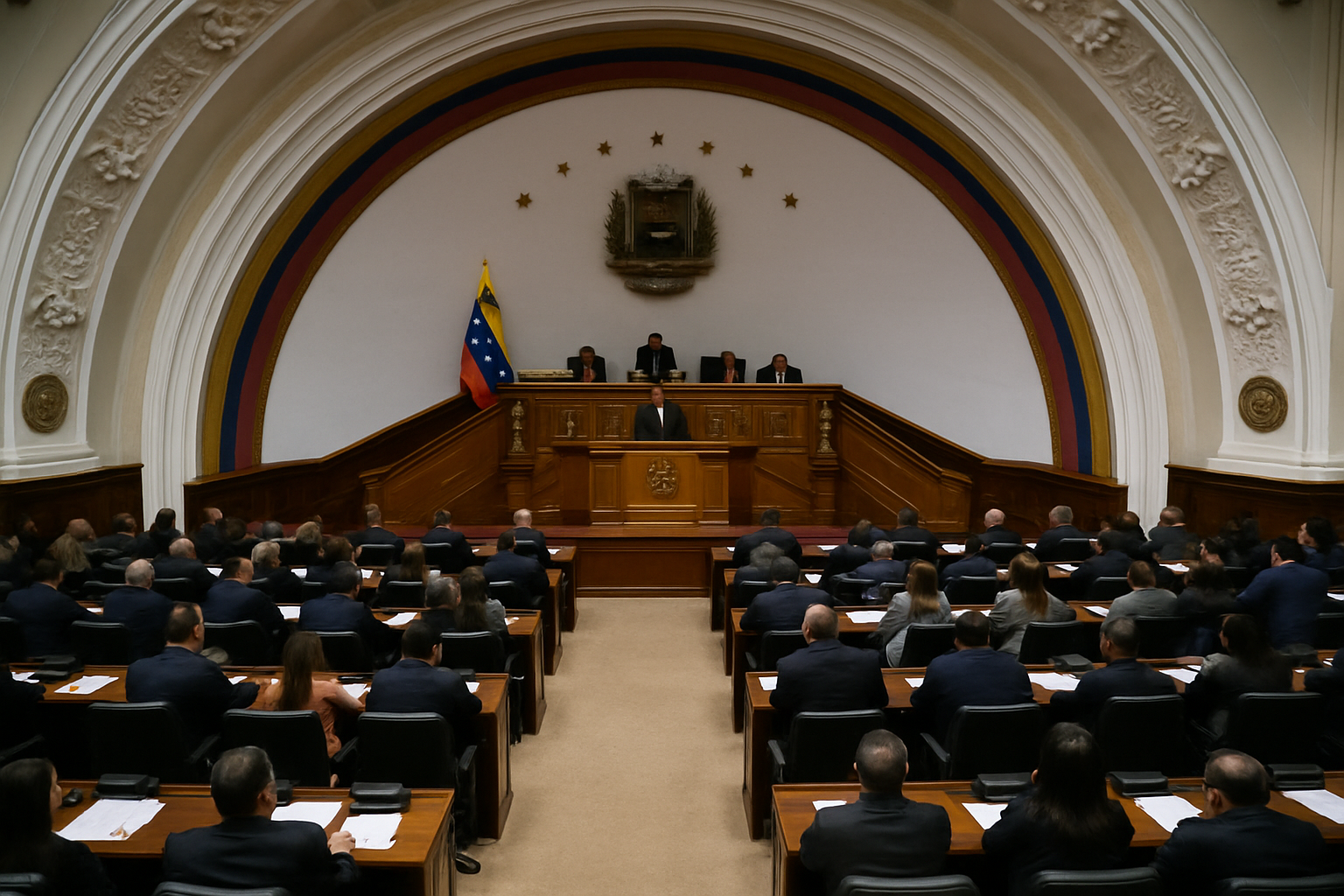
Venezuela continues its complex democratic transition as the National Assembly reports processing over 12,000 amnesty applications while opposition leader Manuel Rosales intensifies calls for electoral reforms and international humanitarian funding falls dramatically short.
The latest developments in Venezuela's political landscape reveal both progress and persistent challenges as the country navigates its post-Maduro transition under Acting President Delcy Rodríguez. On March 6, the National Assembly's amnesty commission announced that 7,654 individuals have now benefited from the comprehensive political reconciliation process, with 289 additional "full freedoms" granted in recent days.
Amnesty Program Expansion
Deputy Jorge Arreaza, who chairs the parliamentary commission overseeing the historic 1999-2026 amnesty law implementation, confirmed the significant scope of the reconciliation effort. The commission has processed 12,233 applications since the program's inception, representing one of the most comprehensive political prisoner amnesties in recent Latin American history.
This landmark legislation, unanimously passed by Venezuela's National Assembly in February 2026, covers political offenses spanning the entire 27-year Chávez-Maduro era. The program has already released over 750 political prisoners since January 2026, though human rights organizations estimate that approximately 600 individuals remain in detention.
"The amnesty process represents rights restitution, not State favor," emphasized Cofavic, a leading Venezuelan human rights organization, reflecting the complex dynamics surrounding the reconciliation efforts.
— Cofavic Human Rights Organization
Electoral Reform Demands Intensify
Former Zulia Governor Manuel Rosales has emerged as a prominent voice calling for fundamental changes to Venezuela's electoral system. Speaking publicly on March 6, Rosales argued that achieving "clean and transparent elections" requires replacing the current National Electoral Council (CNE) leadership.
"We need to change the CNE so that elections are clean and transparent," Rosales declared, outlining his vision for Venezuela's democratic stabilization. His proposal extends beyond electoral reforms to include salary and pension increases, improvements to the electrical system, and the repeal of controversial laws including the hate crimes legislation and the Simón Bolívar Law.
Rosales emphasized that political and economic stabilization must occur simultaneously, reflecting broader concerns about the sustainability of democratic reforms amid ongoing economic hardships.
International Relations and Humanitarian Crisis
Venezuela's international standing continues to evolve as diplomatic relations with the United States have been formally restored after a seven-year break. This diplomatic breakthrough has coincided with significant economic changes, including a 60% surge in oil exports to 800,000 barrels daily, with the U.S. displacing China as Venezuela's top customer.
However, international humanitarian support remains critically underfunded. According to UN reporting, humanitarian aid programs for Venezuela received only 133 million dollars of the requested 606 million in 2025, covering merely 19% of identified needs despite assisting over two million people.
Economic Challenges Persist
Despite political progress, Venezuela continues to grapple with severe economic instability. After more than a year without releasing official data, the Central Bank announced that inflation reached a staggering 475% in 2025, marking the highest inflation rate globally.
This economic crisis has been exacerbated by currency devaluation triggered by the intensification of U.S. sanctions against the former Maduro administration. The dramatic price increases have compounded existing challenges including infrastructure decay, power outages, and fuel shortages that continue to affect daily life for millions of Venezuelans.
Regional and International Context
Venezuela's transition is being closely monitored as a potential template for democratic reconciliation in Latin America. Former Spanish Prime Minister José Luis Rodríguez Zapatero continues to mediate the peace process, while Cardinal Baltazar Porras organizes prayer vigils supporting national reconciliation.
The Dominican Republic has reopened commercial relations with Venezuela, and Brazil and the European Union maintain cautious but supportive engagement with the interim government. This diplomatic support reflects international recognition of the progress made while acknowledging the substantial challenges that remain.
The amnesty process, while significant, faces implementation challenges. Article 7 of the legislation, which requires political prisoners to "present themselves to justice," continues to generate controversy. Opposition groups argue this criminalizes persecution victims, while government supporters maintain it provides necessary legal framework for reconciliation.
Looking Forward
As Venezuela approaches its third month under interim leadership, the coming weeks will be crucial for determining whether current reforms represent genuine democratic transformation or tactical adjustments. The success of the amnesty program, combined with meaningful electoral reforms and economic stabilization, will ultimately determine the sustainability of Venezuela's democratic transition.
María Corina Machado, the Nobel Peace Prize laureate and opposition leader, has announced her intention to return to Venezuela "in a few weeks" to help guarantee the democratic transition. Her return would mark a significant test of the government's commitment to political pluralism and could provide additional momentum for comprehensive democratic reforms.
The international community continues to monitor Venezuela's progress as an indicator of whether economic incentives, diplomatic engagement, and targeted sanctions can successfully promote democratic change in authoritarian contexts. The outcome will likely influence similar approaches throughout Latin America and beyond.