Venezuela finds itself at a pivotal moment as former President Nicolás Maduro confronts serious legal challenges in New York federal court, while his homeland experiences both promising democratic reforms and persistent economic hardships under Acting President Delcy Rodríguez's interim government.
Maduro's Legal Defense Crumbles
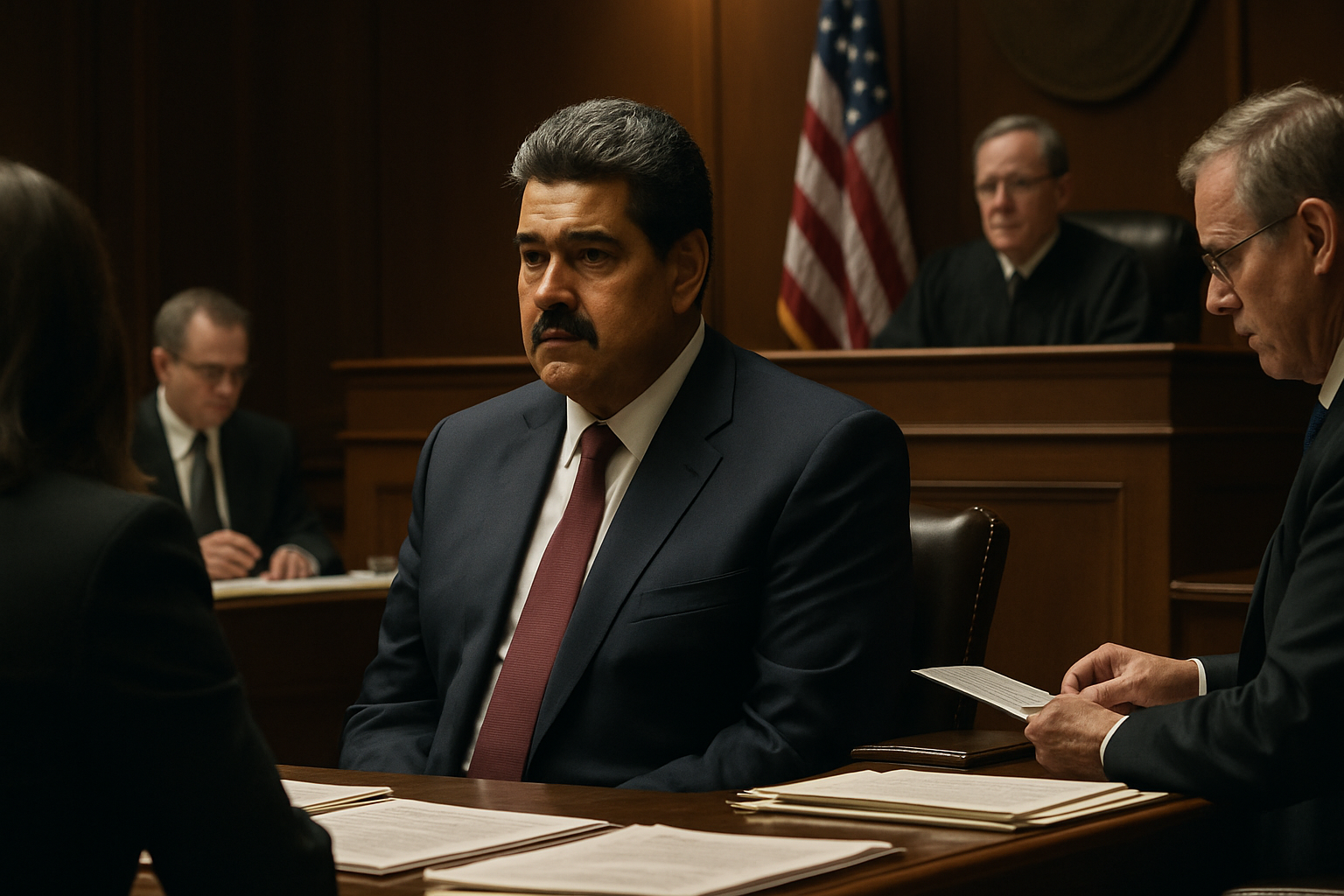
In a dramatic courtroom appearance on Thursday, March 26, 2026, Nicolás Maduro made his second appearance before a New York federal judge since his capture by U.S. forces in January 2026. The former Venezuelan strongman, facing drug trafficking conspiracy and weapons possession charges, sought dismissal of his case on the grounds that U.S. sanctions prevent him from funding his legal defense.
Judge Alvin Hellerstein firmly rejected the defense team's motion to dismiss, dealing a significant blow to Maduro's legal strategy. The ruling came after the U.S. Treasury's Office of Foreign Assets Control (OFAC) denied authorization for Venezuelan state funds to pay for Maduro's legal counsel—a decision that underscores Washington's refusal to recognize his legitimacy as Venezuela's leader.
"The case will proceed despite the funding challenges," Judge Hellerstein declared during Thursday's proceedings.
— Judge Alvin Hellerstein, U.S. District Court
OFAC had initially granted a license on February 9 to allow the use of Venezuelan state funds for Maduro's defense but revoked it just three hours later—a move that legal experts describe as unprecedented in its swift reversal. This leaves the former president in the unusual position of being unable to mount an adequately funded defense while facing charges that could result in decades of imprisonment.
Venezuela's Democratic Transition Accelerates
While Maduro sits in solitary confinement at a New York federal prison—reportedly for his own protection from Venezuelan inmates—his homeland has undergone remarkable transformation under Acting President Delcy Rodríguez's leadership. The interim government has released over 750 political prisoners under a comprehensive amnesty program covering offenses from 1999 to 2026, representing the most ambitious political reconciliation effort in recent Latin American history.
However, significant challenges persist. Human rights organizations report that approximately 600 political prisoners remain detained, and some releases have come with restrictive conditions. Juan Pablo Guanipa, a close ally of Nobel laureate María Corina Machado, was released but placed under house arrest with electronic monitoring—raising questions about the genuine nature of the democratic reforms.
Energy Crisis Strikes Again
Venezuela's fragile infrastructure was exposed once again this week as the government declared a week-long public holiday due to ongoing electrical system failures. The energy crisis, which has plagued the nation for years, reflects the broader economic challenges that persist despite political changes and renewed international engagement.
The power outages affect millions of Venezuelans and threaten to undermine the interim government's efforts to demonstrate competence and stability. Ministry officials included the power-saving measures as part of a broader energy conservation plan, highlighting the continued vulnerability of the national grid.
"The holiday includes ministries as part of the electrical energy saving plan," announced officials from Nueva Esparta state.
— Venezuelan Government Statement
Oil Industry at the Center of Political Tensions
A significant political controversy has emerged over the future of Venezuela's oil industry, with the Ministry of Hydrocarbons strongly condemning opposition proposals for privatization. The ministry characterized María Corina Machado's privatization plans as "anti-national," stating that "the importance of oil for Venezuela can never be diminished by those who have no real or moral authority to speak about our industry."
This dispute comes as Venezuela's oil sector shows signs of recovery, with exports surging 60% to 800,000 barrels daily since January 2026. The United States has displaced China as Venezuela's top oil customer following the restoration of diplomatic relations and the lifting of sanctions—a dramatic reversal from the "maximum pressure" campaign of previous years.
International Relations Transformation
The diplomatic landscape surrounding Venezuela has shifted dramatically since Maduro's removal. The United States formally restored diplomatic relations with Venezuela in March 2026 after a seven-year break, marking one of the most significant foreign policy transformations in recent American history.
Energy Secretary Chris Wright's historic February visit to Caracas resulted in comprehensive cooperation agreements that effectively ended the 2019 oil embargo. Major international oil companies including Chevron, BP, Shell, Eni, and Repsol have been authorized for expanded operations, signaling strong investor confidence in Venezuela's political transition.
Regional powers have responded cautiously but positively to Venezuela's changes. The Dominican Republic has reopened full diplomatic and commercial relations, while Brazil and the European Union maintain careful but supportive engagement. These developments represent a stark contrast to the international isolation that characterized much of the Maduro era.
The Amnesty Process: Progress and Limitations
The political prisoner amnesty program has become both a symbol of Venezuela's democratic progress and a source of ongoing controversy. While the release of over 750 individuals represents unprecedented progress, the conditions attached to some releases and the exclusion of certain categories of prisoners have drawn criticism from human rights organizations.
The amnesty law passed by Venezuela's National Assembly covers a remarkable 27-year period spanning the entire Chávez-Maduro era. However, Article 9 of the legislation excludes those who "promoted attacks on national territory by foreign states or corporations," language that could potentially affect prominent opposition figures.
International mediators, including former Spanish Prime Minister José Luis Rodríguez Zapatero and Cardinal Baltazar Porras, continue to support the reconciliation process through diplomatic engagement and spiritual guidance, respectively.
Economic Challenges Persist
Despite political improvements and renewed international engagement, Venezuela continues to face severe economic challenges. The country recorded a staggering 475% inflation rate in 2025—the world's highest—according to Central Bank data released for the first time in over a year.
Oil production remains well below historical peaks, currently at approximately 700,000 barrels daily compared to the 3 million barrel daily capacity Venezuela maintained during more prosperous times. This production gap reflects the years of underinvestment, international sanctions, and technical brain drain that have affected the sector.
Infrastructure decay extends beyond the energy sector, with persistent power outages, fuel shortages, and transportation difficulties affecting millions of Venezuelans. These challenges require sustained international investment and technical assistance for meaningful recovery.
Regional and Global Implications
Venezuela's transformation has broader implications for Latin American politics and global energy markets. The country's case is being closely monitored as a potential template for peaceful democratic transitions in the region, with particular attention to the balance between justice and reconciliation.
The rapid shift from being a target of U.S. "maximum pressure" to becoming a strategic energy partner demonstrates the potential for dramatic diplomatic transformations when political conditions change. This model could influence American approaches to other challenging international relationships.
For global energy markets, Venezuela's production recovery could significantly impact supply dynamics, particularly as the country works to restore its position as a major oil exporter. The involvement of major international companies suggests confidence in the political stability necessary for long-term investments.
Looking Forward: Democracy's Uncertain Path
As Venezuela navigates this critical transition period, several key challenges remain. The fate of the remaining 600 political prisoners will serve as a crucial test of the government's commitment to comprehensive reconciliation. María Corina Machado's anticipated return to Venezuela "within weeks" will provide another important indicator of the democratic space available to opposition leaders.
The resolution of Maduro's legal case in New York will likely influence Venezuela's international relationships and domestic political dynamics. While the interim government distances itself from its predecessor, the outcome of the drug trafficking trial could affect perceptions of Venezuelan institutional credibility.
Economic recovery will require not just political stability but also massive infrastructure investment, technical capacity building, and the restoration of institutional frameworks that were weakened during years of economic crisis. Success in these areas will determine whether Venezuela's current political opening can translate into sustained prosperity for its citizens.
The international community's continued engagement will be crucial in supporting Venezuela's democratic consolidation while maintaining pressure for genuine reforms. The balance between economic incentives and political conditionality will likely influence the sustainability of the current positive trajectory.
Venezuela's story in 2026 represents both the possibilities and limitations of political transformation in Latin America. While significant progress has been achieved in a remarkably short time, the challenges ahead require sustained commitment from all stakeholders—domestic and international—to ensure that this democratic opening becomes a lasting change rather than a temporary improvement.