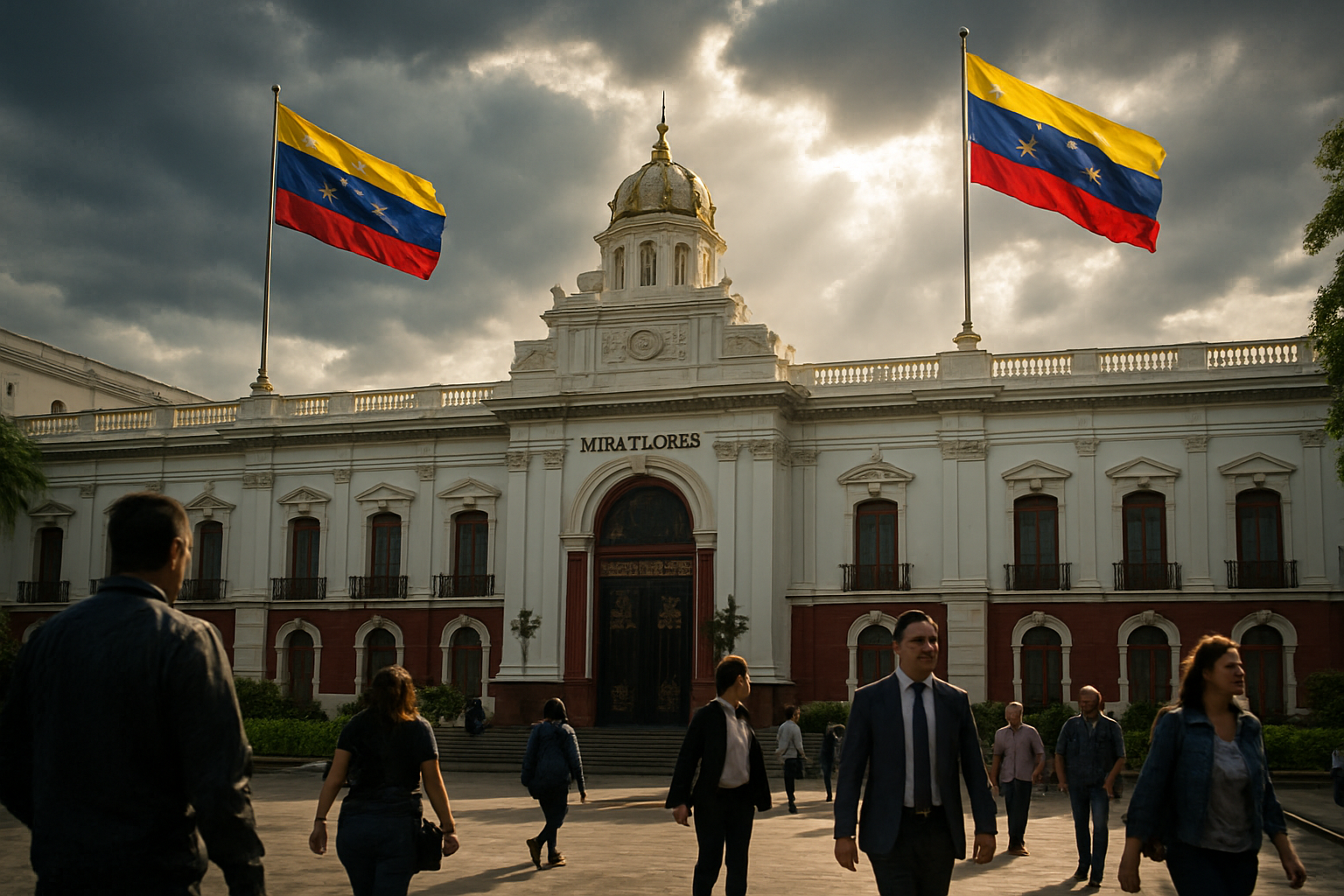
Venezuela's Acting President Delcy Rodríguez announced a significant restructuring of the country's military leadership on March 20, 2026, appointing new regional commanders in what represents the most substantial military reorganization since the democratic transition began following Nicolás Maduro's capture in January.
The interim leader ratified several officers already serving in key regional positions, including Erasmo Ramos continuing at the helm of the Eastern Regional Strategic Defense Integral (REDI), Pedro González in the Western REDI, Pablo Lizano in Los Andes, and Wilfredo Medrano in Guayana. The appointments come just one day after Rodríguez named a new Defense Minister, signaling broader institutional changes within Venezuela's military apparatus.
Military Transition Reflects Broader Democratic Changes
The military restructuring occurs against the backdrop of Venezuela's most dramatic political transformation in decades. Since assuming interim leadership following the U.S. military operation that captured Maduro on January 3, 2026, Rodríguez has overseen sweeping changes that have reshaped both domestic governance and international relations.
Most significantly, her administration has released over 750 political prisoners under a comprehensive amnesty program covering offenses from 1999-2026 - the most extensive political reconciliation effort in recent Latin American history. The releases, while celebrated internationally, have faced some criticism from human rights organizations who note that approximately 600 prisoners remain detained according to Foro Penal monitoring.
"The mandataria interina ratified officers that were already performing their functions in military regions,"
— El Nacional, Venezuelan Media
Economic Recovery and International Engagement
The political transformation has been accompanied by remarkable economic developments. Venezuelan oil exports have surged 60% to 800,000 barrels daily since January, with the United States displacing China as Venezuela's top customer following comprehensive sanctions relief.
Energy Secretary Chris Wright's historic February visit to Caracas resulted in groundbreaking cooperation agreements that effectively ended the Trump administration's 2019 oil embargo. Major international companies including Chevron, BP, Shell, Eni, and Repsol have been authorized for expanded operations, signaling renewed confidence in Venezuela's economic potential.
The diplomatic breakthrough has been equally significant. After seven years of severed relations, the U.S. and Venezuela have restored full diplomatic ties, with Acting President Rodríguez committing to a "new bilateral stage based on mutual respect." The Dominican Republic has reopened commercial relations, while Brazil and European Union nations maintain cautious but supportive engagement with the transition government.
Challenges Remain for Democratic Consolidation
Despite these advances, Venezuela faces substantial challenges that will test the sustainability of its democratic transition. The country's inflation rate reached 475% in 2025 - the world's highest - while oil production remains at just 700,000 barrels daily, far below the historical peak of 3 million barrels.
Infrastructure decay, persistent power outages, and the need for massive international investment continue to affect millions of Venezuelans. Moreover, questions remain about the durability of political reforms, particularly following incidents like the re-arrest of opposition leader Juan Pablo Guanipa, who was released from prison only to be placed under house arrest with electronic monitoring.
The implementation of the amnesty law has also faced complications. While unanimously passed by the National Assembly, Article 9 excludes those who "promoted attacks on national territory by foreign states," leading to selective releases that have drawn criticism from civil society organizations demanding more comprehensive coverage.
Regional and Global Implications
Venezuela's transition is being closely monitored as a potential template for democratic change in Latin America and beyond. Former Spanish Prime Minister José Luis Rodríguez Zapatero continues his mediation efforts in Caracas, while Cardinal Baltazar Porras has organized nationwide prayer vigils to support reconciliation efforts.
The case represents the most significant test of what analysts call "bilateral energy diplomacy" - the Trump administration's strategy of combining military pressure with economic incentives and selective engagement. Success could provide a model for similar international interventions, while failure might undermine the credibility of such approaches globally.
The Venezuelan diaspora, estimated at 7.7 million people worldwide, remains largely hesitant to return despite the political changes. A recent study by Venezuela's Migration Observatory found that most emigrants prioritize proven economic stability over political promises, highlighting the long-term challenges of national reconstruction.
Looking Ahead: Elections and Democratic Legitimacy
Secretary of State Marco Rubio has indicated that "just and democratic" elections represent the next phase of Venezuela's transition, following the achieved stabilization and ongoing economic recovery. However, key questions remain about the timeline, framework, and participation conditions for such elections.
The planned return of Nobel Peace Prize laureate María Corina Machado "within weeks" will serve as a crucial test of the government's commitment to genuine democratic competition. Her ability to participate freely in political activities will likely influence international perceptions of the transition's authenticity.
Meanwhile, families of the 146 Venezuelans recently repatriated from the United States continue to navigate complex reintegration processes, reflecting broader challenges of national reconstruction and healing after decades of political division.
As Venezuela continues its remarkable transformation from international pariah to strategic partner, the military restructuring announced by Acting President Rodríguez represents both continuity and change - maintaining institutional stability while adapting to new democratic realities. The success of these efforts will ultimately determine whether Venezuela's transition becomes a model for peaceful democratic change or a cautionary tale about the complexities of political transformation in the 21st century.