Venezuela's ambitious political prisoner amnesty program faces a critical test as over 200 detainees launched a hunger strike demanding inclusion in the new amnesty law, while dozens of opposition leaders were released following the legislation's implementation.
The hunger strike at Rodeo I detention facility represents the most significant prison action since Acting President Delcy Rodríguez signed the comprehensive 1999-2026 amnesty law on February 21. Among the participants is Argentine gendarme Nahuel Gallo, whose wife María Constanza Cipriani confirmed his involvement in the protest.
Mixed Results of Historic Amnesty Law
The amnesty program has achieved substantial releases while exposing significant limitations. At least 54 political prisoners have been freed in just three days following the law's implementation, according to Foro Penal, bringing the total number of releases under Rodríguez's administration to over 750 since January 2026.
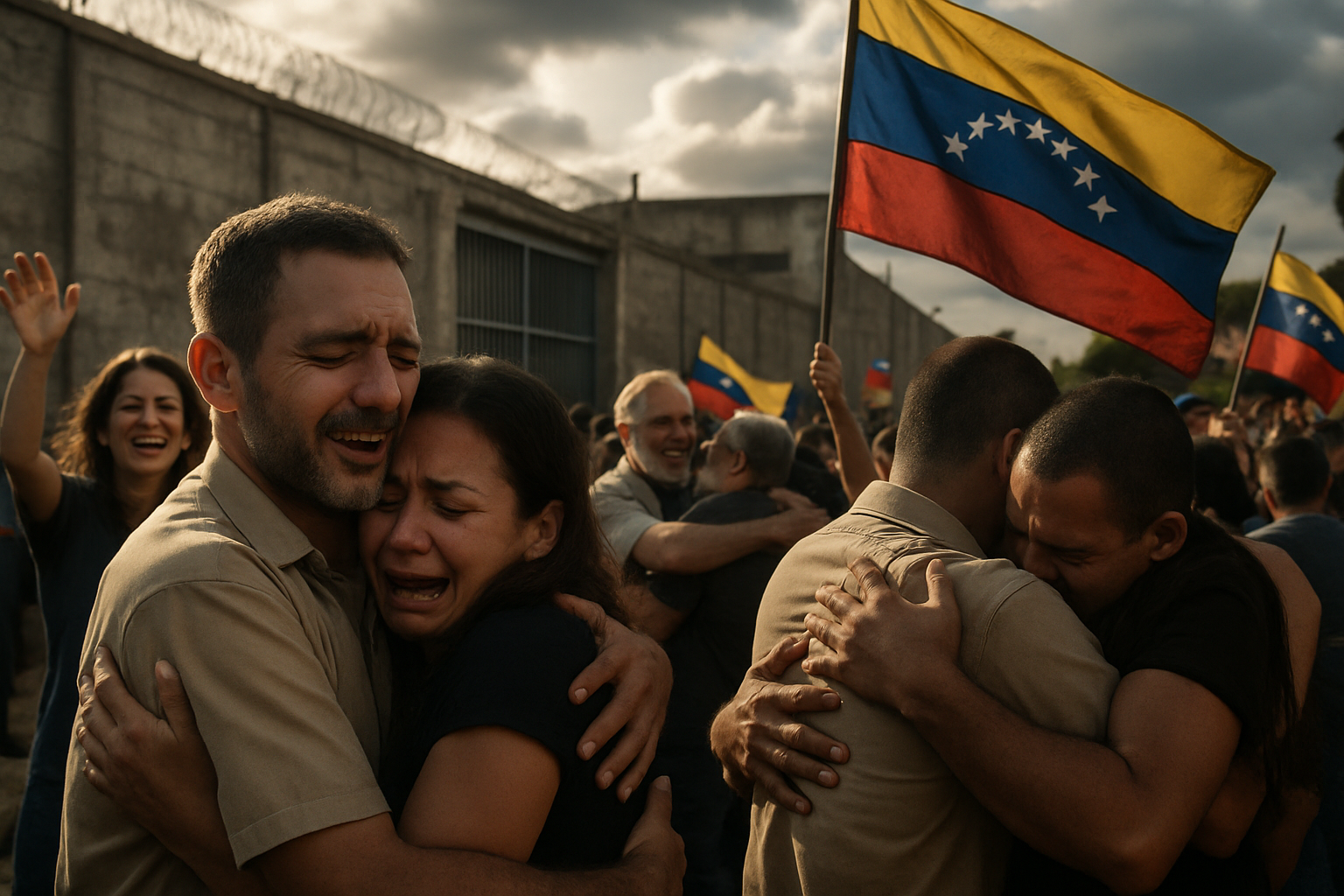
Among those released were seven members of Nobel Peace Prize laureate María Corina Machado's party, Vente Venezuela, including Juan Freites, coordinator for La Guaira. The organization shared video footage showing Freites embracing family members after stepping down from an intelligence service vehicle.
"¡Bienvenido a casa, mi querido Juan! Tu familia, tu mamá, tus hermanas, y toda tu familia Vente Venezuela te esperamos con los brazos abiertos."
— Vente Venezuela statement on social media
However, the Committee for Liberation of Political Prisoners reported releases at multiple facilities, including the women's prison Instituto Nacional de Orientación Femenina (INOF) and El Rodeo I and II prisons, indicating the broad scope of the program while highlighting ongoing detentions.
Exclusions Fuel Desperate Protests
The hunger strike reflects growing frustration over the amnesty law's exclusions, particularly Article 9, which bars those who "promoted attacks on national territory by foreign states or corporations." Critics argue this provision is deliberately vague and discriminatory.
Miami-based organization Veppex has condemned the law as "partial, selective and discriminatory," while many detainees who expected release remain imprisoned. The protest demonstrates the gap between the legislation's promise and its practical implementation.
Families of political prisoners have maintained vigils outside detention centers for weeks, with some entering hunger strikes themselves. The Committee for Liberation of Political Prisoners (CLIPP) has warned of "grave risk" to protesters' lives due to government indifference.
International Context and Diplomatic Pressure
The amnesty program unfolds amid Venezuela's dramatic political transformation following former President Nicolás Maduro's removal in January 2026. The interim government under Rodríguez has pursued unprecedented diplomatic engagement with the United States, including high-level meetings at the Miraflores Palace.
Former Spanish Prime Minister José Luis Rodríguez Zapatero has been mediating the peace process since February, while Cardinal Baltazar Porras has organized nationwide prayer vigils to support the reconciliation effort. This international involvement has provided legitimacy to the process while maintaining pressure for comprehensive prisoner releases.
The economic transformation accompanying the political transition has been striking. Venezuelan oil exports surged 60% to 800,000 barrels daily, with the United States displacing China as the top customer. The Dominican Republic has reopened commercial relations, while Brazil and the European Union have expressed cautious support for the democratic transition.
Implementation Challenges and Civil Society Concerns
Despite the significant number of releases, human rights organizations report that over 600 political prisoners remain detained, according to Foro Penal's tracking. The organization has documented the cases meticulously, providing a stark reminder of the scale of political detention under the previous regime.
Civil society groups have offered mixed reactions to the amnesty process. Cofavic, a prominent human rights organization, emphasized that releases represent "rights restitution, not State favor," while opposition leader Andrés Velásquez has questioned the necessity of an amnesty altogether, arguing that political prisoners "are innocent."
The case of Juan Pablo Guanipa, a close ally of María Corina Machado, illustrates the complex dynamics at play. Initially released in February, he was quickly re-arrested and placed under house arrest with electronic monitoring, raising questions about the durability of the releases and the conditions attached to freedom.
Legal Framework and Article 7 Controversy
The 13-article amnesty law covers the entire 27-year period of the Chávez-Maduro era, representing the most comprehensive political reconciliation effort in recent Latin American history. However, implementation has been complicated by disagreements over Article 7, which requires prisoners to "present themselves to justice."
The Chavista party has demanded that prisoners acknowledge alleged crimes as a condition for release, while the opposition has rejected this requirement, arguing that detainees are victims of persecution, not criminals. This fundamental disagreement has created delays and contributed to the frustration driving the current hunger strikes.
Health Concerns and Humanitarian Crisis
The ongoing hunger strikes raise serious health concerns, particularly given previous reports of poor conditions in Venezuelan detention facilities. Laboratorio de Paz has documented severe malnutrition, physical weakening, and psychological trauma among prisoners from previous detention conditions.
Venezuelan Red Cross has announced plans to provide medical attention to released prisoners, emphasizing its humanitarian neutrality. However, the organization's involvement underscores the health risks faced by those still detained and participating in the protest.
Regional Significance and International Scrutiny
Venezuela's amnesty process is being closely watched throughout Latin America as a potential template for post-authoritarian transitions. The success or failure of the program could influence similar reconciliation efforts in other countries emerging from periods of political repression.
The comprehensive scope of the amnesty, covering nearly three decades of political conflict, is unprecedented in the region. However, critics argue that the exclusions and selective implementation undermine the law's effectiveness as a genuine reconciliation tool.
International observers are monitoring the process as a test of Venezuela's democratic transformation credibility. The ability to resolve the current crisis over excluded prisoners may determine whether the amnesty serves as a model for democratic transition or highlights the persistent challenges of meaningful political reconciliation.
Looking Forward: Critical Juncture
The hunger strike represents a critical juncture for Venezuela's political transition. The interim government faces pressure to address the exclusions while maintaining the momentum of releases already achieved. The international community's continued engagement may prove crucial in resolving the current impasse.
Success in addressing the concerns of striking prisoners could restore confidence in the amnesty process and demonstrate the government's commitment to comprehensive reconciliation. Failure to resolve the crisis may undermine the broader democratic transition and international support for Venezuela's political transformation.
As families maintain their vigils and prisoners risk their health in protest, the coming days will test whether Venezuela's ambitious reconciliation program can overcome its current challenges and fulfill its promise of healing a deeply divided society.