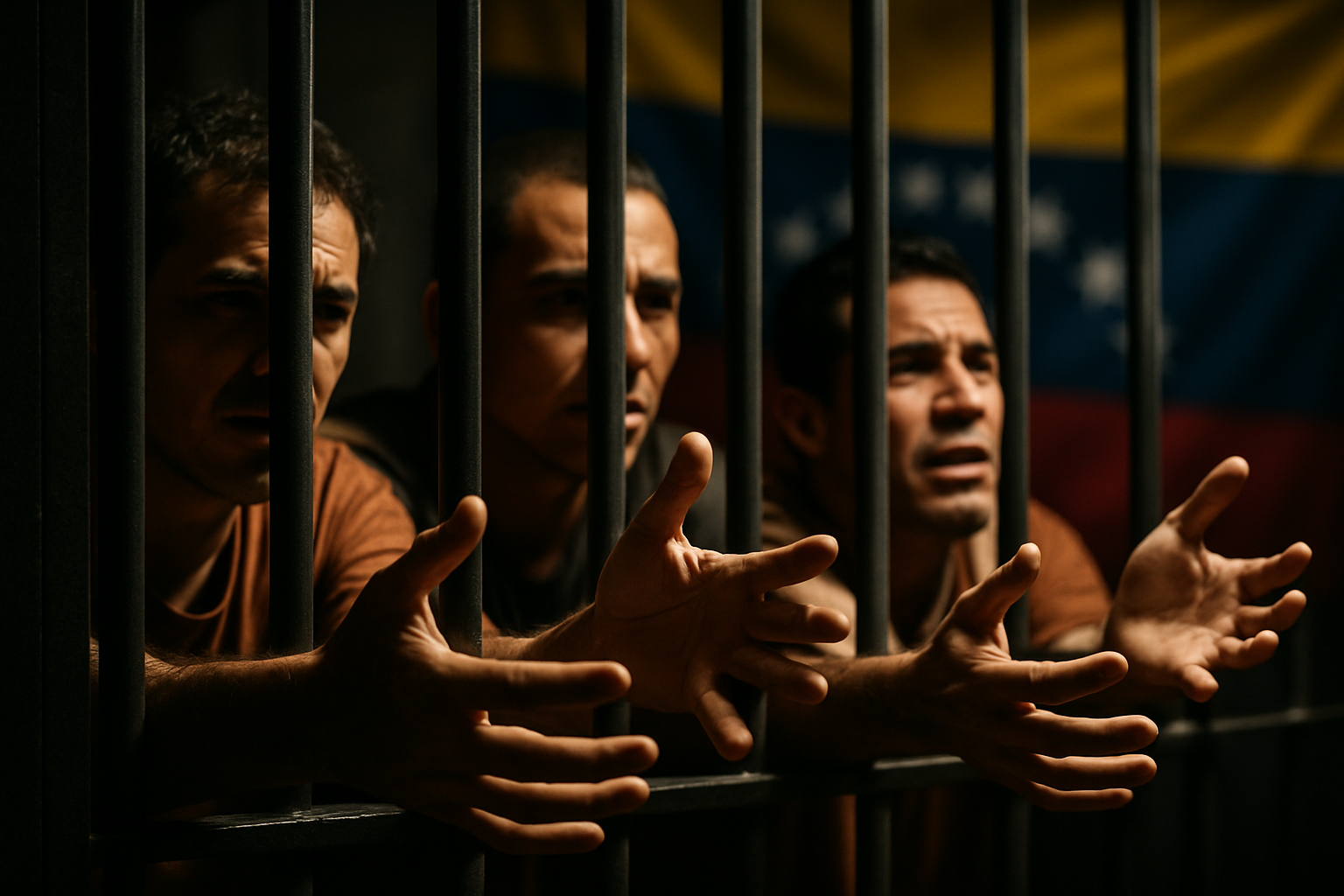
More than 200 political prisoners at Venezuela's Rodeo I detention facility have begun a hunger strike demanding accelerated implementation of the country's historic amnesty law, as families of detainees escalate protests over continued delays in releasing their loved ones.
The hunger strike, which began at the notorious Rodeo I prison complex, includes Argentine gendarme Nahuel Gallo, whose wife confirmed his participation in the protest. The development represents the most significant prison action since Acting President Delcy Rodríguez signed the comprehensive 1999-2026 amnesty law into effect on February 21, 2026.
Amnesty Implementation Faces Obstacles
Despite the unanimous passage of Venezuela's most comprehensive political amnesty in recent Latin American history, implementation has faced significant challenges. The 13-article legislation, covering 27 years of political offenses during the Chávez-Maduro era, was designed to free hundreds of opposition figures, journalists, and activists detained under the previous regime.
According to Foro Penal, Venezuela's leading human rights organization tracking political detentions, 16 prisoners have been confirmed released under the new amnesty law as of February 22. This brings the total number of political prisoners freed to over 750 since January 2026, when the interim government began its release program following Nicolás Maduro's removal from power.
"The amnesty still hasn't reached our home," declared María Constanza Cipriani, wife of detained politician Perkins Rocha, who remains under house arrest with an electronic monitoring device.
— María Constanza Cipriani, via social media
Mixed Results for Released Prisoners
The complexity of the amnesty process is illustrated by cases like that of Williams Dávila, a prominent Acción Democrática leader. Although exonerated on July 18, 2025, Dávila's family reports he continues facing restrictions including regular reporting requirements, prohibition on public statements, and limitations on political participation - raising questions about whether releases constitute genuine freedom.
Similarly troubling is the case of former National Assembly vice-president Juan Pablo Guanipa, a close ally of Nobel Peace Prize laureate María Corina Machado. While initially released in February, Guanipa was quickly placed under house arrest with electronic monitoring, demonstrating the conditional nature of many prisoner releases.
International Support and Humanitarian Response
The Venezuelan Red Cross announced it will provide medical attention to prisoners released under the amnesty program, emphasizing its commitment to neutrality and humanitarian principles. The organization stressed that its work is conducted "without distinction for political, religious, social or any other reasons."
International mediation efforts continue, with former Spanish Prime Minister José Luis Rodríguez Zapatero maintaining his role in peace discussions since February 6, while Cardinal Baltazar Porras organizes nationwide prayer vigils supporting the reconciliation process.
Families Demand Complete Implementation
Family members of political prisoners have maintained vigils and protests at detention centers across Venezuela, some entering their second month of demonstrations. The Committee for the Liberation of Political Prisoners (CLIPP) continues demanding "immediate and complete freedom for all their loved ones unjustly imprisoned."
The hunger strike at Rodeo I prison represents an escalation of these protests, with prisoners themselves taking direct action to pressure authorities for faster implementation of the amnesty law. The inclusion of international cases like that of Argentine gendarme Nahuel Gallo adds diplomatic complexity to the situation.
Legal Limitations and Exclusions
The amnesty law contains several controversial exclusions that have limited its scope. Article 9 specifically excludes those who "promoted attacks on national territory by foreign states or corporations," while Article 7's requirement that prisoners "present themselves to justice" created initial implementation delays when Chavista parties demanded crime acknowledgment from detainees.
These limitations have led to criticism from civil society organizations. Provea, a prominent Venezuelan human rights group, described the law as having "unjustifiable excess of exclusions," while the Miami-based organization Veppex called it "partial, selective and discriminatory."
Economic and Political Context
The amnesty process occurs amid Venezuela's broader democratic transition under Acting President Delcy Rodríguez's interim government. The country has experienced significant economic changes, with oil exports surging 60% to 800,000 barrels daily since January 2026, and the United States displacing China as Venezuela's top oil customer following the lifting of sanctions.
This economic transformation has been accompanied by unprecedented U.S.-Venezuela diplomatic engagement, including high-level meetings at the Miraflores Palace and comprehensive energy cooperation agreements. The political prisoner releases are viewed as a key component of the broader democratic transition process.
Regional and Historical Significance
Venezuela's amnesty law represents the most comprehensive political prisoner amnesty in recent Latin American history. Covering nearly three decades of political conflict, the legislation could serve as a template for reconciliation processes in other post-authoritarian contexts throughout the region.
However, the current hunger strike and ongoing protests highlight the gap between legislative achievement and practical implementation. Human rights organizations emphasize that genuine reconciliation requires not only prisoner releases but also guarantees against future persecution, reintegration support, and broader institutional reforms.
Looking Forward
As the hunger strike at Rodeo I continues, pressure mounts on Venezuelan authorities to accelerate amnesty implementation and address the concerns of families who have waited months for their relatives' freedom. The success or failure of this reconciliation effort will significantly impact Venezuela's democratic transition and could influence similar processes throughout Latin America.
The Venezuelan Red Cross's commitment to providing medical support to released prisoners represents an important humanitarian safety net, while international mediation efforts continue working toward comprehensive resolution of outstanding cases. However, with over 600 political prisoners still detained according to human rights organizations, the path to complete reconciliation remains long and complex.