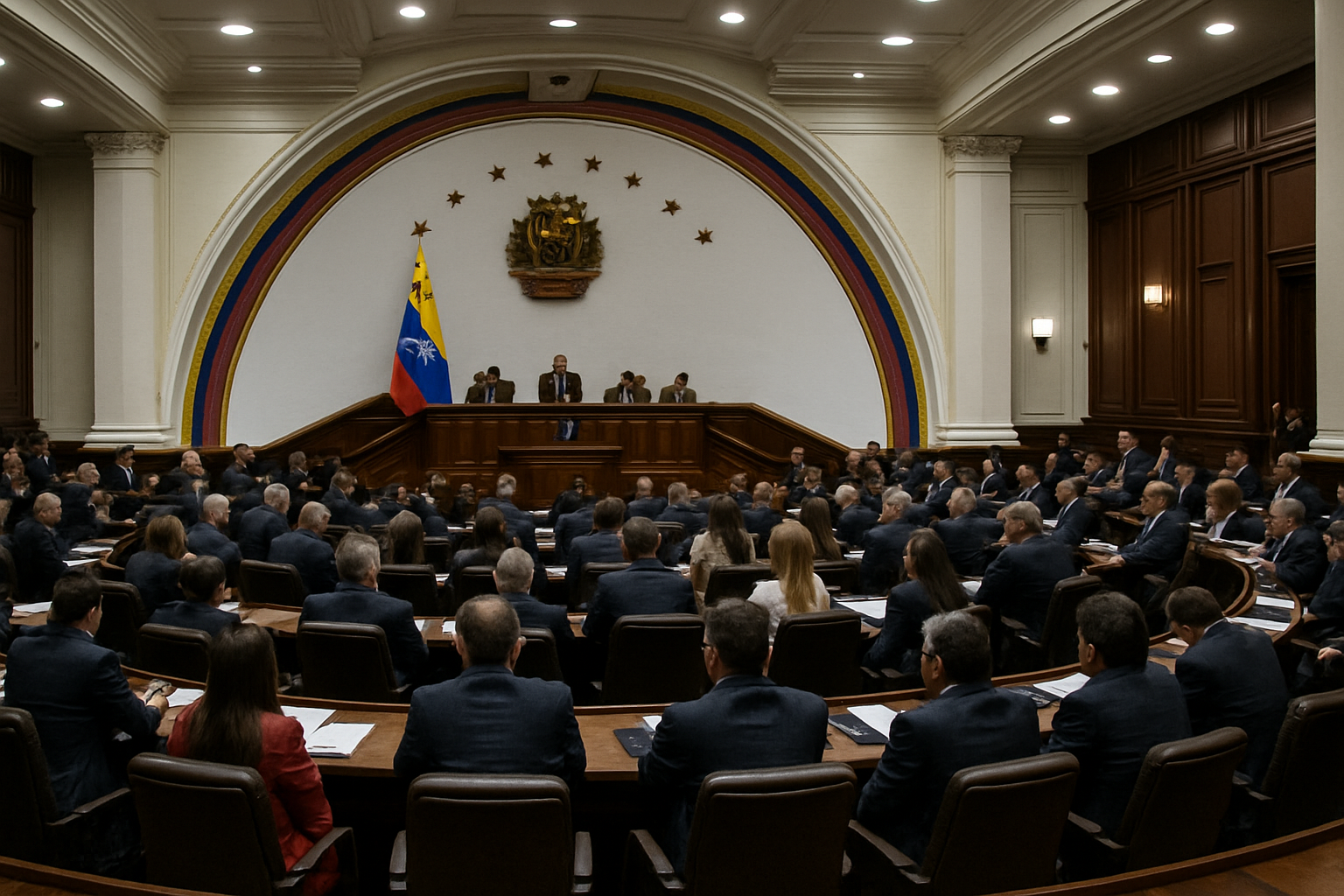
Venezuela's National Assembly began crucial deliberations on February 5, 2026, over a comprehensive amnesty law that could release hundreds of political prisoners, while opposition leader María Corina Machado declared that presidential elections could take place within the year as the country continues its transition following Nicolás Maduro's removal.
The amnesty legislation, initially proposed by Acting President Delcy Rodríguez on January 30, represents a cornerstone of Venezuela's democratic transition after the January 2026 U.S. military intervention that ended Maduro's rule. According to the bill's statement of reasons, the law aims to be "a decisive step for peace" and an opportunity for national reconciliation.
However, civil society organizations have raised significant concerns about the legislative process. Multiple NGOs warned about a lack of transparency in the National Assembly debates, arguing that the process violates principles of transparency, citizen participation, and international standards despite recognizing the initiative as potentially valuable for reconciliation.
Opposition Leaders Express Cautious Optimism
In a significant development, María Corina Machado, the prominent opposition leader who has been a central figure in Venezuela's democratic movement, stated that "presidential elections could be held in Venezuela this year." Her comments reflect growing confidence among opposition figures that the country's political landscape has fundamentally shifted since Maduro's departure.
Machado's prediction comes as Venezuela marks one month since the dramatic change in government. The interim administration under Delcy Rodríguez has initiated several democratic reforms while maintaining stability in a nation that has endured over two decades of socialist rule and severe economic crisis.
Amnesty Program Gains Momentum
The proposed amnesty law builds on early releases that began immediately after the transition. Javier Tarazona, director of the NGO Fundaredes, was freed on February 1, 2026, after more than four years in detention on terrorism and treason charges. According to human rights organization Foro Penal, 367 political prisoners have been released since early January 2026, including journalist Rory Branker who had been detained for nearly a year.
The releases occurred at multiple facilities including El Rodeo penitentiary in Miranda state, representing a major human rights reversal from the systematic detention of opposition figures, journalists, and activists under the previous regime. However, according to Slovak news reports, the amnesty will not extend to serious violations of human rights, maintaining legal accountability for the gravest crimes.
"This represents a historic opportunity for national reconciliation, but we must ensure the process meets international transparency standards."
— Venezuelan Civil Society Organization
International Diplomatic Engagement
Venezuela's transition has attracted significant international attention and support. The interim government has engaged in high-level diplomatic meetings with U.S. officials, including encounters between Acting President Delcy Rodríguez and U.S. Chargé d'Affaires Laura Dogu at the Miraflores Presidential Palace. These represent the highest-level U.S.-Venezuela diplomatic contacts since relations were severed in 2019.
Secretary of State Marco Rubio has outlined a three-phase reconstruction plan for Venezuela: stabilization addressing the humanitarian crisis, economic recovery requiring sanctions relief, and democratic transition with free elections. Oil exports have surged 60% from 498,000 to 800,000 barrels daily in January, with the United States displacing China as Venezuela's top oil customer.
Challenges Remain
Despite the progress, Venezuela continues to face enormous challenges. The country's oil production remains at only 700,000 barrels daily, far below its historical peak of 3 million barrels. Hyperinflation, infrastructure decay, power outages, fuel shortages, and food insecurity continue to affect the population, requiring extensive international investment and technical assistance for recovery.
The Dominican Republic has begun reopening commercial relations, air traffic, and consular services with Venezuela, while Brazil and the European Union have expressed cautious support for the democratic transition. However, the success of the transition will ultimately depend on the interim government's ability to organize credible elections and address the country's deep-seated economic problems.
Transparency Concerns
While the amnesty initiative has been welcomed by many as a step toward reconciliation, civil society groups have expressed reservations about the process. NGOs argue that the current approach to debating the law in the National Assembly lacks adequate transparency and citizen participation, potentially undermining international standards for democratic governance.
The concerns highlight the delicate balance the interim government must strike between moving quickly to implement reforms and ensuring that democratic processes are properly followed. The credibility of Venezuela's transition will largely depend on whether institutions can demonstrate genuine commitment to transparency and accountability.
Looking Toward Elections
Machado's prediction that elections could occur within 2026 reflects the rapidly changing political dynamics in Venezuela. The opposition leader's confidence suggests that conditions for free and fair elections may be emerging after years of authoritarian rule and electoral manipulation under Maduro.
However, organizing credible elections will require significant institutional reforms, international observation, and the participation of all political forces. The success of the amnesty law and the continued engagement of the international community will be crucial factors in determining whether Venezuela can complete its transition to democracy.
As the National Assembly continues its deliberations on the amnesty law, Venezuela stands at a crossroads. The decisions made in the coming weeks and months will shape not only the fate of hundreds of political prisoners but also the broader trajectory of the country's democratic future. The international community watches closely as this oil-rich nation attempts to rebuild its democratic institutions after more than two decades of authoritarian rule.