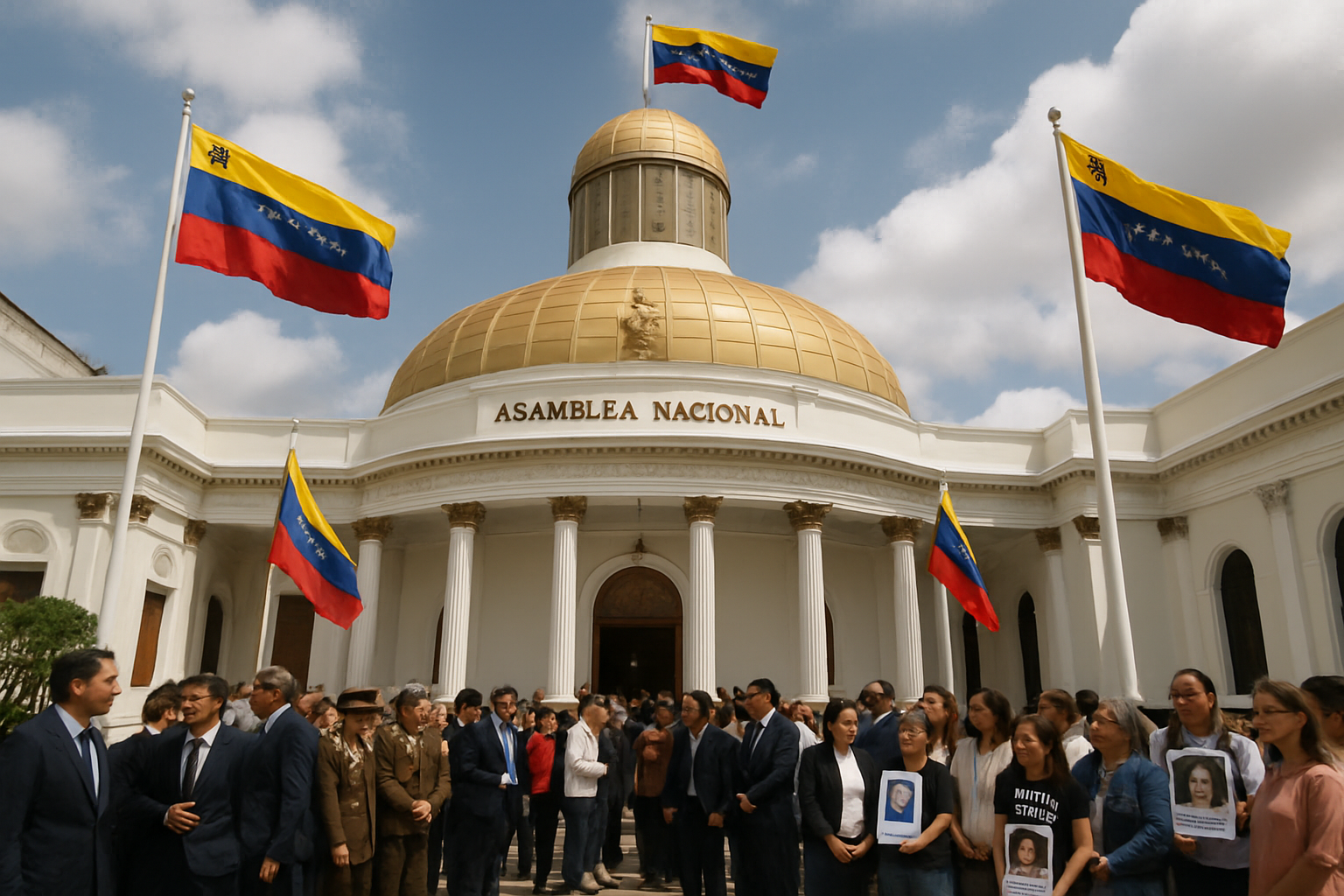
Venezuelan opposition leader Juan Pablo Guanipa was placed under house arrest with electronic monitoring just hours after being released from prison, highlighting the complex dynamics surrounding Venezuela's ongoing political prisoner release program as the National Assembly prepares to debate comprehensive amnesty legislation.
The dramatic turn of events underscores the delicate balance between political reconciliation and security concerns as Venezuela's interim government under Acting President Delcy Rodríguez navigates the most significant political prisoner amnesty in recent Latin American history.
Guanipa's Release and Immediate Re-Detention
Juan Pablo Guanipa, a close ally of opposition leader María Corina Machado and former National Assembly vice-president, was freed from detention on Tuesday after more than eight months in prison. However, within hours of his release, he was placed under house arrest at his residence in Maracaibo, equipped with an electronic ankle monitor and subjected to strict communication restrictions.
According to Venezuelan media reports, Guanipa is now "silenced" under the terms of his house arrest, prohibited from making public statements about his case or engaging in political activities. The conditions of his detention require him to remain at his residence under electronic surveillance.
"This represents the complex nature of Venezuela's transition period, where progress toward political reconciliation must be balanced with legal procedures and security considerations."
— Ernesto Villegas, Coordinator of the Program for Peace and Democratic Coexistence
National Assembly Amnesty Deliberations
The National Assembly has been receiving families of political prisoners for consultations regarding the proposed amnesty law, with coordinated sessions taking place at the Rómulo Gallegos Latin American Studies Center in Caracas. Ernesto Villegas, coordinator of the Program for Peace and Democratic Coexistence, announced that additional family consultation sessions would continue throughout the week.
The comprehensive amnesty legislation, covering political offenses from 1999 to 2026, represents a 27-year scope addressing the entirety of the Chávez-Maduro era. The law passed its first reading unanimously in the National Assembly in early February and is scheduled for final approval.
Families of political prisoners are demanding that the amnesty law be "inclusive rather than selective," seeking guarantees that all political detainees will be covered under the legislation without exceptions or arbitrary exclusions.
Unprecedented Scale of Releases
According to Foro Penal, the NGO that leads legal defense for political prisoners in Venezuela, at least 431 political prisoners have been released since the government announced the liberation process slightly over a month ago. This represents the most significant political prisoner release program in Venezuela's recent history.
The releases have occurred at multiple facilities across the country, including the notorious Helicoide prison and El Rodeo penitentiary. Among those freed have been journalists, opposition figures, activists, and civil society leaders who had been detained on charges ranging from terrorism and treason to "hatred" and conspiracy.

International Context and Diplomatic Engagement
The prisoner release program occurs within the broader context of Venezuela's political transition following significant changes in government leadership. High-level diplomatic engagement has intensified, including unprecedented meetings between Venezuelan officials and international representatives.
Former Spanish Prime Minister José Luis Rodríguez Zapatero has been participating in peace plan discussions in Caracas, bringing international legitimacy to the reconciliation process. Cardinal Baltazar Porras has organized nationwide "prayers for prisoners" vigils, adding moral authority from the Catholic Church to the amnesty efforts.
The United States has maintained high-level diplomatic contact through Chargé d'Affaires Laura Dogu, representing the most significant U.S.-Venezuela diplomatic engagement in years. This engagement occurs alongside Venezuela's economic transformation, with oil exports increasing by 60% and the U.S. displacing China as Venezuela's top oil customer.
Regional and Civil Society Responses
The Dominican Republic has reopened commercial relations with Venezuela, while Brazil and the European Union have expressed cautious support for the democratic transition. This regional engagement provides international validation for the amnesty process while maintaining pressure for genuine democratic reforms.
Civil society organizations have expressed mixed reactions to the amnesty program. Cofavic, a prominent human rights organization, emphasized that prisoner releases represent "the restitution of rights, not a favor from the State," framing the releases as correcting historical injustices rather than governmental benevolence.
Opposition leader Andrés Velásquez has questioned the necessity of amnesty legislation altogether, arguing that political prisoners "are innocent" and should not require pardons for exercising fundamental democratic rights.
Implementation Challenges and Future Outlook
The case of Juan Pablo Guanipa illustrates the complex challenges facing Venezuela's amnesty program. While hundreds of prisoners have been released, the conditions of their freedom—including house arrest, electronic monitoring, and communication restrictions—raise questions about the extent of genuine political reconciliation.
Human rights advocates emphasize the need for comprehensive reintegration guarantees, including protections against future persecution, safe return provisions for political exiles, and monitoring mechanisms to ensure sustainable reconciliation rather than cosmetic reforms.
"Any comprehensive amnesty must include guarantees for safe political participation and protection against future cycles of persecution."
— Alfredo Romero, Director of Foro Penal
Historical Significance and Regional Implications
Venezuela's amnesty program represents the most comprehensive political prisoner release in recent Latin American history. The 27-year temporal scope covering the entire period of political conflict since 1999 offers an unprecedented opportunity for national reconciliation if successfully implemented.
The success or failure of this amnesty process will have significant implications beyond Venezuela's borders, potentially serving as a model for conflict resolution and democratic transition in other countries facing similar political divisions.
International observers view the program as a critical test of Venezuela's commitment to genuine democratic transformation versus cosmetic reforms designed to ease international pressure while maintaining authoritarian control.
As the National Assembly prepares for the final debate and vote on the amnesty law, the eyes of the international community remain focused on whether Venezuela can achieve meaningful political reconciliation or whether the current releases represent temporary measures subject to reversal based on political convenience.
The coming weeks will be decisive in determining whether Venezuela's amnesty program establishes a genuine foundation for democratic renewal or proves to be another chapter in the country's long history of incomplete political transitions.