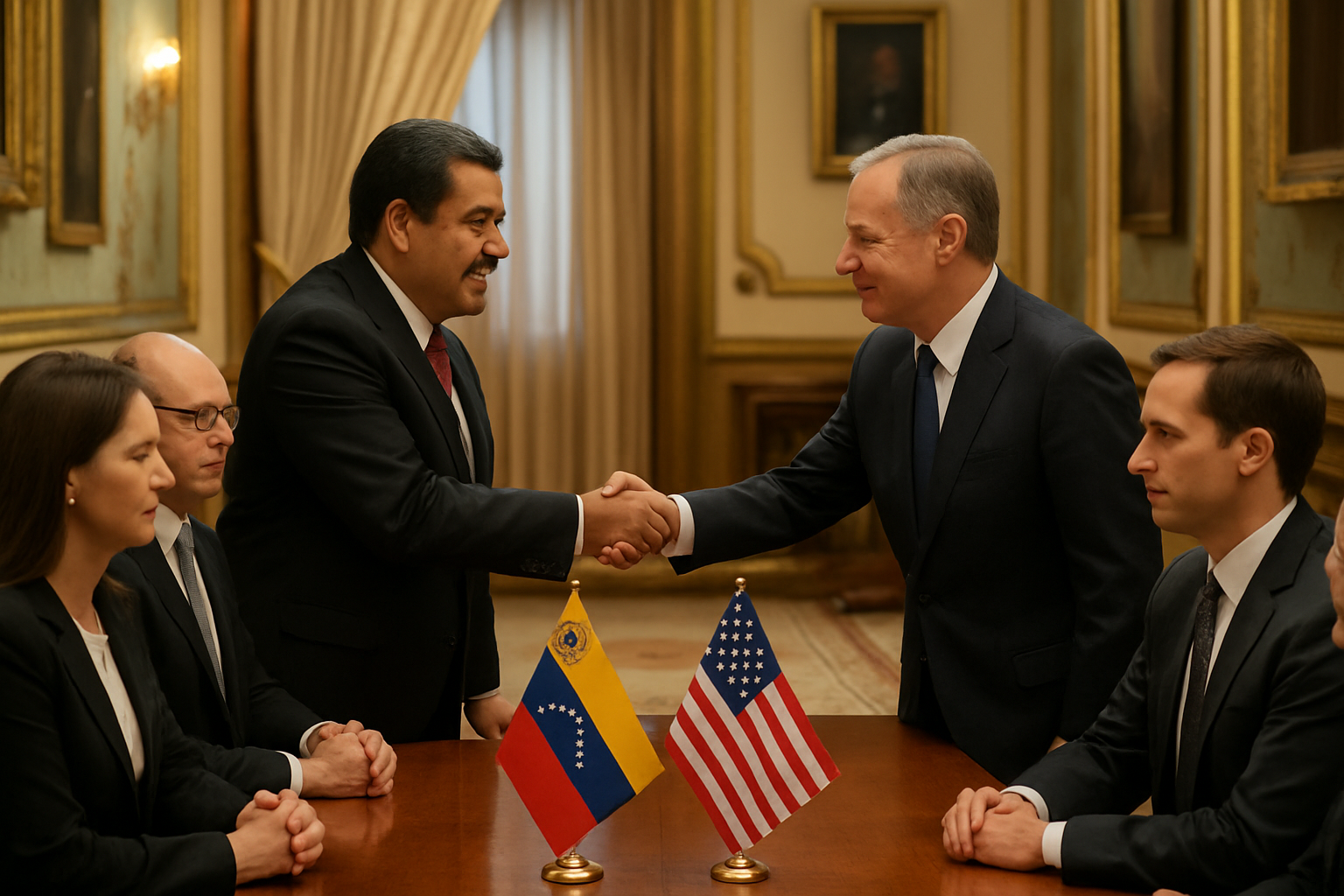
Venezuelan Acting President Delcy Rodríguez hosted US Chargé d'Affaires Laura Dogu at Miraflores Presidential Palace on Monday afternoon, marking the highest-level diplomatic contact between the two nations in years amid broader regional diplomatic shifts.
According to Communications Minister Miguel Pérez Pirela, the meeting took place "in the context of the working agenda" between Caracas and Washington, though he provided few additional details about the specific topics discussed. National Assembly President Jorge Rodríguez was also present during the talks, underscoring the significance of the diplomatic engagement.
The meeting comes as President Donald Trump claims his administration is actively negotiating with both Venezuelan and Cuban leaders, suggesting a potential shift in US policy toward the Caribbean region after years of maximum pressure campaigns.
US Three-Phase Plan for Venezuela
Dogu confirmed the high-level meeting via social media, stating that she reiterated Washington's intended "three-phase plan" for Venezuela during the discussions. "Today I met with Delcy Rodríguez and Jorge Rodríguez to reiterate the three phases that Secretary of State Marco Rubio has proposed for Venezuela: stabilization, economic recovery and democratic transition," Dogu wrote.
The proposed framework represents a structured approach to addressing the complex political and economic challenges facing Venezuela, which has endured years of international sanctions and internal political crisis. The plan's emphasis on "stabilization" suggests immediate priorities around security and basic governance, while "economic recovery" acknowledges the country's severe economic difficulties.
The third phase, focused on "democratic transition," indicates that the United States maintains its position that any long-term resolution must involve political reforms, though the specific mechanisms for such a transition remain unclear.
Trump's Claims of Ongoing Negotiations
Simultaneously, President Trump has indicated that negotiations are underway with leaders from both Venezuela and Cuba. Speaking about Cuba, Trump stated that the island nation has now lost its financial and energy support network, particularly following the cessation of oil and money shipments from Venezuela.
However, Cuban diplomatic sources have contested Trump's characterization of these contacts. A senior Cuban diplomat told the Associated Press that while Cuba remains "open to dialogue" with the United States, no formal negotiations are currently taking place. This disconnect highlights the complex nature of regional diplomatic communications and the potential for mischaracterization of preliminary contacts.
Regional Diplomatic Context
The diplomatic engagement occurs against the backdrop of significant political changes in Venezuela. Following Nicolás Maduro's removal from power in January 2026 after US military intervention, Acting President Delcy Rodríguez announced a proposed general amnesty law for political prisoners, signaling potential openness to reconciliation measures.
The first releases under this initiative have already begun, with Javier Tarazona, director of NGO Fundaredes, freed on February 1, 2026, after more than four years of detention on terrorism and treason charges. Opposition leader María Corina Machado has celebrated these releases, viewing them as positive steps toward national reconciliation.
Historical Context of US-Venezuela Relations
The current diplomatic engagement represents a potential thaw in relations that have been severely strained for over a decade. Under previous administrations, the United States imposed extensive sanctions on Venezuelan officials and the country's oil sector, while recognizing opposition leader Juan Guaidó as the legitimate president.
The relationship deteriorated further under Maduro's presidency, with the US implementing what officials described as a "maximum pressure" campaign designed to force political change in Venezuela. This included sanctions on the state oil company PDVSA and restrictions on financial transactions.
"Today I met with Delcy Rodríguez and Jorge Rodríguez to reiterate the three phases that Secretary of State Marco Rubio has proposed for Venezuela: stabilization, economic recovery and democratic transition."
— Laura Dogu, US Chargé d'Affaires
Challenges and Opportunities Ahead
Despite the apparent diplomatic opening, significant challenges remain in any potential normalization of US-Venezuela relations. The proposed three-phase plan suggests a long-term process that will require sustained political will from both sides and careful navigation of complex domestic and international considerations.
Economic recovery, in particular, will likely require significant international assistance and the potential lifting of sanctions that have severely impacted Venezuela's ability to access global financial markets and trade networks. The country's oil industry, once a major source of revenue, has been particularly affected by US sanctions.
The political transition component may prove most challenging, as it involves fundamental questions about governance structures, electoral processes, and the role of various political actors in Venezuela's future. Any sustainable solution will need to address the concerns of both government supporters and opposition groups.
International Implications
The diplomatic developments have broader implications for regional stability and US influence in Latin America. Venezuela's strategic location, significant oil reserves, and political relationships with countries like Russia and China make it a key factor in broader geopolitical calculations.
European allies and regional partners will be watching closely to see how the United States balances its traditional emphasis on democracy and human rights with pragmatic considerations about regional stability and economic interests.
The engagement also occurs as the Trump administration pursues what it describes as a more transactional approach to foreign policy, emphasizing direct negotiations and bilateral deals over multilateral frameworks.
Looking Forward
While the meeting between Rodríguez and Dogu represents an important diplomatic step, observers caution that substantial progress will depend on sustained engagement and concrete actions from both sides. The proposed amnesty for political prisoners and the apparent willingness to engage in structured discussions about Venezuela's future are positive signs, but significant obstacles remain.
The success of any diplomatic initiative will likely depend on the ability of both governments to manage domestic political pressures while pursuing pragmatic solutions to shared challenges. For Venezuela, this includes addressing economic hardship and political polarization, while the United States must balance various competing interests and constituencies in its approach to the region.
As these diplomatic contacts continue, the international community will be watching for concrete signs of progress, particularly in areas such as human rights, economic governance, and democratic institutions that have been central to the broader international response to Venezuela's crisis.