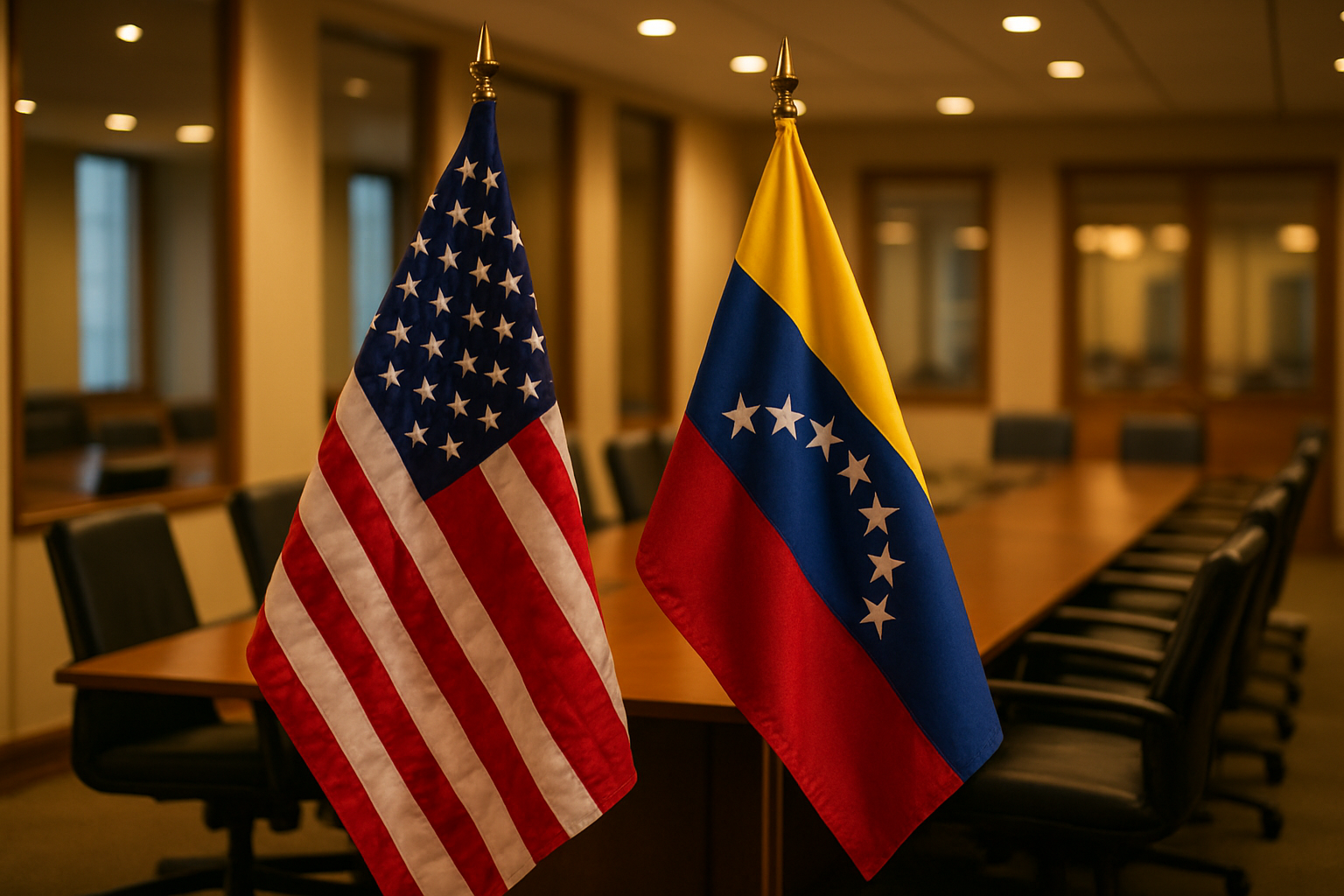
The United States and Venezuela formally restored diplomatic relations on March 7, 2026, ending a seven-year diplomatic freeze and opening unprecedented opportunities for prisoner exchanges, energy cooperation, and foreign investment in the post-Maduro era.
Acting President Delcy Rodríguez announced the restoration with a message directed at President Donald Trump, emphasizing the beginning of "a new bilateral stage based on mutual respect" and expressing Venezuela's willingness to "build long-term relationships based on mutual respect and equality."
Diplomatic Breakthrough After Years of Isolation
The restoration represents a complete reversal from the "maximum pressure" campaign to strategic partnership following the January 2026 U.S. military operation that resulted in Nicolás Maduro's capture. The formal recognition comes as both nations move to reopen embajadas and exchange diplomatic representatives for the first time since relations were severed in January 2019.
Deputy Communications Minister Rander Peña announced that Venezuelan officials are conducting inspections of embassy and consulate facilities in the United States, with the Washington embassy requiring renovation work before full operations can resume. This marks a dramatic shift in Venezuela's international standing from pariah state to strategic partner in just two months.
"President @RealDonaldTrump, we receive this decision as recognition of the Venezuelan people and their just cause for the truth of our country."
— Delcy Rodríguez, Acting President of Venezuela
Energy Partnership Drives Economic Transformation
The diplomatic restoration builds on remarkable economic cooperation that began immediately after Maduro's removal. Venezuelan oil exports have surged 60% from 498,000 to 800,000 barrels daily, with the United States displacing China as Venezuela's top customer following comprehensive sanctions relief.
Energy Secretary Chris Wright's historic February visit to Caracas resulted in comprehensive cooperation agreements signed at Miraflores Palace with Acting President Rodríguez. The Treasury Department has authorized five major oil companies—Chevron, BP, Shell, Eni, and Repsol—to expand operations significantly.
Interior Secretary Doug Burgum's March visit announced mining code reforms that will provide "unlimited opportunities for cooperation" and unprecedented access for American companies to Venezuela's critical mineral resources. This addresses U.S. supply chain security concerns while countering Chinese dominance in strategic materials production.
Political Reconciliation and Prisoner Releases
Venezuela's interim government has implemented the most comprehensive political reconciliation program in recent Latin American history. Over 750 political prisoners have been released since January 2026 under Rodríguez's amnesty program, with the National Assembly unanimously approving a historic 1999-2026 amnesty law.
The amnesty covers a 27-year period spanning the entire Chávez-Maduro era, with recent releases including prominent opposition figures like Juan Pablo Guanipa, a close ally of Nobel Peace Prize laureate María Corina Machado. However, approximately 600 political prisoners remain detained, with some releases involving restrictive conditions such as house arrest and electronic monitoring.
International mediators, including former Spanish Prime Minister José Luis Rodríguez Zapatero and Cardinal Baltazar Porras, have supported the reconciliation process through ongoing mediation efforts and nationwide prayer vigils.
Investment Opportunities Emerge
International investors are already positioning themselves for Venezuela's economic recovery. According to Reuters reports, three major investment advisory groups are organizing trips to the country to evaluate the political and macroeconomic climate following the recent changes in Venezuela's political landscape.
The Dominican Republic has reopened full diplomatic and commercial relations with Venezuela, while Brazil and the European Union maintain cautious but supportive approaches to the democratic transition. American Airlines has requested authorization to restart direct flights between Miami and Caracas and Maracaibo for the first time since 2019.
Venezuela's oil production potential reaches 3 million barrels daily under proper international investment and technical assistance, compared to the current 700,000 barrels—well below the historical peak of 3 million barrels that the country achieved before the economic crisis.
Regional Implications and Strategic Context
The Venezuela transformation serves as a template for "bilateral energy diplomacy" designed to counter Chinese influence throughout Latin America. This approach combines military pressure, economic incentives, and selective diplomatic engagement—what analysts call the "Corolario Trump," a 21st-century update to the Monroe Doctrine.
Secretary of State Marco Rubio's three-phase reconstruction plan has progressed successfully through stabilization and economic recovery phases, with democratic transition representing the final objective. President Trump has announced his intention to visit Venezuela, which would make him the first U.S. president to do so since 1997.
The success of the Venezuela model is being closely studied internationally as a potential framework for resolving territorial disputes, managing democratic transitions, and developing strategic partnerships in an era of great power competition.
Ongoing Challenges and Future Prospects
Despite the dramatic diplomatic progress, significant challenges remain. Venezuela continues to face hyperinflation, infrastructure decay, and power outages that require sustained international investment and technical assistance. The country's oil production capacity remains far below historical levels, requiring substantial infrastructure modernization.
Congressional oversight continues, with Republican support for the reset as an anti-China strategy, while Democrats demand greater transparency in Venezuelan oil deal arrangements. The House previously voted 219-211 to require oversight of Venezuelan energy agreements, reflecting bipartisan concerns about the rapid policy reversal.
María Corina Machado's announced return to Venezuela "within weeks" will serve as a critical test of the interim government's genuine commitment to democratic norms and political pluralism. Her second White House meeting with senior Trump administration officials, including Secretary Rubio, signals escalating opposition integration in the transition process.
Historical Significance
The restoration of U.S.-Venezuela relations represents the most significant hemispheric realignment since the end of the Cold War. The rapid transformation from diplomatic isolation to strategic partnership demonstrates the potential for innovative approaches to international crisis resolution in the multipolar era.
Success in Venezuela could provide a template for similar diplomatic transformations globally, while failure might undermine the credibility of such approaches for future territorial disputes and democratic transitions. The international community continues to monitor developments as an indicator of whether rapid diplomatic reversals through combined pressure and incentives can produce sustainable democratic outcomes.
The restoration comes amid broader global diplomatic initiatives, including ongoing negotiations with Iran, continued engagement with China, and the Trump administration's comprehensive approach to reshaping international relationships through bilateral partnerships rather than traditional multilateral frameworks.