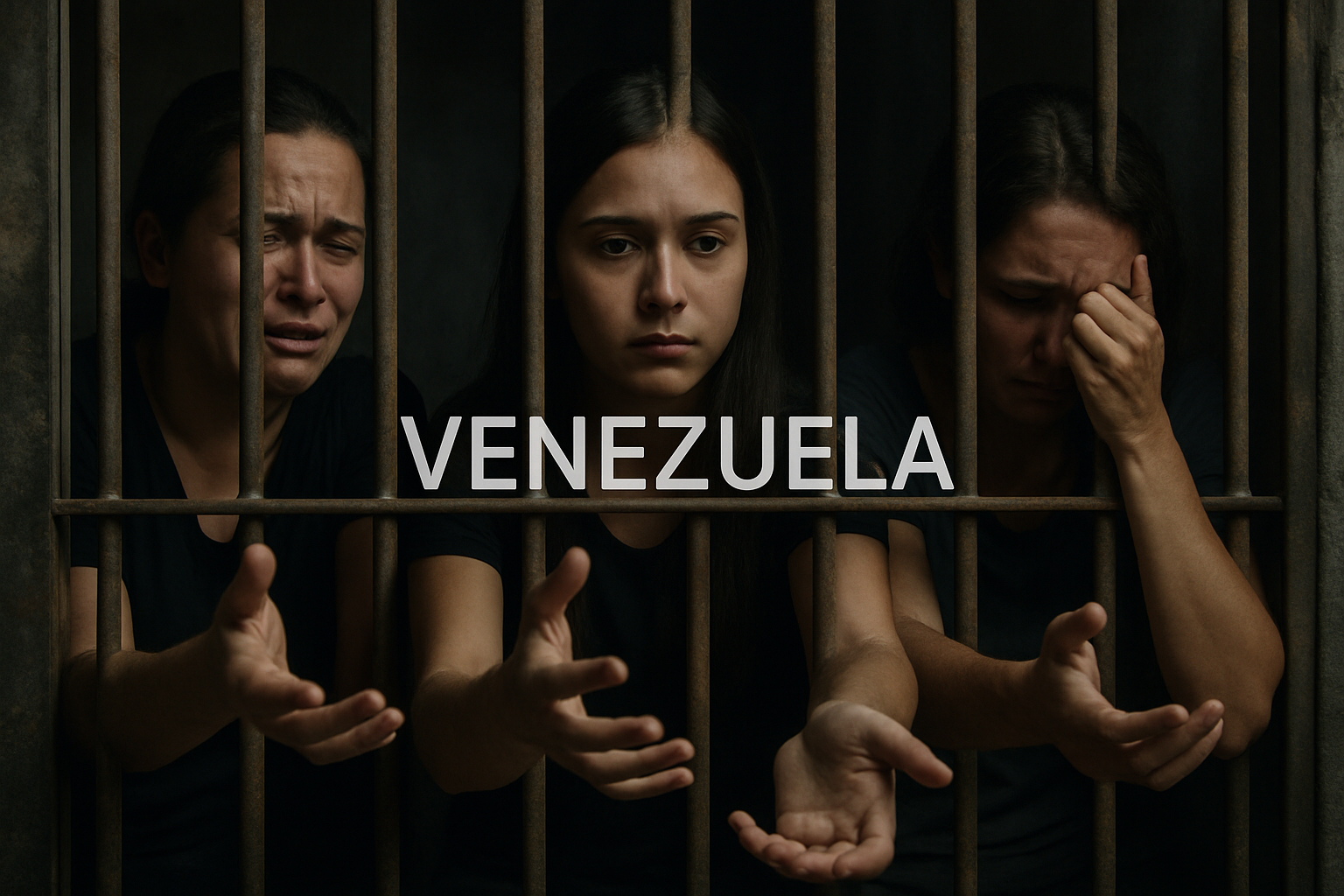
Human rights organizations have documented alarming conditions facing women political prisoners in Venezuela, with 56 female detainees among the 526 political prisoners identified by Foro Penal as of Monday, March 8, 2026, enduring what activists describe as systematic abuse and "extreme vulnerability."
Andreína Baduel, director of the Committee for the Liberation of Political Prisoners (CLIPP), issued urgent warnings about the deteriorating situation facing female political detainees, describing conditions of "immense vulnerability" where women are "victims of different types of violence, including psychological and even sexual violence."
The revelations come as Venezuela's political prisoner amnesty program, despite releasing over 750 detainees since January 2026 under Acting President Delcy Rodríguez, continues to face implementation challenges that particularly affect women prisoners, according to multiple human rights organizations.
Systematic Abuse and 'Vejaciones' Documented
Speaking to EFE news agency, Baduel emphasized that female political prisoners are being "vejadas" - a Spanish term encompassing humiliation, degradation, and abuse - while detained in facilities across the country. The CLIPP director's statements represent some of the most explicit documentation of gendered violence against political detainees in Venezuelan detention facilities.
"Political female prisoners are in conditions of immense vulnerability and are victims of different types of violence, such as psychological, including sexual violence," Baduel told reporters, calling for urgent international intervention.
The documentation aligns with broader patterns of abuse identified by human rights groups. Laboratorio de Paz previously reported that 32 prisoners showed "severe malnutrition, physical weakening, cognitive disorientation, psychological trauma" from inadequate detention conditions, though this broader study did not specifically focus on gendered aspects of abuse.
Families Maintain Desperate Vigils
Family members of detained women have maintained continuous vigils outside detention facilities, including the notorious Zona 7 center in Caracas and El Helicoide prison. Some families have entered their second month of protests, with several engaging in hunger strikes to pressure authorities for releases.
Sandra Rosales, wife of detained police officer Dionnys Quintero, exemplifies the psychological toll on families. She has continued her vigil at Zona 7 despite what observers describe as evident psychological and physical exhaustion.
The Committee for Liberation of Political Prisoners has warned that government indifference puts both prisoners and protesting families at "grave risk," with at least one woman fainting during protests and requiring hospital transport by taxi due to ambulance unavailability.
Amnesty Law Implementation Faces Gender-Specific Barriers
Venezuela's comprehensive amnesty law, covering political offenses from 1999-2026 and unanimously approved by the National Assembly, has achieved significant releases but faces particular implementation challenges affecting women prisoners.
Of the 670 documented releases since January 8, 2026, according to Foro Penal president Alfredo Romero, the gender breakdown reveals concerning patterns. While some prominent women have been freed, including seven members of María Corina Machado's Vente Venezuela party, the 56 women still detained represent a disproportionate percentage facing complex release conditions.
"The opposition led by Machado and González Urrutia is demanding the freedom of 56 women detained for political reasons."
— 14ymedio, March 8, 2026
Many releases, particularly affecting women, involve restrictive conditions rather than complete freedom. Legal experts note that Article 7 of the amnesty law, requiring prisoners to "present themselves to justice," has created bureaucratic obstacles that disproportionately impact female detainees who often lack the same legal resources or family networks as male prisoners.
International Calls for Urgent Action
The timing of these revelations, coinciding with International Women's Day on March 8, has intensified international pressure for immediate action. Multiple human rights organizations have called for international oversight of Venezuelan detention facilities, with particular attention to gendered forms of abuse.
The Venezuelan opposition, led by Nobel Peace Prize laureate María Corina Machado and supported by Edmundo González Urrutia, has made the liberation of the 56 women political prisoners a central demand in their continuing advocacy efforts.
Former Spanish Prime Minister José Luis Rodríguez Zapatero, who has continued mediation efforts in Caracas, and Cardinal Baltazar Porras, organizing prayer vigils nationwide, have not publicly addressed the specific situation of women prisoners, though both have emphasized the humanitarian urgency of complete amnesty implementation.
Historical Context and Continuing Challenges
The documentation of systematic abuse against women political prisoners occurs within the broader context of Venezuela's most comprehensive political reconciliation effort in recent Latin American history. The 27-year amnesty coverage spanning the entire Chávez-Maduro era represents unprecedented scope for regional peace processes.
However, human rights organizations emphasize that legislative achievements must translate into meaningful protection for the most vulnerable detainees. Cofavic, a prominent Venezuelan human rights organization, has consistently emphasized that releases represent "rights restitution, not State favor," highlighting the particular urgency for women facing gendered forms of persecution.
The situation reflects broader challenges in Venezuela's democratic transition under Acting President Delcy Rodríguez. While the interim government has achieved significant diplomatic breakthroughs, including restored US-Venezuela relations and 60% increases in oil exports, the treatment of women political prisoners serves as a critical test of genuine democratic commitment.
Urgent Need for Gender-Sensitive Implementation
Legal experts and human rights advocates emphasize that effective amnesty implementation requires recognition of the specific vulnerabilities facing women political prisoners. This includes addressing not only their immediate release but also comprehensive protection, medical attention, psychological support, and guarantees against future persecution.
The Venezuelan Red Cross has announced medical attention programs for released prisoners, though advocates note the particular need for trauma-informed care addressing the documented sexual and psychological violence experienced by women detainees.
At least 25 political prisoners were recently released from the Zona 7 facility, according to CLIPP confirmation, though the organization emphasizes that this represents only partial progress toward the "inclusive rather than selective" amnesty demanded by families and international observers.
Path Forward Requires Immediate Action
As Venezuela continues its democratic transition amid unprecedented international engagement, the treatment of women political prisoners represents both a humanitarian crisis requiring immediate intervention and a critical test of the interim government's commitment to human rights and democratic values.
Human rights organizations continue documenting conditions and calling for international pressure to ensure that Venezuela's amnesty process addresses not only the quantity of releases but the quality of protection provided to the most vulnerable detainees, particularly women facing systematic abuse in detention facilities.
The international community's response to these documented abuses will significantly influence both the credibility of Venezuela's democratic transition and the broader effectiveness of regional human rights mechanisms designed to protect political prisoners from gendered forms of persecution.