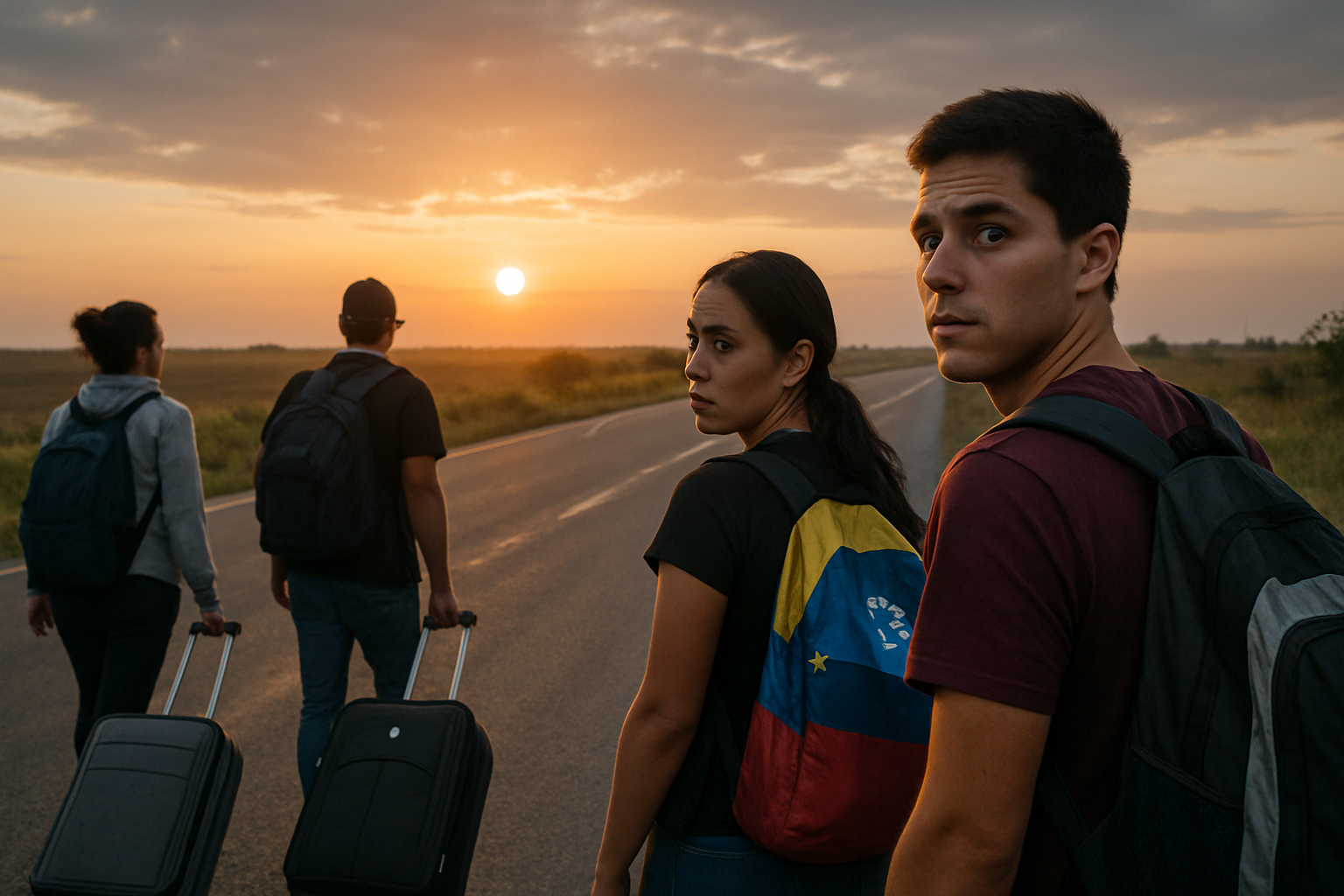
A comprehensive study by Venezuela's Migration Observatory (ODV) reveals that the vast majority of Venezuelan emigrants living abroad have no plans to return to their homeland in the short term, despite significant political changes and economic improvements since Acting President Delcy Rodríguez assumed power in January 2026.
The findings come as Venezuela experiences its most promising democratic opening in over two decades, with over 750 political prisoners released, unprecedented US-Venezuela diplomatic engagement, and oil exports surging 60% to 800,000 barrels daily. Yet these dramatic improvements have not translated into widespread diaspora interest in immediate repatriation.
Limited Return Interest Despite Improvements
The ODV study, which surveyed Venezuelan emigrants across multiple host countries, indicates that only a small fraction of the estimated 7.7 million Venezuelans living abroad are considering returning in the near future. This reluctance persists even as the interim government has implemented sweeping reforms including the most comprehensive political prisoner amnesty in recent Latin American history.
The research comes at a crucial moment for Venezuela's transition. Since Nicolás Maduro's removal from power on January 3, 2026, the country has undergone rapid transformation. The United States has displaced China as Venezuela's top oil customer, comprehensive amnesty legislation covering 1999-2026 political offenses has been unanimously approved by the National Assembly, and international relations are being restored with countries like the Dominican Republic.
Historical Context of Venezuelan Emigration
The Venezuelan migration crisis, which began intensifying during the Chávez-Maduro era, represents one of the largest displacement crises in the Western Hemisphere's modern history. Economic collapse, political persecution, and humanitarian emergencies drove millions from their homeland over the past two decades.
Memory of the journey remains fresh for many emigrants. The dangerous trek through Colombia, Ecuador, Peru, and beyond to reach countries like Chile, Argentina, or the United States created lasting trauma that influences return decisions. Many Venezuelan families have established new roots, obtained legal status, and built economic stability in host countries.
"The improvements in Venezuela are encouraging, but building a new life abroad takes tremendous sacrifice. Many families are not ready to risk that stability for uncertainty at home."
— Venezuelan Migration Observatory, Study Summary
Economic Considerations Drive Decision-Making
Despite Venezuela's economic recovery indicators - including the dramatic increase in oil production and exports - many emigrants remain skeptical about long-term stability. The country still faces significant challenges including hyperinflation, infrastructure decay, and power outages that continue despite international assistance programs.
Venezuelan workers abroad have often achieved economic stability that would be difficult to replicate immediately upon return. In countries like Colombia, Peru, and Ecuador, established Venezuelan communities provide employment networks and social support that facilitate integration.
The study reveals that economic security ranks as the primary factor influencing return decisions, followed by educational opportunities for children, healthcare access, and political stability guarantees.
Political Reforms Yet to Convince Diaspora
Even the unprecedented political prisoner amnesty program, which has freed over 750 detainees since January 2026 under the comprehensive 1999-2026 amnesty law, has not significantly altered diaspora return intentions. Many emigrants cite the need to observe long-term democratic consolidation rather than immediate political changes.
The case of opposition leader Juan Pablo Guanipa - released from prison but then placed under house arrest with electronic monitoring - illustrates the cautious optimism many emigrants feel about political reforms. While historic, the changes are viewed as requiring time to prove their sustainability.
María Corina Machado's announced intention to return to Venezuela "in a few weeks" to "guarantee a transition to democracy" has generated international attention, but has not sparked a broader diaspora return movement. The Nobel Peace Prize laureate's symbolic return represents political reconciliation rather than mass repatriation.
Success Stories Provide Alternative Models
The study contrasts Venezuelan hesitancy with successful diaspora reintegration programs in other countries. Guyana's diaspora engagement initiative, led by Hugh Todd, successfully facilitated the return of over 2,000 overseas Guyanese in five years through structured opportunity-based policies.
However, Venezuela's situation differs significantly due to the scale of displacement and the complexity of political transition. While countries like Guyana created proactive engagement for voluntary returns, Venezuela faces the challenge of convincing emigrants who fled crisis conditions rather than seeking economic opportunities abroad.
International Mediation and Diplomatic Progress
International efforts to support Venezuela's transition continue through multiple channels. Former Spanish Prime Minister José Luis Rodríguez Zapatero has maintained mediation efforts since February, while Cardinal Baltazar Porras organizes nationwide prayer vigils adding moral authority to the reconciliation process.
The unprecedented US-Venezuela diplomatic engagement, including Energy Secretary Chris Wright's historic Caracas visit and comprehensive energy cooperation agreements, provides international legitimacy to the transition. However, these diplomatic successes have not yet translated into diaspora confidence for immediate return.
The broader international response remains cautious. While the Dominican Republic has reopened relations and Brazil and the EU express careful support, the international community continues monitoring whether changes represent genuine democratic reform or cosmetic adjustments.
Regional Immigration Policy Context
Venezuelan emigrant decision-making occurs within a broader global context of restrictive immigration policies. European Union countries have implemented increasingly strict asylum procedures, while traditional destination countries face their own economic and political pressures that affect immigrant integration.
The timing of potential return decisions coincides with global migration challenges that have led to enhanced border security measures and reduced humanitarian protections in many regions. This context makes the security of current legal status abroad particularly valuable for Venezuelan emigrants.
Future Implications for Venezuelan Society
The reluctance of the diaspora to return immediately poses long-term challenges for Venezuela's reconstruction. The emigrants include many skilled professionals, entrepreneurs, and young people whose expertise could contribute to national recovery efforts.
However, the study also suggests that return interest may increase over time if political and economic stability prove sustainable. Many respondents indicated they would consider return in the medium to long term, pending continued democratic progress and economic recovery.
The Venezuelan case may serve as a template for understanding diaspora return patterns following major political transitions. Unlike countries where emigrants fled specific conflicts with clear endpoints, Venezuela's crisis involved systematic institutional breakdown requiring comprehensive reconstruction.
Ongoing Challenges and Monitoring
Despite releasing over 750 political prisoners, Venezuelan authorities still detain over 600 political prisoners according to human rights organization Foro Penal. The implementation of the amnesty law faces ongoing challenges, with many releases involving conditional rather than complete freedom.
Recent developments, including hunger strikes at the Rodeo I detention facility involving over 200 political prisoners, demonstrate that reconciliation remains incomplete. Argentine gendarme Nahuel Gallo's participation in these protests, as confirmed by his wife María Constanza Cipriani, highlights continuing international dimensions of the political prisoner issue.
The study recommendations emphasize the need for sustained democratic progress, economic stability, and international monitoring to build diaspora confidence in Venezuela's transformation. Without addressing fundamental concerns about long-term stability, return rates are likely to remain limited regardless of short-term improvements.
Conclusion
The Venezuelan diaspora's reluctance to return home immediately reflects the complexity of reconstruction following systematic political and economic collapse. While Venezuela experiences its most promising democratic opening in decades, emigrants prioritize proven stability over promising changes.
The ODV study serves as a sobering reminder that political transitions, however dramatic, require sustained commitment and demonstrated results to rebuild the trust necessary for large-scale diaspora return. For the millions of Venezuelans abroad, the question is not whether improvements are occurring, but whether they will prove durable enough to justify abandoning hard-won stability in host countries.
As Venezuela continues its democratic transition under Acting President Delcy Rodríguez, the diaspora response will serve as a critical indicator of the country's long-term transformation credibility. The success of reconciliation efforts may ultimately be measured not just by political prisoner releases or economic indicators, but by the willingness of Venezuelan emigrants to return home.