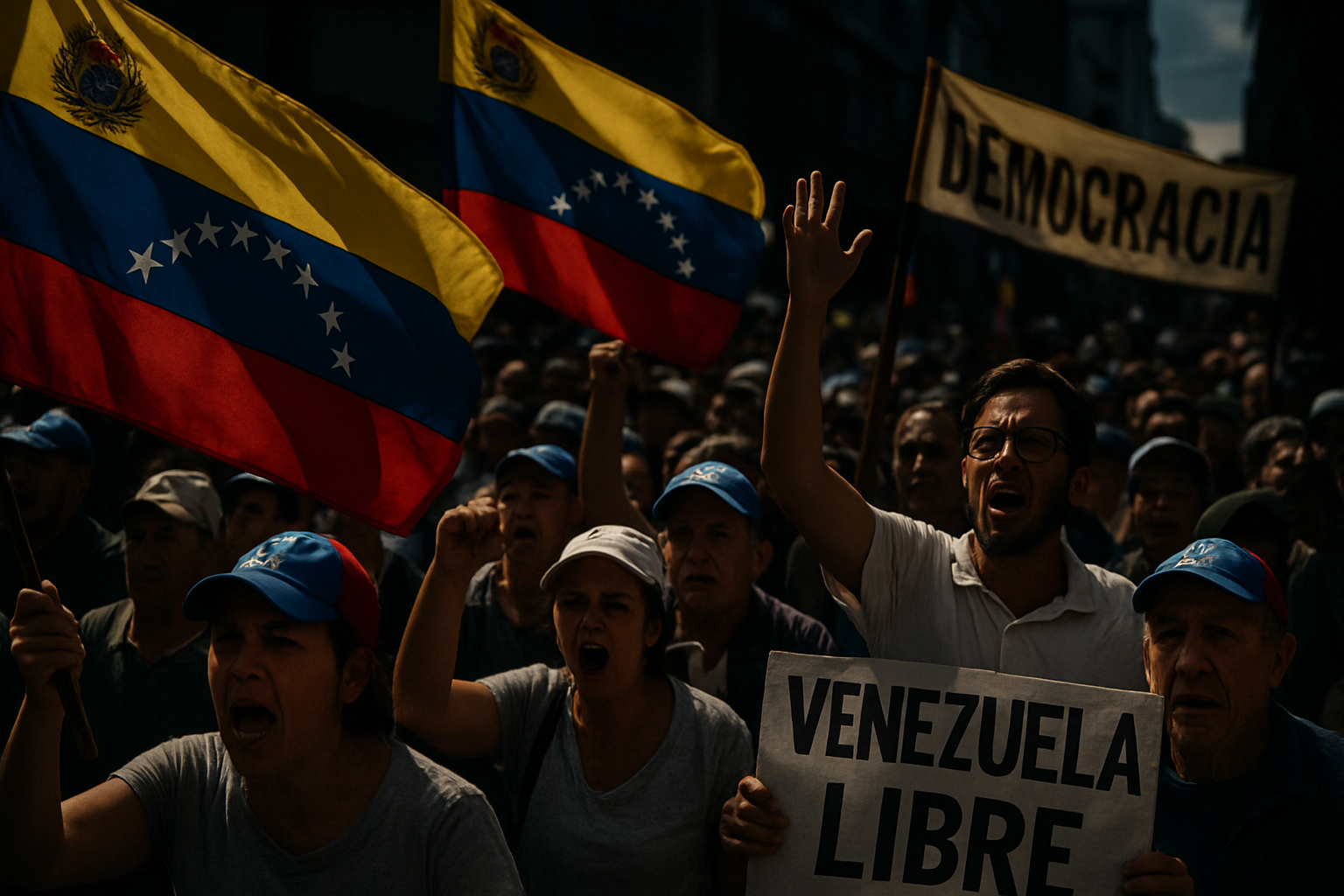
Venezuelan opposition leader Juan Pablo Guanipa was re-arrested on February 9, 2026, less than 12 hours after his release from detention, in a dramatic development that has cast doubt on Venezuela's commitment to genuine democratic reform under Acting President Delcy Rodríguez.
Guanipa, a former National Assembly vice-president and close ally of Nobel Peace Prize laureate María Corina Machado, had been freed on February 8 as part of an accelerating amnesty program that has released over 400 political prisoners since January 2026. However, his freedom was short-lived, lasting fewer than 12 hours before authorities detained him again.
Swift Re-Arrest Sparks International Concern
According to Venezuelan government minister Diosdado Cabello, the re-arrest was justified because Guanipa "tried to create chaos in the country." Cabello defended the action, stating that "justice works here" in Venezuela. The prosecutor's office clarified that it was a "new arrest" for allegedly violating the conditions of his release, which included restrictions on speaking publicly about his case.
During his brief hours of freedom, Guanipa toured Caracas by motorcycle and met with relatives of political prisoners, actions that authorities claim violated his release conditions. His son, Ramón Guanipa, has since demanded proof of life for his father, stating on social media that he is now in "forced disappearance."
"My father is in forced disappearance. We demand immediate proof of life."
— Ramón Guanipa, Son of Juan Pablo Guanipa
Background: A Symbol of Opposition Resistance
Juan Pablo Guanipa's case has become emblematic of Venezuela's ongoing struggle between democratic forces and authoritarian control. He was originally arrested in August 2024 during a massive crackdown following disputed elections that year. His detention was part of a broader pattern of political persecution under the Maduro regime that saw hundreds of opposition figures, journalists, and activists imprisoned.
As a former National Assembly vice-president and prominent opposition leader, Guanipa represents the institutional face of Venezuelan democracy. His close relationship with María Corina Machado, who won the Nobel Peace Prize for her work defending democratic institutions, has made him a high-profile target for government repression.
The Amnesty Program's Mixed Results
Guanipa's release on February 8 was part of a comprehensive amnesty program launched by Acting President Delcy Rodríguez following Nicolás Maduro's removal from power in January 2026. The program has so far freed over 400 political prisoners, representing the largest political prisoner release in recent Latin American history.
The amnesty law, which passed its first reading unanimously in the National Assembly on February 5, covers political offenses from 1999-2026. National Assembly President Jorge Rodríguez had promised that ALL remaining political prisoners would be freed "between Tuesday and Friday at latest" following the law's second reading on February 11.
International Reactions and Diplomatic Implications
The re-arrest has drawn sharp criticism from international observers who view it as a test case for Venezuela's democratic transition. María Corina Machado had earlier denounced what she called Guanipa's "kidnapping," highlighting the continued risks faced by opposition leaders even during the supposed democratic opening.
The incident occurs amid unprecedented diplomatic engagement between Venezuela and the United States. Acting President Rodríguez has met with U.S. Chargé d'Affaires Laura Dogu at Miraflores Palace in the highest-level diplomatic contact since 2019. Secretary of State Marco Rubio has outlined a three-phase reconstruction plan for Venezuela focusing on stabilization, economic recovery, and democratic transition.
However, Guanipa's re-arrest suggests that the transition from authoritarian rule to democracy remains fragile and contested. International media reports, including coverage from Caracas Chronicles, describe the incident as a test of Acting President Delcy Rodríguez's "political openness" – a test that critics argue she has failed.
Civil Society Concerns and Family Demands
Human rights organizations have expressed mixed reactions to the amnesty process. While supporting the release of political prisoners, groups like Cofavic have emphasized that releases are "restitution of rights, not State favor," indicating that these individuals should never have been imprisoned in the first place.
Opposition leader Andrés Velásquez has questioned the necessity of an amnesty law entirely, arguing that political prisoners "are innocent" and should be released without any legal process that might imply guilt.
The Committee of Mothers for Truth has demanded family participation in the verification and implementation of prisoner releases, highlighting concerns about transparency and accountability in the process.
Economic Context of Political Transition
The political drama unfolds against the backdrop of significant economic changes in Venezuela. Oil exports have surged 60% to 800,000 barrels daily since January, with the United States displacing China as Venezuela's top oil customer. This economic transformation has accompanied the political transition but also creates pressure for stability that may influence how authorities handle opposition figures.
The Dominican Republic has reopened commercial relations with Venezuela, while Brazil and the European Union have expressed cautious support for the democratic transition. However, Venezuela continues to face massive challenges including hyperinflation, infrastructure decay, and oil production that remains well below historical levels.
Looking Ahead: Tests of Democratic Commitment
Guanipa's case represents a critical test of whether Venezuela's interim government is committed to genuine democratic reform or merely engaging in cosmetic changes. The international community is closely monitoring developments as indicators of Venezuela's democratic transformation and human rights progress.
The incident also raises questions about the implementation of the amnesty law and whether promised releases will be meaningful and lasting. With hundreds of political prisoners still detained and the law's second reading scheduled for February 11, the coming days will be crucial in determining the trajectory of Venezuela's democratic transition.
For international observers, the Guanipa case highlights the ongoing challenges in Latin America's efforts to transition from authoritarian rule to stable democracy. The success or failure of Venezuela's amnesty program could serve as a model or cautionary tale for other countries grappling with similar challenges across the region.
As Venezuela continues its complex transition, the treatment of opposition leaders like Juan Pablo Guanipa will remain a bellwether for the country's democratic future and its relationship with the international community.