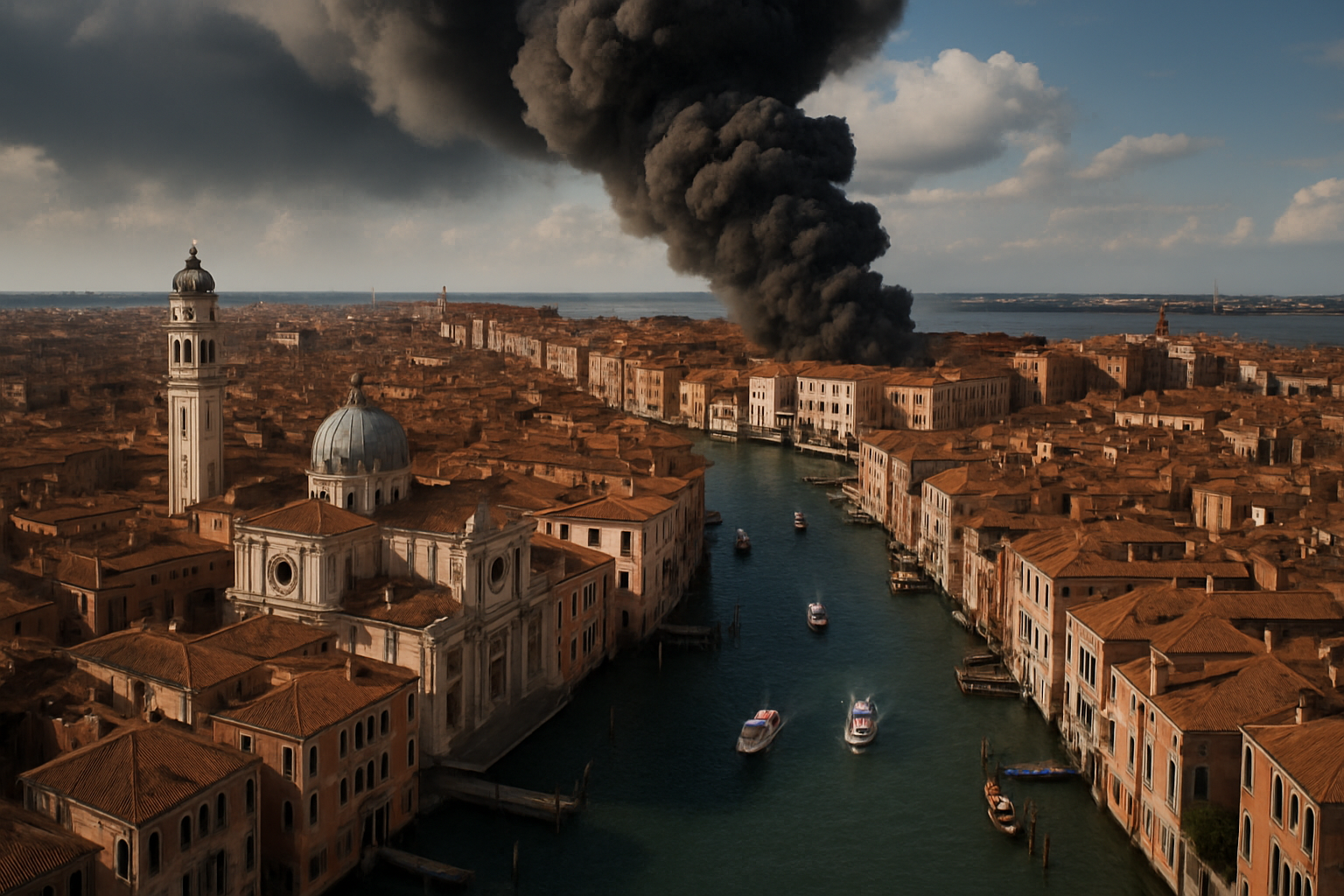
A fire erupted at the Serbian pavilion during the Venice Biennale on March 18, 2026, sending a dramatic column of black smoke across the historic city and creating alarming scenes as emergency responders battled the blaze amid challenging wind conditions.
The fire broke out on the roof of the Serbian pavilion at approximately 10:30 AM local time, according to reports from Italian media outlets. The incident occurred during one of the world's most prestigious international art exhibitions, which has been running since the late 19th century and attracts hundreds of thousands of visitors annually.
Initial reports from Il Sole 24 ORE indicated that the fire was contained to the exterior roof covering, with no injuries reported and no damage to the interior exhibitions, furnishings, or other pavilion structures. However, the situation proved more challenging than initially assessed.
Strong Winds Complicate Emergency Response
According to Repubblica.it, the fire "erupted from the roof of the Serbian pavilion and continued to feed itself even after initial interventions due to strong gusts of wind." The meteorological conditions significantly hampered firefighting efforts and prevented quick containment of the blaze.
The dramatic scenes unfolded as Venice experienced unseasonably strong winds that fanned the flames and made the fire particularly difficult to control. Emergency services deployed multiple units to the Giardini area where the national pavilions are located, with firefighting boats approaching via Venice's canal system to support ground operations.
The column of black smoke became visible throughout Venice's historic center, creating concern among tourists and residents who could see the plumes rising above the city's Renaissance skyline. Social media posts from witnesses showed the stark contrast between Venice's centuries-old architecture and the modern emergency response.
Venice Biennale in Context of Cultural Tensions
The incident occurs during a particularly significant edition of the Venice Biennale, which has been marked by international diplomatic tensions. In recent months, 22 European countries had protested Russia's participation in the 2026 Biennale through a joint ministerial letter, reflecting broader geopolitical concerns affecting cultural institutions worldwide.
The Serbian pavilion's location in the historic Giardini area places it among the most prestigious national presentations at the Biennale. The pavilion typically showcases contemporary Serbian artists and has been an important cultural diplomacy platform for Serbia's international artistic presence.
This year's Biennale has already attracted significant international attention as part of what cultural observers have termed the "2026 Cultural Renaissance" - a period of unprecedented global cultural activity and international artistic collaboration that has characterized the early months of 2026.
Emergency Response and Safety Measures
Venice's emergency services, experienced in dealing with unique challenges posed by the city's canal-based infrastructure, deployed specialized equipment designed for the historic environment. Fire boats navigated the narrow waterways to position crews strategically around the affected area.
The Biennale organization immediately activated emergency protocols, evacuating nearby pavilions as a precautionary measure while maintaining operations in unaffected areas of the exhibition. Visitors were temporarily redirected from the Giardini section during the active firefighting operations.
Local authorities worked to ensure the safety of artworks and installations in neighboring pavilions, given the proximity of national presentations and the potential for fire or smoke damage to spread to adjacent structures.
Cultural and Economic Impact
The Venice Biennale represents one of Italy's most important cultural events, contributing significantly to Venice's tourism economy and international cultural prestige. The exhibition typically runs for seven months, from April through November, drawing art collectors, critics, artists, and cultural enthusiasts from around the world.
The incident highlights ongoing challenges facing historic cultural institutions in adapting to modern safety requirements while preserving architectural heritage. Venice's unique environment presents particular challenges for emergency response, requiring specialized equipment and procedures adapted to the city's canal system.
Insurance and restoration experts will likely need to assess both immediate fire damage and potential long-term impacts from smoke exposure. The art world will be watching closely to understand the full extent of damage to what could be irreplaceable contemporary artworks.
Investigation and Future Implications
Authorities have initiated a full investigation into the cause of the fire, examining everything from electrical systems to potential maintenance issues that might have contributed to the incident. The timing during the Biennale's active period will likely prompt renewed scrutiny of safety protocols at international cultural events.
The incident also raises broader questions about climate adaptation for cultural institutions, as extreme weather events become more frequent. The strong winds that complicated firefighting efforts reflect changing weather patterns that cultural institutions worldwide must increasingly consider in their emergency planning.
As Venice continues to grapple with challenges ranging from overtourism to climate change impacts including rising sea levels, the fire at one of its most important cultural events underscores the vulnerability of the city's cultural infrastructure to both immediate emergencies and long-term environmental pressures.
The Serbian pavilion fire represents a significant incident during what has been described as a watershed year for international cultural cooperation, occurring amid a global renaissance of cultural activity that has characterized 2026. The art world will be closely monitoring recovery efforts and any potential impacts on the remainder of this year's Venice Biennale programming.