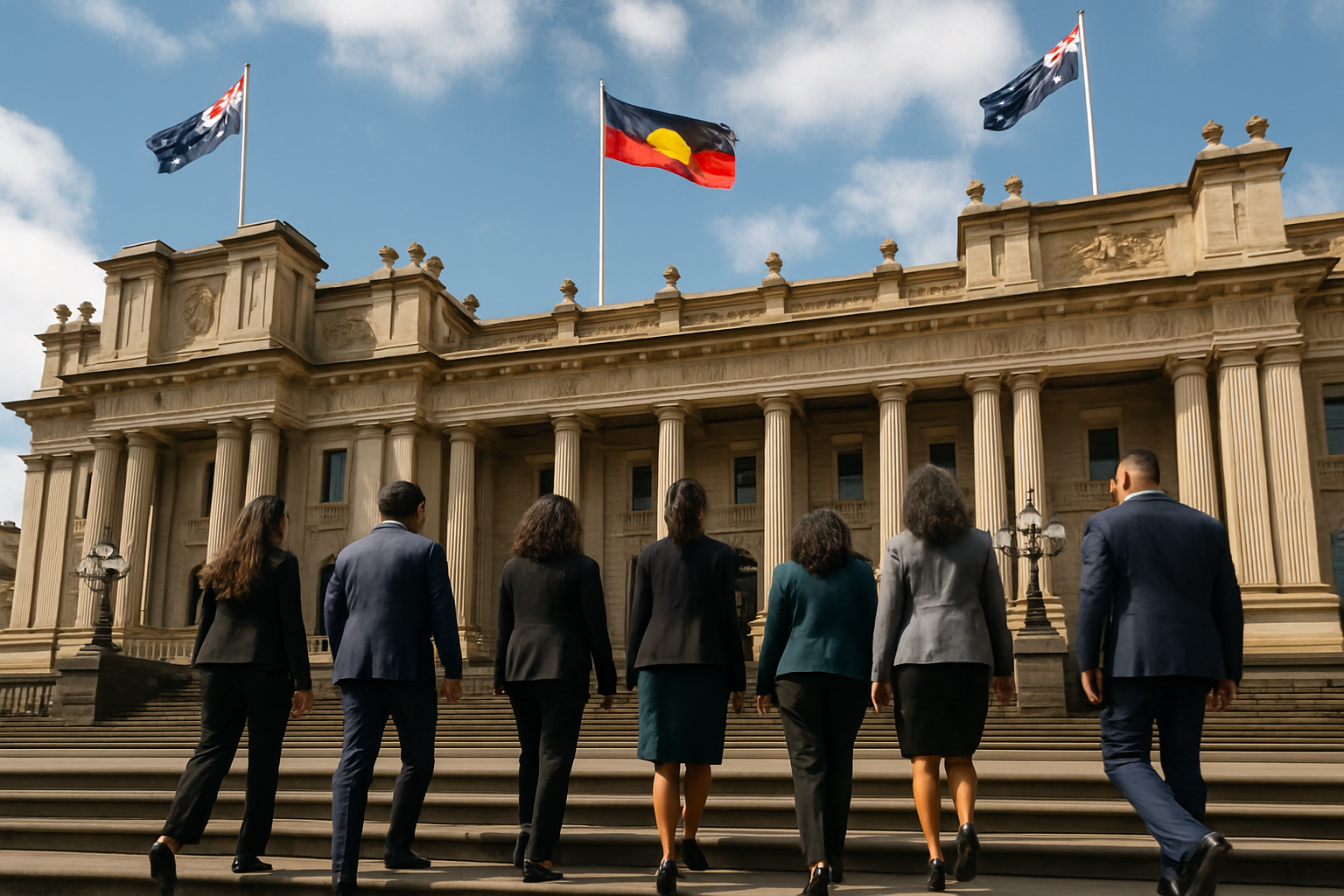
Victoria's historic treaty elections are underway with successful candidates beginning their new roles, but the process faces unprecedented political uncertainty as the Liberal opposition maintains its commitment to abolish the agreement if elected in November 2026.
The First Peoples' Assembly of Victoria has confirmed that treaty candidates who emerged victorious in recent elections are now taking on their responsibilities within the groundbreaking framework designed to establish Australia's first formal treaty between a state government and its Indigenous peoples.
Historic Context and Current Momentum
The Victorian treaty process represents a watershed moment in Australian Indigenous rights, building upon a broader "Cultural Renaissance" that has gained momentum throughout 2026. This renaissance has seen significant developments including the Vatican's historic repatriation of sacred items to First Nations communities in Canada, led by National Chief Cindy Woodhouse Nepinak, and the groundbreaking Musqueam urban rights agreement covering Metro Vancouver territories.
The treaty elections mark the culmination of years of advocacy and legislative work, establishing the First Peoples' Assembly as the representative body empowered to negotiate terms directly with the Victorian government. The process has garnered international attention as a potential model for reconciliation between settler governments and Indigenous peoples.
Opposition Threats and Electoral Stakes
The November 2026 Victorian election has emerged as a critical juncture for the treaty's future. The Liberal opposition's unwavering commitment to scrapping the agreement has transformed what began as a bipartisan reconciliation effort into a politically contentious issue that could determine the trajectory of Indigenous rights in Australia's most populous state.
Political analysts describe the opposition's stance as reflecting broader tensions within Australian society regarding Indigenous sovereignty and the practical implications of formal treaty arrangements. The uncertainty surrounding the treaty's future has created urgency among Indigenous advocates and their supporters to demonstrate tangible progress before the election.
National and International Implications
The Victorian treaty process has been closely monitored by Indigenous communities across Australia and internationally. Success would establish a precedent for similar agreements in other Australian states and territories, potentially influencing the broader national conversation about constitutional recognition and Indigenous sovereignty.
The stakes extend beyond Victoria's borders, with the outcome likely to impact federal government approaches to Indigenous affairs and Australia's international standing on human rights. Recent international developments, including Canada's strengthening of Indigenous consultation frameworks through the Musqueam agreement, have highlighted Australia's relative lag in formal recognition of Indigenous peoples' rights.
Contemporary Challenges and Institutional Barriers
Even as the treaty process advances, Indigenous communities continue to face institutional barriers that underscore the urgency of formal recognition. Recent incidents have highlighted ongoing challenges, including the Federation Council's removal of Indigenous flags from its chamber on the NSW-Victoria border due to claimed lack of formal display protocols, despite strong community opposition.
Such administrative decisions reflect the broader pattern of institutional structures that were originally designed without Indigenous input continuing to create barriers to democratic participation. Indigenous advocates argue that these examples demonstrate why formal treaty recognition is essential for overcoming systemic obstacles to equality and representation.
The Electoral Countdown
With approximately eight months remaining before the Victorian election, treaty supporters face the challenge of demonstrating concrete benefits while building broader public support for the process. Recent polling suggests that while many Victorians support the concept of reconciliation, understanding of the treaty's specific mechanisms and implications remains limited.
The First Peoples' Assembly has indicated plans for increased community engagement and education campaigns designed to build awareness of the treaty's potential benefits for both Indigenous and non-Indigenous Victorians. These efforts will need to counter opposition messaging that portrays the treaty as divisive or economically burdensome.
Economic and Social Dimensions
Supporters argue that the treaty framework offers opportunities for economic development, improved health and education outcomes, and enhanced cultural preservation for Indigenous communities. The agreement includes provisions for consultation on matters affecting Indigenous peoples and recognition of cultural protocols in government decision-making.
Critics, however, have raised concerns about the treaty's potential impact on existing legal frameworks and its implications for resource management and development approvals. These concerns have been amplified by the opposition's campaign rhetoric, which frames the treaty as potentially hindering economic development.
Lessons from International Experience
The Victorian treaty process is occurring within a global context of evolving Indigenous rights recognition. The success of the Canadian Musqueam agreement in establishing consultation frameworks for urban Indigenous rights provides both inspiration and practical lessons for the Victorian process.
Similarly, the Vatican's repatriation of sacred cultural items to First Nations communities, facilitated by ceremony led by National Chief Cindy Woodhouse Nepinak, demonstrates the growing international momentum for Indigenous cultural recognition and reparations.
Technology and Cultural Preservation
The Victorian treaty process has also embraced technological innovation to support cultural preservation while respecting sacred protocols. Digital platforms have been developed to facilitate community consultation while ensuring that sensitive cultural information remains protected according to traditional protocols.
This technological integration represents a forward-looking approach that could serve as a model for other jurisdictions seeking to balance modern democratic processes with traditional Indigenous governance systems.
The Path Forward
As the treaty elections conclude and successful candidates assume their roles, the focus shifts to the practical work of negotiation and implementation. The Assembly faces the dual challenge of advancing substantive negotiations with the current government while building sufficient public support to ensure the treaty's survival regardless of the election outcome.
The coming months will be crucial for demonstrating the treaty's value proposition to Victorian voters. Success will require not only effective advocacy but also tangible progress on issues that matter to both Indigenous and non-Indigenous communities, including economic development, environmental protection, and social cohesion.
A Template for National Change
The Victorian treaty process represents more than a local policy initiative; it embodies a potential template for transforming Indigenous-settler relations throughout Australia. The success or failure of this groundbreaking agreement will likely influence Indigenous rights advocacy across the country for decades to come.
As successful candidates take up their positions within the treaty framework, they carry not only the hopes of Victoria's Indigenous communities but also the aspirations of Indigenous peoples throughout Australia who see this process as a pathway to genuine recognition, sovereignty, and reconciliation.
The November election will ultimately determine whether Victoria becomes a model for Indigenous rights advancement or a cautionary tale about the fragility of progress in the face of political opposition. For Australia's Indigenous peoples, the stakes could not be higher.