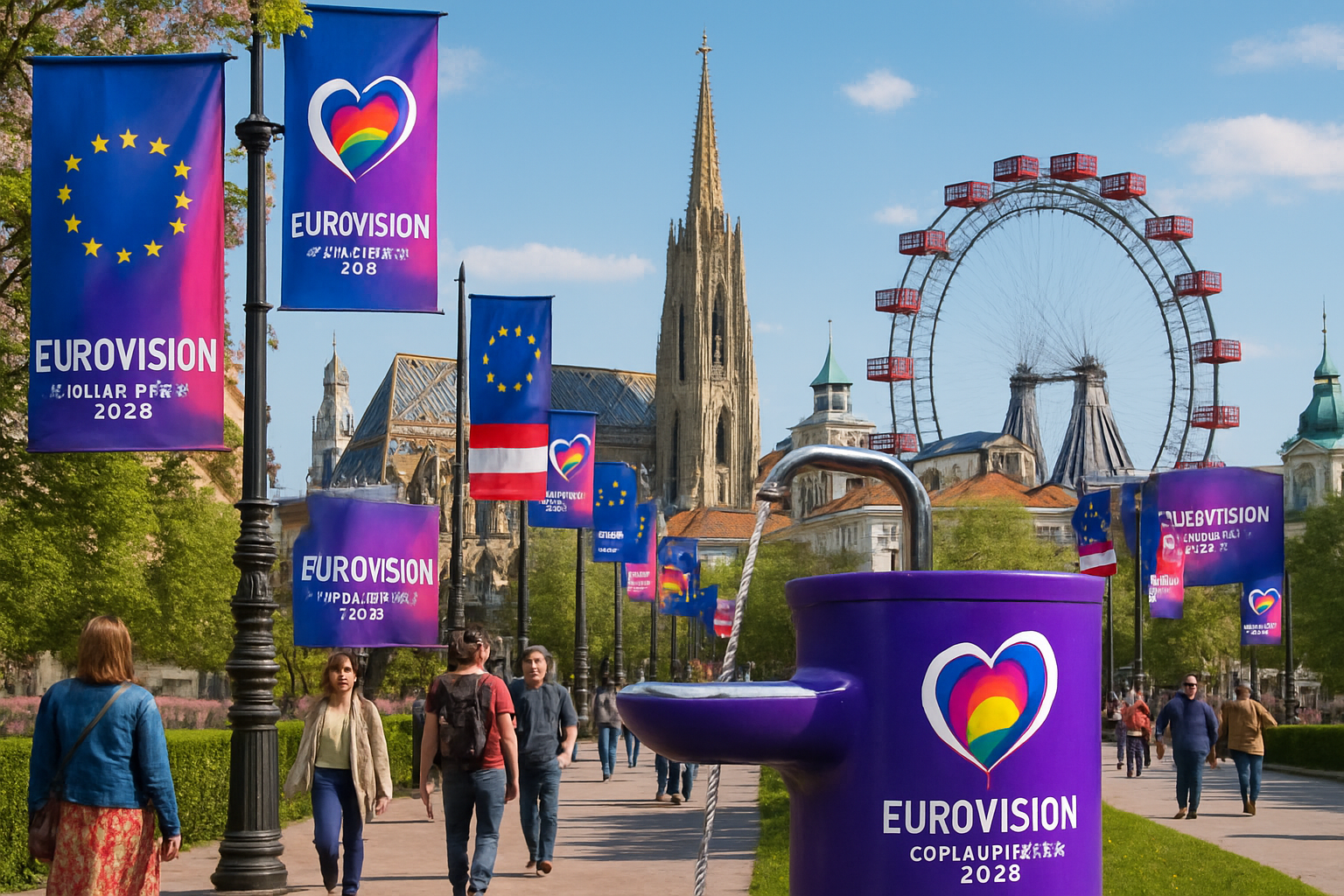
Ten years after its last hosting triumph, Vienna is transforming itself once again for the Eurovision Song Contest as the Austrian capital prepares to welcome the 70th edition of Europe's premier musical celebration in May 2026.
The comprehensive preparations extend far beyond the main venue, with the city implementing an ambitious program of cultural events, infrastructure improvements, and community engagement initiatives that position Eurovision 2026 as a centerpiece of Austria's broader cultural renaissance.
SingAlong Events Bring Eurovision to Residential Communities
In an innovative approach to community engagement, Vienna is launching special Eurovision SingAlong events directly in residential complexes throughout the city. These events, designed to bring "ESC-Stimmung" (Eurovision atmosphere) to "Wiener Häuser zum Leben" (Vienna's public housing), represent a fundamental shift from traditional elite cultural consumption toward inclusive community programming.
The initiative reflects Vienna's commitment to ensuring that Eurovision 2026 serves as a cultural celebration for all residents, not merely a spectacle for international visitors. By embedding Eurovision activities within Vienna's extensive public housing network, the city demonstrates how major cultural events can strengthen social cohesion while celebrating European diversity.
Infrastructure Enhancements: The "12 Points" Drinking Fountain Project
Deputy Mayor Jürgen Czernohorszky announced a unique infrastructure improvement program dubbed "12 Points für den Ausbau der Wiener Trinkbrunnen" (12 Points for the Expansion of Vienna's Drinking Fountains). This initiative will see twelve "Brunnhilden" (fountain structures) at heavily frequented locations throughout the city transformed with special Eurovision-themed designs.
The drinking fountain project represents Vienna's practical approach to Eurovision hosting - combining cultural celebration with lasting civic improvements that will benefit residents long after the contest concludes. The initiative also aligns with sustainable tourism practices, providing visitors with accessible hydration options while reducing plastic waste during the event.
"We're giving Vienna's infrastructure a Eurovision makeover that will serve both our guests and our residents for years to come."
— Deputy Mayor Jürgen Czernohorszky
ORF Wien's Comprehensive Programming Strategy
Austrian national broadcaster ORF Wien has announced an extensive programming schedule that extends Eurovision's cultural impact throughout the host period. The broadcaster emphasized that Eurovision's return to Vienna after a decade represents "ein einzigartiges musikalisches Großereignis" (a unique musical mega-event) that places the city "erneut in den Mittelpunkt" (once again at the center) of European cultural attention.
ORF's programming strategy demonstrates how public broadcasting can leverage major cultural events to strengthen national cultural identity while fostering international cooperation. The comprehensive coverage plan includes pre-contest cultural programming, behind-the-scenes documentary content, and post-contest analysis that positions Eurovision within broader discussions of European cultural development.
Building on 2015 Success
Vienna's 2026 preparations build extensively on lessons learned from the highly successful 2015 Eurovision hosting. That edition, won by Sweden's Måns Zelmerlöw, established Vienna as a premier Eurovision venue capable of delivering both technical excellence and cultural authenticity.
The decade between hostings has allowed Vienna to enhance its cultural infrastructure while maintaining the intimate, welcoming atmosphere that made the 2015 contest memorable. City officials report that venue improvements, transportation coordination, and visitor services have all been refined based on 2015 experience and subsequent international best practices.
Cultural Diplomacy and European Identity
Eurovision 2026 in Vienna occurs within the context of what cultural experts have termed the "February 2026 Cultural Renaissance" - an unprecedented period of coordinated European cultural programming emphasizing authentic artistic expression over manufactured content. Vienna's Eurovision preparations exemplify this broader movement toward culture as a tool for international understanding and community building.
The contest arrives at a crucial moment for European cultural cooperation. With 89% of Europeans demanding greater EU unity according to recent Eurobarometer polling, Eurovision 2026 provides a platform for demonstrating European values of diversity, cooperation, and peaceful cultural exchange through music.
Technology Integration with Cultural Authenticity
Vienna's preparations showcase sophisticated integration of modern technology with traditional cultural elements. Advanced staging capabilities will support ambitious artistic projects without compromising the authentic cultural expressions that define each participating nation's musical identity.
This approach reflects a mature understanding of how innovation can enhance rather than replace established cultural foundations. Digital platforms will extend Eurovision's global reach while maintaining the essential human connections and cultural authenticity that make the contest meaningful to participating communities.
Economic and Tourism Impact
Cultural tourism experts project significant economic benefits from Eurovision 2026, extending well beyond the contest weekend itself. The pre-contest cultural programming, infrastructure improvements, and enhanced international recognition are expected to generate lasting tourism revenue while supporting Vienna's creative industries.
The city's strategic approach to Eurovision hosting - combining immediate event management with long-term cultural infrastructure development - positions Vienna as a model for how cities can leverage major cultural events for sustainable economic and social benefits.
Community Ownership and Engagement
Perhaps most significantly, Vienna's Eurovision 2026 preparations emphasize community ownership of the cultural event. From residential SingAlongs to neighborhood fountain improvements, the city's approach ensures that local residents are active participants in Eurovision rather than merely passive observers of an international spectacle.
This community-centered strategy reflects broader trends in cultural event management, where successful celebrations require authentic local engagement alongside international appeal. Vienna's Eurovision 2026 preparations provide a template for how major cultural events can strengthen local communities while showcasing national culture to global audiences.
Looking Toward May 2026
As Vienna's Eurovision 2026 preparations intensify, the city stands poised to deliver not merely a successful television production, but a comprehensive cultural celebration that honors both Austrian hospitality and European diversity. The combination of practical infrastructure improvements, innovative community programming, and sophisticated cultural diplomacy positions Vienna's Eurovision 2026 as potentially the most community-integrated Eurovision hosting in the contest's seven-decade history.
The success of these preparations will be measured not only in television ratings and visitor satisfaction, but in the lasting cultural infrastructure and community engagement that Eurovision 2026 creates for Vienna residents. With its emphasis on inclusive celebration and lasting civic improvements, Vienna's Eurovision 2026 represents an evolution in how cities can approach major cultural events as opportunities for sustainable community development.