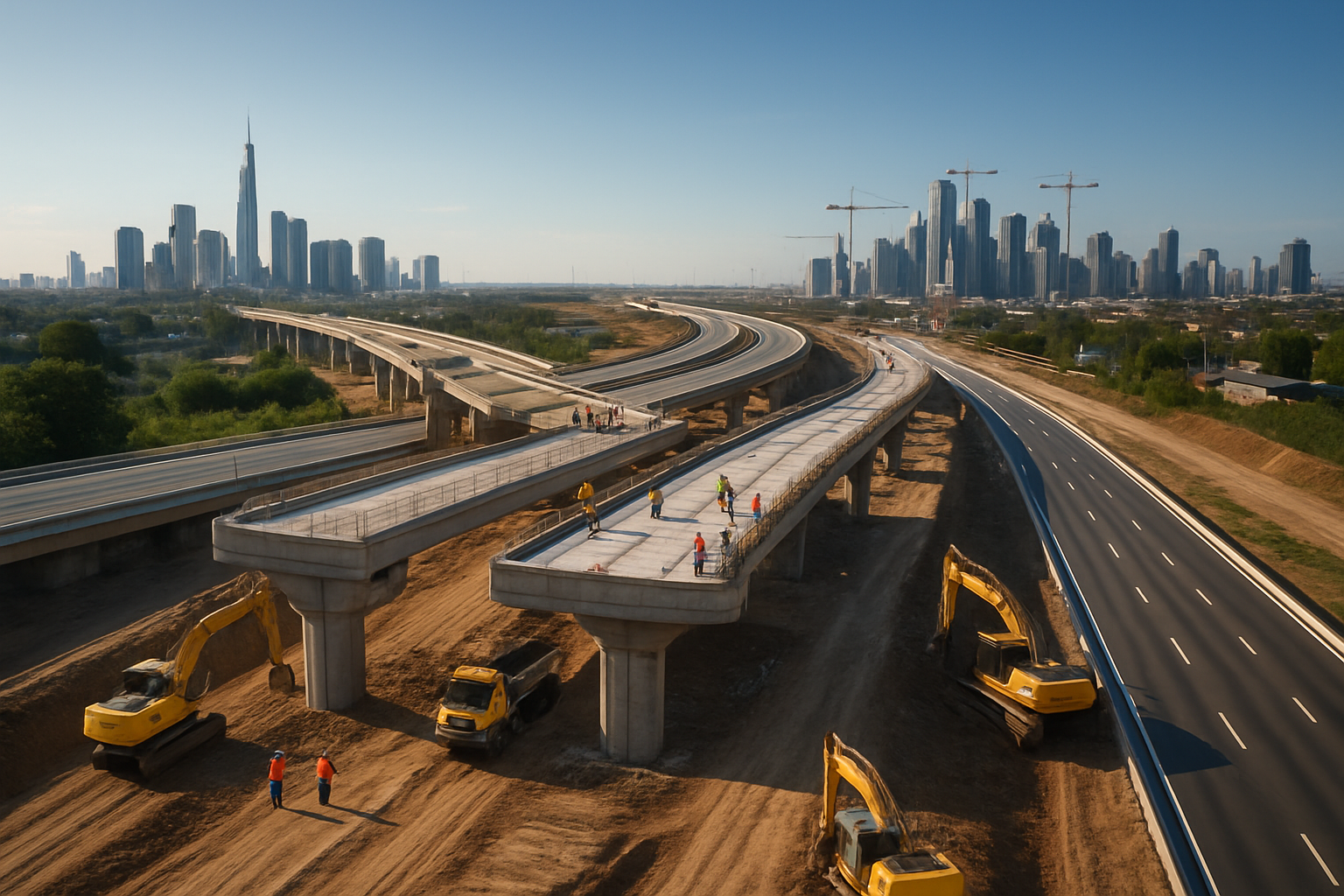
Two groundbreaking transportation projects on opposite sides of the globe underscore an unprecedented surge in infrastructure development that is reshaping global connectivity. Vietnam's proposed $755 million expressway linking Ho Chi Minh City to Cambodia and El Salvador's transformative Metrocable system represent the vanguard of a worldwide infrastructure renaissance that has mobilized over $570 billion in investments throughout 2026.
Vietnam's ambitious project aims to create a continuous high-speed road corridor between Ho Chi Minh City and Phnom Penh through a two-phase development plan. The initiative would connect Vietnam's existing HCMC-Moc Bai Expressway with Cambodia's Phnom Penh-Bavet route, establishing a crucial trade artery between the two Southeast Asian nations. This represents more than mere infrastructure development—it embodies Vietnam's strategic vision to position itself as a regional logistics hub while strengthening bilateral economic ties with Cambodia.
El Salvador's Metropolitan Revolution
Simultaneously, El Salvador is pioneering urban mobility solutions through its innovative Metrocable project. Public Works Minister Romeo Rodríguez announced that the cable car system will connect the Zacamil sector directly to Parque Cuscatlán, providing unprecedented access to San Salvador's historic center. The project promises to benefit approximately 200,000 residents who currently endure travel times of over an hour using traditional public transportation.
The Metrocable represents a paradigm shift in urban planning, demonstrating how developing nations can implement cutting-edge transportation solutions that dramatically improve quality of life. By reducing commute times from over an hour to roughly 30 minutes, the system will enhance economic opportunities, educational access, and healthcare connectivity for residents across the metropolitan area.

Regional Integration and Economic Impact
These projects exemplify the broader transformation occurring across developing economies, where infrastructure investment serves as both economic catalyst and regional integration tool. Vietnam's expressway project aligns with the Association of Southeast Asian Nations' (ASEAN) connectivity master plan, which seeks to enhance trade flows and reduce logistics costs across the region. The Ho Chi Minh City-Phnom Penh corridor will facilitate increased bilateral trade, reduce transportation costs for businesses, and strengthen supply chain resilience.
The economic implications extend far beyond immediate construction benefits. Vietnam's infrastructure development supports its ambition to become a regional manufacturing and logistics center, while El Salvador's urban mobility improvements directly address metropolitan challenges that have historically hindered economic development. Both projects demonstrate how strategic infrastructure investment can address immediate needs while positioning nations for long-term competitiveness.
"This development represents a significant step in improving connectivity and reducing travel times, which will directly impact the productivity and quality of life for hundreds of thousands of residents."
— Romeo Rodríguez, El Salvador's Public Works Minister
Technology Integration and Sustainability
Modern infrastructure projects increasingly incorporate smart technology and environmental considerations from the design phase. Vietnam's expressway proposal includes provisions for intelligent transportation systems, real-time traffic monitoring, and integrated logistics platforms that will optimize cargo flows between the two countries. The project also emphasizes environmental sustainability through advanced drainage systems, wildlife corridors, and renewable energy integration at service facilities.
El Salvador's Metrocable system showcases how aerial transportation can minimize environmental impact while maximizing urban connectivity. Unlike traditional road expansion, cable car systems require minimal ground-level disruption, preserve existing communities, and offer significantly lower carbon emissions per passenger compared to individual vehicle transportation.
Financing Innovation and International Cooperation
The financing mechanisms behind these projects reflect the evolution of infrastructure development in the 21st century. Vietnam's expressway proposal involves sophisticated public-private partnerships that leverage domestic construction expertise with international financing arrangements. This model allows for risk sharing while ensuring local capacity building and technology transfer.
El Salvador's approach demonstrates how smaller economies can implement transformative infrastructure through targeted investment and technical cooperation. The Metrocable project benefits from international expertise in cable car technology while maintaining local ownership and operational control, creating a sustainable model for urban mobility improvement.
Challenges and Implementation Considerations
Despite their promise, both projects face significant implementation challenges. Vietnam's cross-border expressway requires extensive coordination between Vietnamese and Cambodian authorities, including harmonization of technical standards, customs procedures, and maintenance protocols. Environmental assessments must address impact on the Mekong Delta region's sensitive ecosystem, while land acquisition processes require careful community consultation.
El Salvador's Metrocable system must navigate complex urban topography and integrate with existing transportation networks. The project requires sophisticated engineering to ensure safety in seismic conditions while minimizing disruption to established neighborhoods. Community engagement remains crucial for ensuring public acceptance and optimal route planning.
Global Infrastructure Context
These developments occur within a broader context of unprecedented global infrastructure investment. The $570 billion surge documented throughout 2026 includes major projects across Africa, Asia, and Latin America, from Kenya's Northern Corridor improvements to Croatia's sustainable transportation initiatives. This coordinated investment wave reflects recognition that infrastructure serves as the foundation for sustainable economic development, climate resilience, and international competitiveness.
The timing is particularly significant as nations seek to build resilience against supply chain disruptions while addressing climate change adaptation needs. Both Vietnam's expressway and El Salvador's Metrocable incorporate climate-resilient design principles that ensure long-term functionality despite changing environmental conditions.
Future Implications and Expansion Potential
Success of these initial phases could catalyze broader regional transformation. Vietnam's Ho Chi Minh City-Phnom Penh corridor may eventually extend to other Southeast Asian capitals, creating an integrated highway network that rivals Europe's autobahn system. El Salvador's Metrocable model could inspire similar projects across Latin America's mountainous urban areas, where traditional transportation infrastructure faces topographical constraints.
The projects also demonstrate how infrastructure investment can serve diplomatic and regional integration objectives. Vietnam's cross-border expressway strengthens bilateral relations with Cambodia while supporting both nations' economic development goals. El Salvador's urban mobility improvements enhance the country's attractiveness for international investment and tourism.
As construction progresses on both projects throughout 2026, they will provide valuable case studies for other developing economies seeking to modernize their transportation infrastructure. The combination of innovative financing, environmental sustainability, and community benefits established by these projects sets new standards for 21st-century infrastructure development.
The Vietnam-El Salvador infrastructure developments represent more than individual national projects—they embody a global shift toward strategic, sustainable, and technologically advanced transportation solutions that promise to reshape economic opportunities and improve millions of lives across the developing world.