Vietnam held general elections on March 15, 2026, for the 16th National Assembly and People's Councils at all levels, with approximately 93% of candidates representing the ruling Communist Party of Vietnam (CPV) in a process that underscores the socialist republic's distinctive approach to democratic governance.
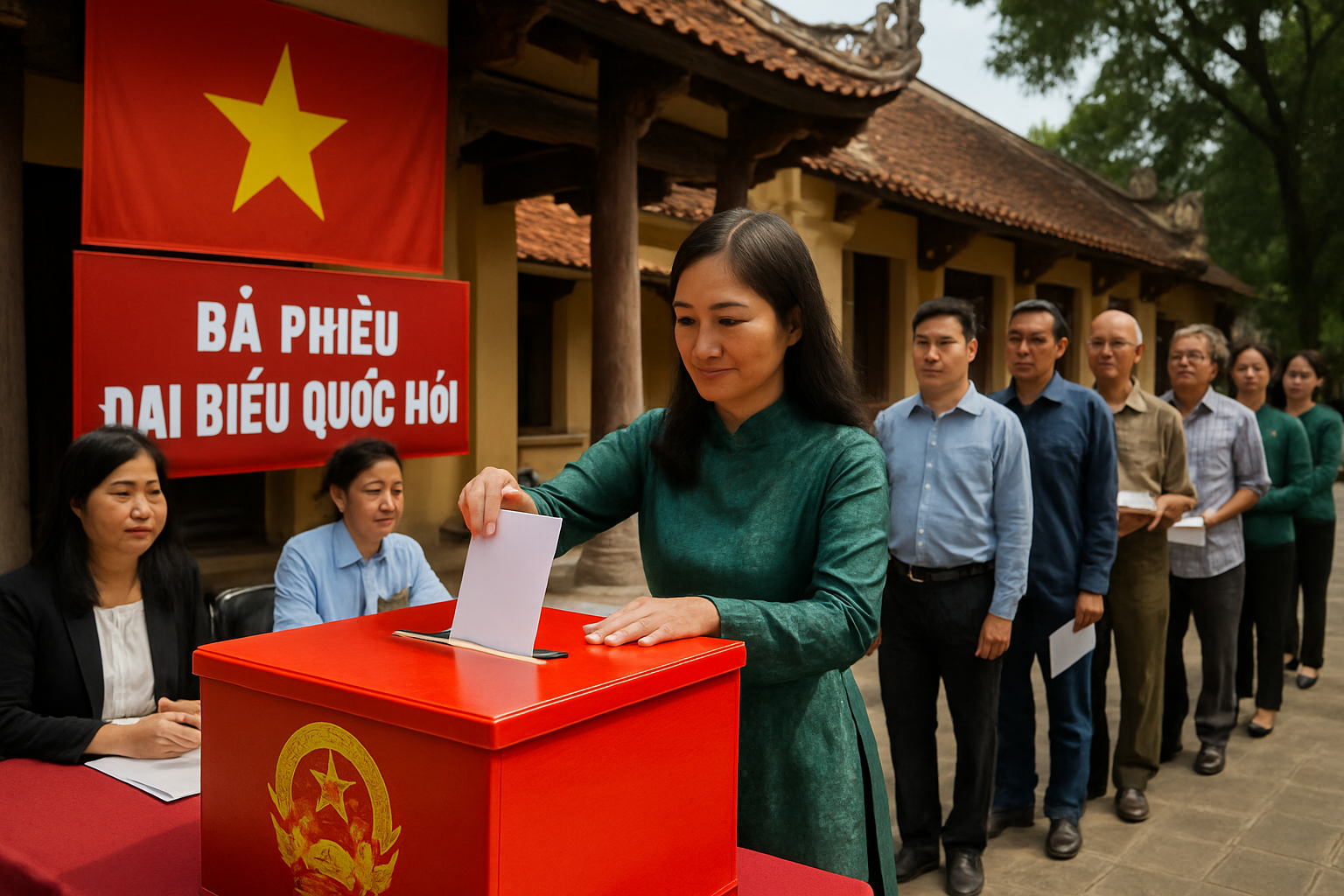
Nearly 79 million eligible voters across Vietnam participated in the electoral process, choosing representatives for the 2026-2031 tenure. The election featured the participation of the country's top leadership, including Party General Secretary and other high-ranking officials who cast their ballots in a demonstration of the democratic process within Vietnam's one-party system.
Communist Party Dominance in Candidate Selection
The overwhelming representation of Communist Party candidates reflects Vietnam's political structure, where the CPV serves as the guiding political force. This 93% representation is consistent with the country's constitutional framework, which establishes the Communist Party as the leading political organization representing the working class and the entire people.
The candidate selection process follows Vietnam's established democratic centralism principles, where potential representatives are vetted through party organizations and mass organizations before being presented to voters. This system ensures ideological alignment while maintaining what Vietnamese officials describe as "socialist democracy."
Electoral Process and Voter Participation
The elections took place across thousands of polling stations nationwide, with voters selecting deputies for both the National Assembly and various levels of People's Councils. The high voter turnout of nearly 79 million participants demonstrates continued civic engagement within Vietnam's political framework.
Vietnamese electoral law allows for multiple candidates per constituency, providing voters with choices even within the Communist Party framework. Independent candidates, while rare, can participate if they meet specific criteria and gain approval through the established vetting process.
Leadership Participation and Symbolism
The visible participation of Vietnam's top leaders in the voting process serves both practical and symbolic functions. Party and State leaders casting their ballots alongside ordinary citizens reinforces the principle of collective participation in the democratic process while demonstrating leadership commitment to the electoral system.
This leadership visibility during elections is a hallmark of Vietnamese political culture, emphasizing unity between the Party, State, and people in the country's democratic processes. The practice also serves to legitimize the electoral system by showing that even the highest officials participate as equals in the voting process.
International Context and Comparisons
Vietnam's electoral system differs significantly from multi-party democracies but follows patterns similar to other socialist states. The emphasis on Party leadership in candidate selection reflects the Marxist-Leninist principle of the vanguard party's role in representing working-class interests.
Compared to recent democratic transitions in neighboring countries like Bangladesh, where youth-led movements challenged established parties, Vietnam's elections represent continuity within an established socialist framework. The stability of this system contrasts with the political volatility experienced in other Southeast Asian democracies.
National Assembly Role and Responsibilities
The 16th National Assembly will serve as Vietnam's highest representative organ of the people and highest organ of state power for the 2026-2031 term. The Assembly's responsibilities include constitutional and legislative functions, overseeing government performance, and making key decisions on social and economic development.
Deputies elected to the National Assembly represent diverse sectors of Vietnamese society, including workers, farmers, intellectuals, ethnic minorities, and religious representatives, ensuring broad social representation within the Communist Party framework.
Economic and Social Priorities
The newly elected National Assembly will face significant challenges in guiding Vietnam's continued economic development. Key priorities include maintaining rapid economic growth, addressing environmental concerns, improving social services, and managing the country's integration into the global economy while preserving socialist principles.
Vietnam's economic success over recent decades, transforming from a war-torn nation to a rapidly developing economy, provides legitimacy to the political system. The new Assembly will need to address inequality, urbanization pressures, and climate change adaptation while maintaining political stability.
Regional and Global Implications
Vietnam's stable electoral process contributes to regional stability in Southeast Asia at a time when several neighboring countries face political transitions and democratic challenges. The country's consistent governance model provides predictability for international partners and regional cooperation frameworks.
As ASEAN's chair in recent years and a growing economic power, Vietnam's political stability through established electoral processes supports regional integration efforts and provides an alternative model of governance that balances economic development with political continuity.
The March 15, 2026 elections represent both continuity and renewal in Vietnamese politics, demonstrating the durability of the socialist system while providing opportunities for new leadership to address emerging challenges in the country's development trajectory.