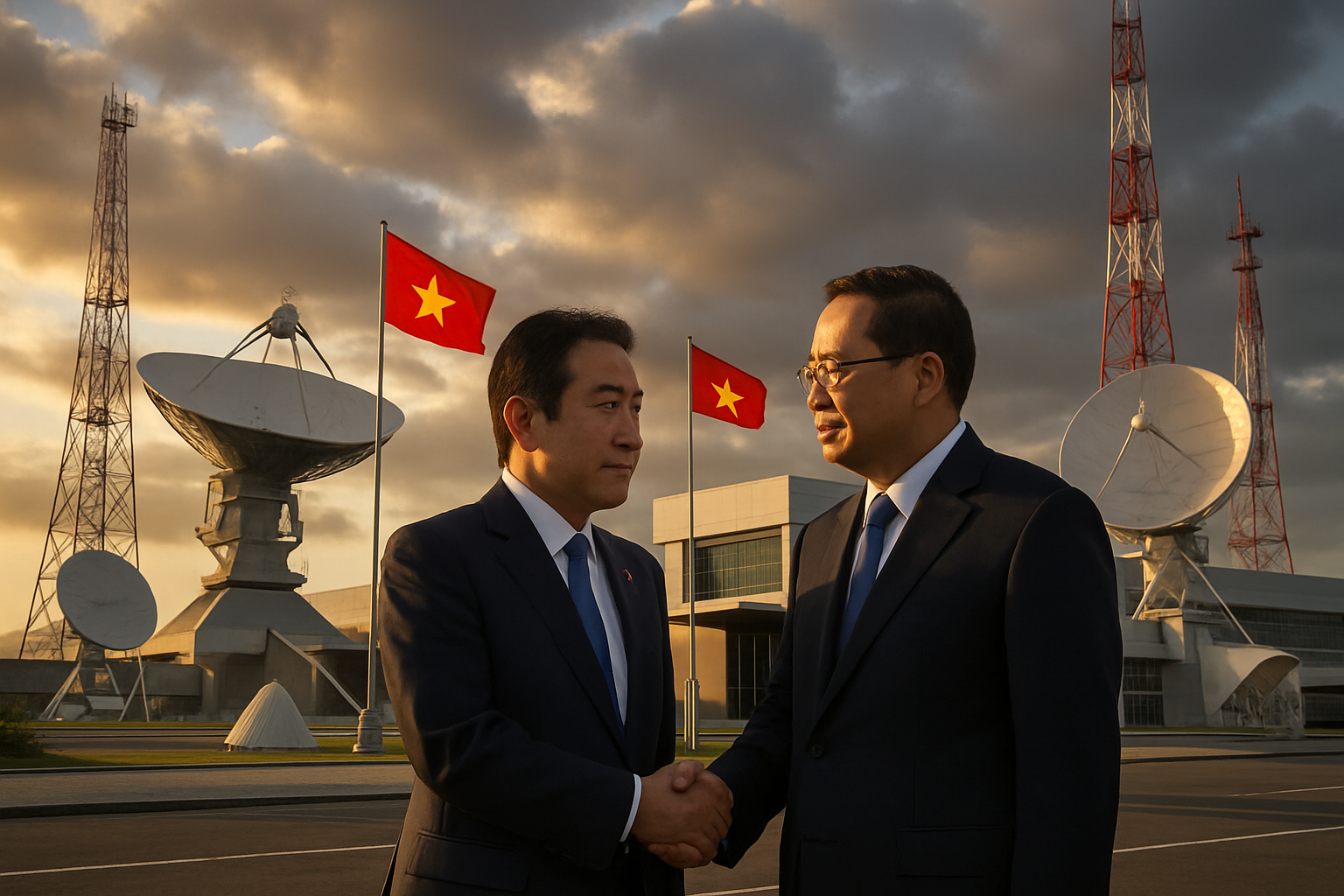
Vietnam officially inaugurated its first National Space Center (VNSC) on March 13, 2026, with Prime Minister Pham Minh Chinh presiding over a ceremony that marks a historic milestone in the country's space program development and strengthens technological cooperation with Japan.
The project was developed with Official Development Assistance (ODA) from Japan, highlighting the growing technological partnership between the two nations during what space industry experts call the "space economy golden age" transition. The center's opening positions Vietnam as an emerging player in Southeast Asia's expanding space capabilities.
Strategic Partnership with Japan
The Vietnam National Space Center represents a significant achievement in Japan-Vietnam technological cooperation, building on Japan's extensive experience in space technology and satellite development. Japan's contribution through ODA financing demonstrates its commitment to supporting regional space capability development while strengthening bilateral partnerships across Southeast Asia.
This collaboration occurs amid Japan's own space industry evolution, which has faced recent challenges including multiple delays to the Space One Kairos rocket program in early 2026. Despite these setbacks, Japan continues to maintain its position as a leader in precision engineering and satellite technology, expertise that has been crucial in establishing Vietnam's space infrastructure.
"The Vietnam National Space Center represents not just a facility, but a bridge to the future of our nation's technological sovereignty and regional cooperation."
— Prime Minister Pham Minh Chinh
Global Context: The New Space Race
Vietnam's space center opening comes during an unprecedented period of global space development. The international space economy is projected to exceed $1 trillion by 2030, with emerging nations increasingly seeking to establish independent space capabilities rather than relying solely on foreign providers.
The timing is particularly significant as major space powers intensify their activities. SpaceX is preparing for a potentially trillion-dollar IPO in June 2026, China continues advancing its Shenlong reusable spacecraft program, and Pakistan has selected astronaut candidates for China's Tiangong station missions scheduled for October-November 2026.
Meanwhile, NASA's Artemis II mission faces continued delays due to technical challenges with hydrogen leak issues and helium system failures, pushing the lunar flyby mission beyond its planned March 2026 launch date. These developments highlight both the opportunities and challenges facing nations entering the space sector.
Vietnam's Space Ambitions
The National Space Center is expected to focus on several key areas crucial for Vietnam's development:
- Earth observation satellites for environmental monitoring and disaster response
- Agricultural optimization through precision satellite data
- Communications satellite development for national connectivity
- Climate change monitoring and adaptation strategies
- Regional cooperation in space technology sharing
Vietnam's entry into space capabilities comes as Southeast Asian nations increasingly recognize space technology as essential infrastructure rather than experimental luxury. The country's geographic position and growing technological base make it well-suited for satellite operations serving both national needs and regional markets.
Regional Space Development Momentum
Vietnam's space center joins a growing network of Asian space capabilities. Recent developments include Chile's MOTHRA telescope array for cosmic observation, Malta's Vision 2050 strategy positioning space as a strategic economic pillar, and Paraguay's historic $24 million satellite infrastructure partnership with Japan through JICA financing.
The democratization of space technology has enabled smaller nations to participate through specialized capabilities rather than massive infrastructure investments. Vietnam's approach mirrors successful models where countries leverage international partnerships while building domestic expertise.
Technology Transfer and Capacity Building
The Japanese partnership extends beyond funding to include comprehensive technology transfer and capacity building programs. Vietnamese engineers and scientists have been training with Japanese counterparts, learning satellite design, mission operations, and ground control systems management.
This knowledge transfer is crucial as Vietnam aims to develop indigenous satellite capabilities over the coming decade. The center will serve as a hub for training the next generation of Vietnamese space professionals while fostering regional cooperation in space technology development.
Economic and Strategic Implications
The space center represents more than technological achievement—it positions Vietnam strategically in the emerging space economy. Countries with independent space capabilities enjoy significant advantages in telecommunications, weather forecasting, agricultural planning, and disaster management.
For Japan, the partnership strengthens its position as a regional technology leader while creating opportunities for Japanese aerospace companies to expand their presence in Southeast Asian markets. The collaboration model could serve as a template for similar partnerships across the region.
Future Challenges and Opportunities
Vietnam faces several challenges as it develops its space program, including the need for sustained investment in technology and human resources, the requirement for international coordination to avoid space debris issues, and the complexity of maintaining cutting-edge facilities in a rapidly evolving technological landscape.
However, the opportunities are substantial. Space-based services are becoming essential for modern economies, and countries with early investments in space infrastructure often see significant returns through improved communications, better disaster preparedness, and enhanced agricultural productivity.
International Space Cooperation Framework
Vietnam's space center opening reflects broader trends in international space cooperation. While major powers compete for lunar resources and deep space exploration capabilities, emerging nations are finding success through bilateral partnerships and regional cooperation frameworks.
The Japan-Vietnam model demonstrates how established space nations can support emerging capabilities while building mutually beneficial partnerships. This approach contrasts with the more competitive dynamics seen among major space powers, offering a collaborative path for smaller nations to access space benefits.
Environmental and Climate Applications
Given Vietnam's vulnerability to climate change impacts, including sea level rise and extreme weather events, the space center's earth observation capabilities will be crucial for environmental monitoring and adaptation planning. Satellite data can provide early warning systems for natural disasters, monitor deforestation and coastal erosion, and support sustainable development initiatives.
This environmental focus aligns with global concerns about space debris and atmospheric pollution from increased rocket launches. Vietnamese officials have indicated commitment to responsible space development that considers environmental impacts both on Earth and in space.
Looking Toward 2030
As Vietnam's National Space Center begins operations, the country joins a select group of nations with independent space capabilities. The success of this initiative will likely influence other Southeast Asian nations considering similar investments in space technology.
The center's development occurs during a critical period when space activities are transitioning from experimental to essential infrastructure for modern civilization. Vietnam's early investment in space capabilities, supported by Japanese expertise and financing, positions the country to benefit from the expanding space economy while contributing to regional stability and development.
The March 13 inauguration represents more than the opening of a facility—it marks Vietnam's formal entry into the space age and demonstrates how international cooperation can enable emerging nations to participate in humanity's expansion beyond Earth. As the global space economy approaches its projected trillion-dollar valuation, Vietnam's National Space Center stands ready to help the country claim its place among spacefaring nations.