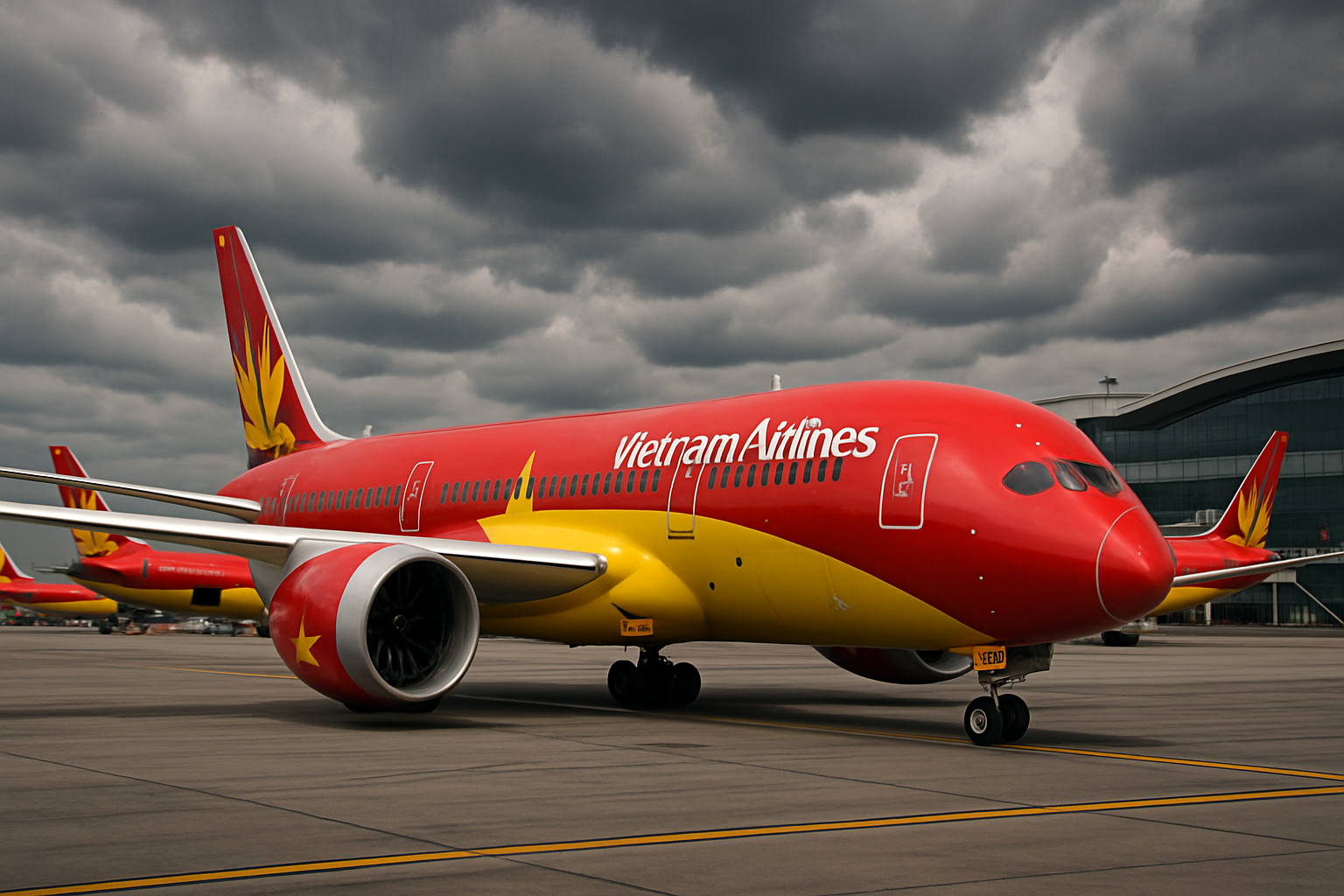
Vietnamese airlines have announced massive aircraft acquisition deals worth over $30 billion for 90 Boeing aircraft, representing one of the largest fleet expansion initiatives in Southeast Asian aviation history and signaling Vietnam's growing confidence in the post-pandemic recovery of international air travel.
Vietnam Airlines, the national flag carrier, signed a definitive agreement in Washington, D.C. to purchase 50 Boeing 737-8 narrow-body aircraft valued at approximately $8.1 billion, while Sun PhuQuoc Airways secured a separate $22.5 billion deal for 40 Boeing 787 Dreamliner jets. The combined orders represent a strategic bet on Vietnam's expanding role as a regional aviation hub and international gateway.
The Vietnam Airlines agreement was formalized in the presence of General Secretary of the Central Committee of the Communist Party of Vietnam To Lam and Vietnamese officials as part of his official visit to the United States. The signing ceremony underscored the strategic importance of the deal beyond commercial aviation, reflecting broader diplomatic and economic ties between Vietnam and the United States.
Strategic Fleet Modernization Initiative
Vietnam Airlines' leadership revealed that discussions are already underway with Boeing for an additional investment of 30 wide-body aircraft in the coming period, with an estimated total value exceeding $12 billion. This subsequent phase would support the airline's international network expansion strategy, targeting long-haul routes across Asia-Pacific, Europe, and North America.
The Boeing 737-8 aircraft selected by Vietnam Airlines represent the latest generation of fuel-efficient narrow-body jets, offering enhanced operational economics and environmental performance. These aircraft will primarily serve the airline's domestic routes connecting major Vietnamese cities and regional international destinations across Southeast Asia.
Sun PhuQuoc Airways' commitment to 40 Boeing 787 Dreamliners positions the carrier for aggressive international expansion. The Dreamliner's long-range capabilities and passenger comfort features make it ideal for Vietnam's growing tourism sector and business travel market, particularly targeting direct routes to key destinations in Asia, Australia, and potentially trans-Pacific services.
Market Context and Regional Competition
The Vietnamese orders come during a period of unprecedented global aviation recovery, with carriers worldwide rushing to secure new aircraft delivery slots as travel demand rebounds to pre-pandemic levels. The deals reflect Vietnam's strategic positioning to capture increased tourism and business travel as the country continues its economic development trajectory.
Vietnam's aviation sector has experienced remarkable growth over the past decade, driven by rising incomes, urbanization, and the country's integration into global trade networks. The massive Boeing orders position Vietnamese carriers to compete more effectively with regional rivals including Singapore Airlines, Thai Airways, and Malaysia Airlines for lucrative international routes.
Industry analysts note that the timing of these orders aligns with Boeing's strategic focus on the Asia-Pacific region, where air travel growth rates consistently outpace global averages. The deals provide Boeing with crucial order momentum following the company's recovery from the 737 MAX crisis and production challenges during the pandemic.
Economic Impact and Employment Implications
The $30 billion in aircraft orders will generate significant economic multiplier effects throughout Vietnam's aviation ecosystem. Beyond direct employment at the airlines, the fleet expansion will create opportunities in aircraft maintenance, pilot and cabin crew training, ground services, and related aviation support industries.
Vietnam Airlines estimates the new aircraft will enable the carrier to increase annual passenger capacity by over 15 million travelers, supporting the country's tourism development goals. The government has identified aviation infrastructure as crucial for achieving its target of welcoming 65 million international visitors annually by 2030.
The orders also reflect Vietnam's broader economic confidence and access to international capital markets. Financing arrangements for the aircraft acquisitions involve a combination of direct purchase, operating leases, and export credit facilities, demonstrating the country's sophisticated approach to fleet financing.
Technology and Environmental Considerations
Both the Boeing 737-8 and 787 Dreamliner feature advanced fuel-efficient engines and lightweight composite materials that reduce environmental impact compared to older generation aircraft. Vietnam Airlines emphasized sustainability commitments as a key factor in the Boeing selection, aligning with global aviation industry decarbonization goals.
The Dreamliner's advanced passenger experience features, including larger windows, improved cabin air systems, and reduced noise levels, support Vietnam's strategy to position itself as a premium travel destination in Southeast Asia. These enhancements are particularly important for attracting high-value international business and leisure travelers.
Integration of the new aircraft will require substantial pilot training and maintenance infrastructure development. Both Vietnamese carriers are establishing partnerships with Boeing and international training organizations to ensure seamless fleet integration and maintain the highest operational safety standards.
Strategic Timeline and Implementation
Aircraft deliveries are expected to commence in 2026 and continue through 2030, allowing for orderly fleet integration and route development. The phased delivery schedule provides Vietnamese carriers flexibility to adapt capacity deployment based on market recovery patterns and route performance.
Vietnam Airlines plans to utilize the initial 737-8 deliveries for domestic route frequency increases and regional international expansion, particularly targeting underserved city-pair connections within ASEAN member countries. The carrier views regional integration as crucial for building feed traffic for its international long-haul network.
Sun PhuQuoc Airways' Dreamliner deployment strategy focuses on direct international routes from Vietnam to key business and tourism destinations, reducing reliance on connecting flights through regional hubs. This point-to-point strategy aims to capture time-sensitive business travelers and leisure passengers seeking convenient travel options.
Industry Implications and Future Outlook
The Vietnamese orders represent a significant vote of confidence in the post-pandemic aviation recovery, particularly in the Asia-Pacific region where travel restrictions were among the most stringent globally. The deals signal Vietnamese carriers' belief that international travel demand will not only recover but exceed pre-pandemic levels.
Regional competitors are likely to respond with their own fleet expansion announcements, potentially accelerating aircraft orders across Southeast Asia. The competitive dynamics could benefit passengers through increased route options, frequency, and potentially lower fares as carriers compete for market share.
For Boeing, the Vietnamese orders provide crucial sales momentum as the manufacturer competes with Airbus for narrow-body and wide-body market share in the rapidly growing Asia-Pacific region. The deals demonstrate Boeing's success in rebuilding customer confidence following previous challenges with the 737 MAX program.
The historic $30 billion Vietnamese airline orders underscore the country's ambitious aviation growth strategy and confidence in long-term travel demand recovery. As these modern, fuel-efficient aircraft enter service over the next four years, they will fundamentally transform Vietnam's position in the competitive Southeast Asian aviation market while supporting the country's broader economic development objectives.