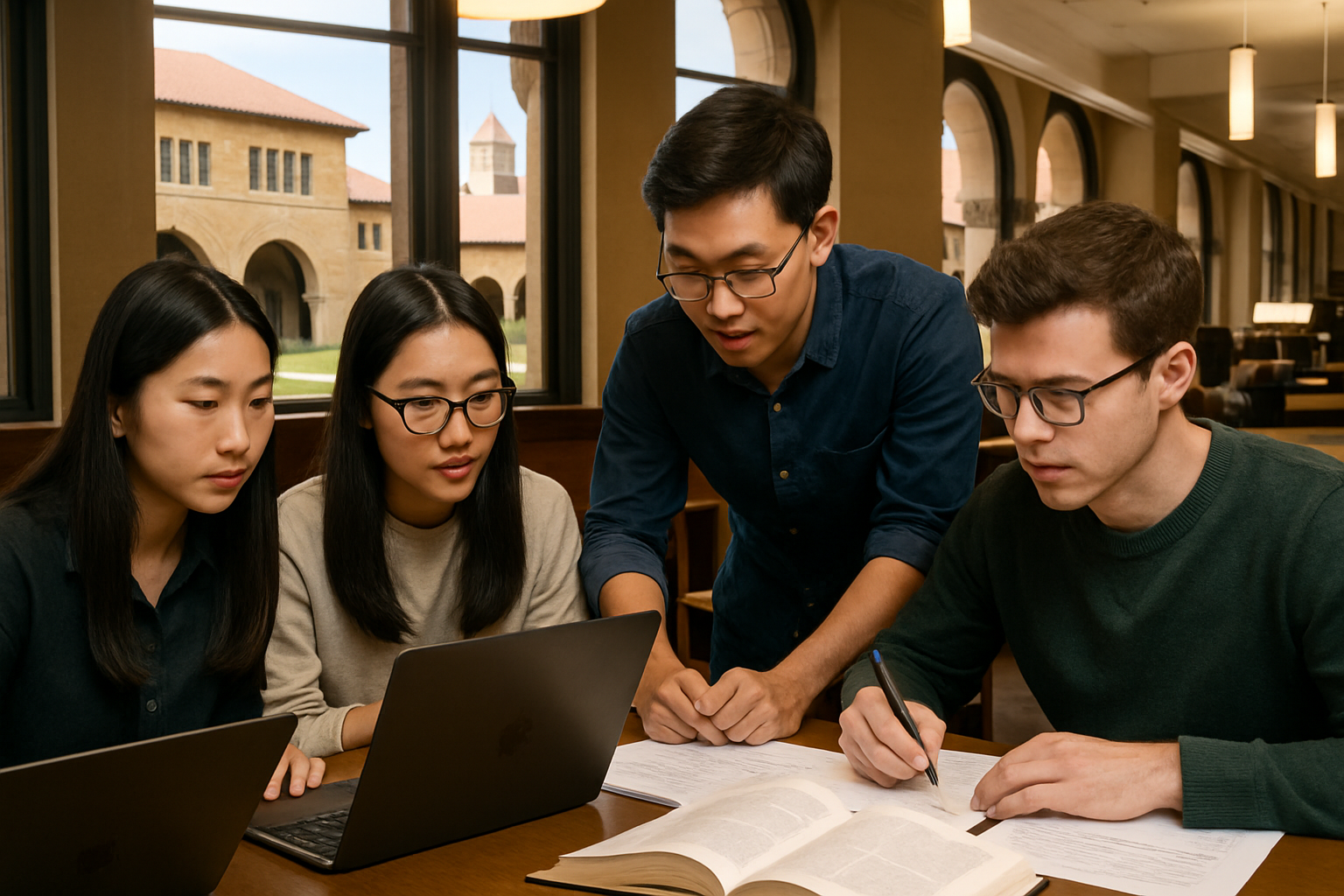
Vietnamese scholars are spearheading a remarkable transformation in global academic exchange, demonstrating how strategic educational partnerships and scientific excellence can bridge nations and drive breakthrough discoveries that benefit humanity.
Two groundbreaking developments this week illustrate Vietnam's growing prominence in international education and research. A Stanford University alumnus has facilitated the placement of hundreds of Vietnamese scholars at prestigious American institutions, while Vietnamese scientists in Hong Kong have solved a decades-old molecular biology puzzle with profound implications for cancer treatment.
From Pentagon Corridors to Academic Pathways
Pham Duc Trung Kien's journey from walking the halls of the White House and U.S. Department of Defense to becoming a catalyst for Vietnamese educational excellence exemplifies the transformative power of international academic networks. The Stanford alumnus has dedicated his American connections to fostering Vietnamese talent, creating pathways for hundreds of compatriots to pursue advanced studies at elite U.S. universities.
This initiative represents more than traditional educational exchange—it embodies a sophisticated approach to academic diplomacy that builds long-term intellectual bridges between nations. Kien's work demonstrates how individual commitment to educational excellence can create systemic change, establishing networks that will benefit generations of Vietnamese scholars.
"Educational partnerships transcend borders, creating lasting connections that drive innovation and mutual understanding between cultures."
— International Education Expert
Scientific Breakthrough in Hong Kong
Simultaneously, three Vietnamese researchers at Hong Kong institutions have achieved a scientific milestone that could reshape cancer therapy. Their team solved a 20-year-old puzzle in molecular biology related to RNA interference, opening new doors for cancer treatments based on this revolutionary therapeutic approach.
This breakthrough exemplifies how Vietnamese scientific talent, when supported by world-class research infrastructure, can produce discoveries with global impact. The research addresses fundamental mechanisms of cellular biology that have puzzled scientists for two decades, demonstrating the caliber of Vietnamese researchers working at the cutting edge of biomedical science.
Global Context of Educational Renaissance
These developments occur within what experts are calling the "2026 Educational Technology Renaissance"—a coordinated international movement emphasizing thoughtful integration of digital tools with traditional educational values. Vietnam's success reflects broader patterns of educational transformation documented across Asia-Pacific and globally.
Recent achievements include Vietnamese students achieving perfect IELTS scores at Hanoi Foreign Language Specialized School, nationwide English proficiency assessments involving over one million teachers (representing the world's first comprehensive evaluation of this scale), and consistent excellence in international academic competitions.
Regional Leadership Models
Vietnam's approach exemplifies successful educational modernization that balances technological advancement with cultural preservation. The country has positioned itself as a potential leader for developing nations seeking to maintain cultural authenticity while developing global competencies.
This strategy contrasts with purely technology-focused approaches, instead emphasizing human-centered education that amplifies rather than replaces fundamental teacher-student relationships. Vietnamese educational initiatives demonstrate that effective reform requires cultural sensitivity, sustained political commitment, and international cooperation based on mutual respect rather than dependency.
Economic and Strategic Implications
The Vietnamese approach to international education represents sophisticated economic strategy. By investing in educational excellence and facilitating access to world-class institutions, Vietnam is building human capital that drives long-term economic development while maintaining cultural identity.
Individual achievements like the computing research award won by a Vietnamese student at Pomona College, California—one of only eight nationwide recipients and co-author of research ranked in the top 1% globally—demonstrate the caliber of talent Vietnam is developing and nurturing through international partnerships.
These educational investments generate substantial returns through reduced crisis intervention costs, improved workforce productivity, and enhanced international competitiveness. Prevention-first educational approaches consistently demonstrate superior economic outcomes compared to reactive systems.
International Cooperation Models
Vietnam's success illustrates effective international cooperation that goes beyond traditional aid relationships. The Stanford alumni network, Hong Kong research collaborations, and systematic teacher development represent partnerships based on mutual benefit and shared expertise.
This model of cooperation—emphasizing knowledge sharing, cultural bridge-building, and authentic relationships—provides templates for other nations seeking educational modernization while preserving cultural values. It demonstrates how smaller nations can leverage international partnerships without compromising educational sovereignty.
Addressing Global Challenges
The cancer research breakthrough by Vietnamese scientists addresses one of humanity's most pressing health challenges. RNA interference-based therapies represent a revolutionary approach to treating diseases at the cellular level, with implications extending far beyond cancer to potentially address genetic disorders, viral infections, and other conditions.
Similarly, the educational pathways created by Vietnamese scholars contribute to addressing global challenges through developing talent capable of tackling climate change, technological disruption, and social cohesion through quality educational systems serving as strategic 21st-century infrastructure.
Future Trajectory
March 2026 represents a critical juncture for global educational policy, with Vietnam's achievements providing evidence that thoughtful, culturally-sensitive reform can achieve world-class results while maintaining human creativity, critical thinking, and cultural knowledge that define authentic educational excellence.
The success factors identified in Vietnamese initiatives—sustained political commitment, comprehensive stakeholder engagement, innovation-tradition balance, cultural sensitivity, and international cooperation—provide blueprints for educational transformation that serves both national development and global advancement.
As the world faces complex challenges requiring international cooperation, Vietnam's approach to academic excellence demonstrates how strategic educational investment, combined with authentic partnerships and respect for cultural values, can drive breakthrough discoveries and create lasting connections that benefit all humanity.