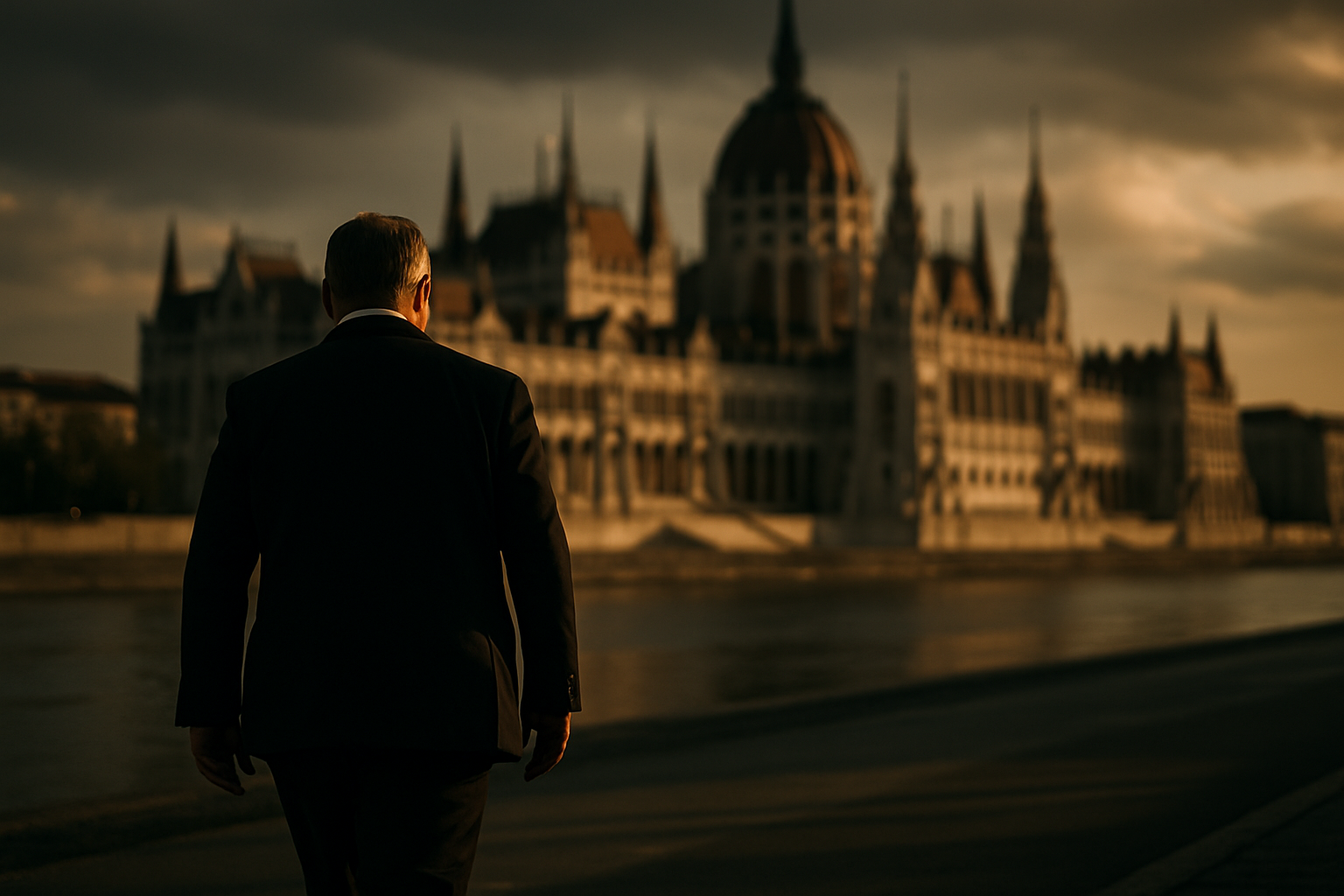
Hungarian Prime Minister Viktor Orbán has announced his decision to relinquish his parliamentary seat after 36 years of uninterrupted service, marking a dramatic shift in Hungarian politics following his party's crushing electoral defeat in April 2026.
The announcement came during a video statement posted on social media Saturday afternoon, where Orbán declared that he was returning his parliamentary mandate obtained as party leader, stating he was "needed not in parliament, but in the reorganization of the national camp." This decision effectively ends one of the longest continuous parliamentary careers in modern Hungarian politics.
Electoral Defeat Sparks Political Transformation
Orbán's departure from parliament follows the devastating defeat of his Fidesz party in the April 12, 2026 elections, where Péter Magyar's Tisza Party achieved a constitutional supermajority with 138 seats out of 199. The election saw a record 80% voter turnout—the highest since Hungary's 1989 democratic transition—and marked the most dramatic political reversal in Central Europe since the end of the communist era.
The former prime minister, who led Hungary for 16 years across two separate periods, suffered his worst electoral performance with Fidesz collapsing to just 55 seats. This represented a seismic shift from the party's previous dominance, particularly among younger voters aged 18-30, dubbed "Generation Orbán," who decisively rejected nationalist messaging despite coming of age under his rule.
"The mandate I received as party leader is actually my parliamentary mandate from Fidesz, so I decided to return it. I am now needed not in parliament, but in the reorganization of the national camp."
— Viktor Orbán, in video statement
Fidesz Leadership Transition
While stepping down from parliament, Orbán indicated he would remain as Fidesz party leader pending an internal confidence vote. The parliamentary faction will be led by Gergely Gulyás when it convenes on Monday, according to multiple Hungarian media reports. This arrangement suggests a complex transition period for the party as it grapples with its unprecedented electoral defeat.
The decision comes amid what sources describe as ongoing discussions within Fidesz about "renewal of the national wing," indicating potential broader organizational changes within Hungary's former ruling party. Party officials have not yet announced when the confidence vote will take place.
International Context and Implications
Orbán's parliamentary departure follows a tumultuous period that saw unprecedented international intervention in Hungarian elections. The April campaign was marked by documented Russian interference operations supporting Fidesz, combined with explicit American political backing through a visit from US Vice President JD Vance just five days before voting.
The electoral defeat also ended Hungary's systematic obstruction of EU policies, including the immediate lifting of a €90 billion Ukraine aid blockade that had created the deepest institutional crisis in EU history. The restoration of normal EU relations has already begun, with €19 billion in previously frozen EU funding expected to be restored within days.
Some analysts have suggested Orbán might seek political asylum in the United States, with journalist Szabolcs Panyi speculating about potential requests for protection. However, these claims remain unverified and have not been confirmed by official sources.
Legacy of 36 Years in Parliament
Orbán's parliamentary career began in 1990, shortly after Hungary's transition from communism, making him one of the longest-serving parliamentarians in Hungarian history. His tenure spanned crucial periods including Hungary's EU accession in 2004, the 2008 financial crisis, and more recently, his controversial transformation from liberal democrat to nationalist authoritarian leader.
During his time as prime minister from 2010-2026, Orbán fundamentally altered Hungary's political landscape through judicial reforms, media consolidation, and civil society restrictions that drew repeated criticism from EU institutions. His government's approach to migration, LGBTQ+ rights, and rule of law became flashpoints in Hungary's relationship with Brussels.
Democratic Renewal and Future Prospects
The new Tisza-led government under Péter Magyar has announced immediate democratic reforms enabled by their constitutional supermajority, including judicial independence restoration, media oligarchy dismantling, and wealth tax implementation. Magyar, a former government insider who emerged as Orbán's most effective challenger, has symbolically announced his first official visit will be to Poland, reconnecting Hungary with Central European and EU institutions.
The peaceful transfer of power, marked by Orbán's acknowledgment that "the Hungarian people have spoken," demonstrates the resilience of democratic institutions despite years of authoritarian pressure. Street celebrations in Budapest, featuring Hungarian and EU flags, reflected widespread relief among opposition supporters.
Orbán's decision to step back from parliamentary politics while potentially maintaining party leadership suggests a strategic retreat rather than complete political retirement. The move allows Fidesz to potentially regroup and reorganize while distancing itself from the policies that led to electoral defeat.
The broader implications extend beyond Hungary's borders, as Orbán's fall removes a key ally of Vladimir Putin within the European Union and eliminates a successful model for right-wing populist movements across the continent. His departure from parliament marks not just the end of an era in Hungarian politics, but potentially a turning point for European democratic governance in the 21st century.