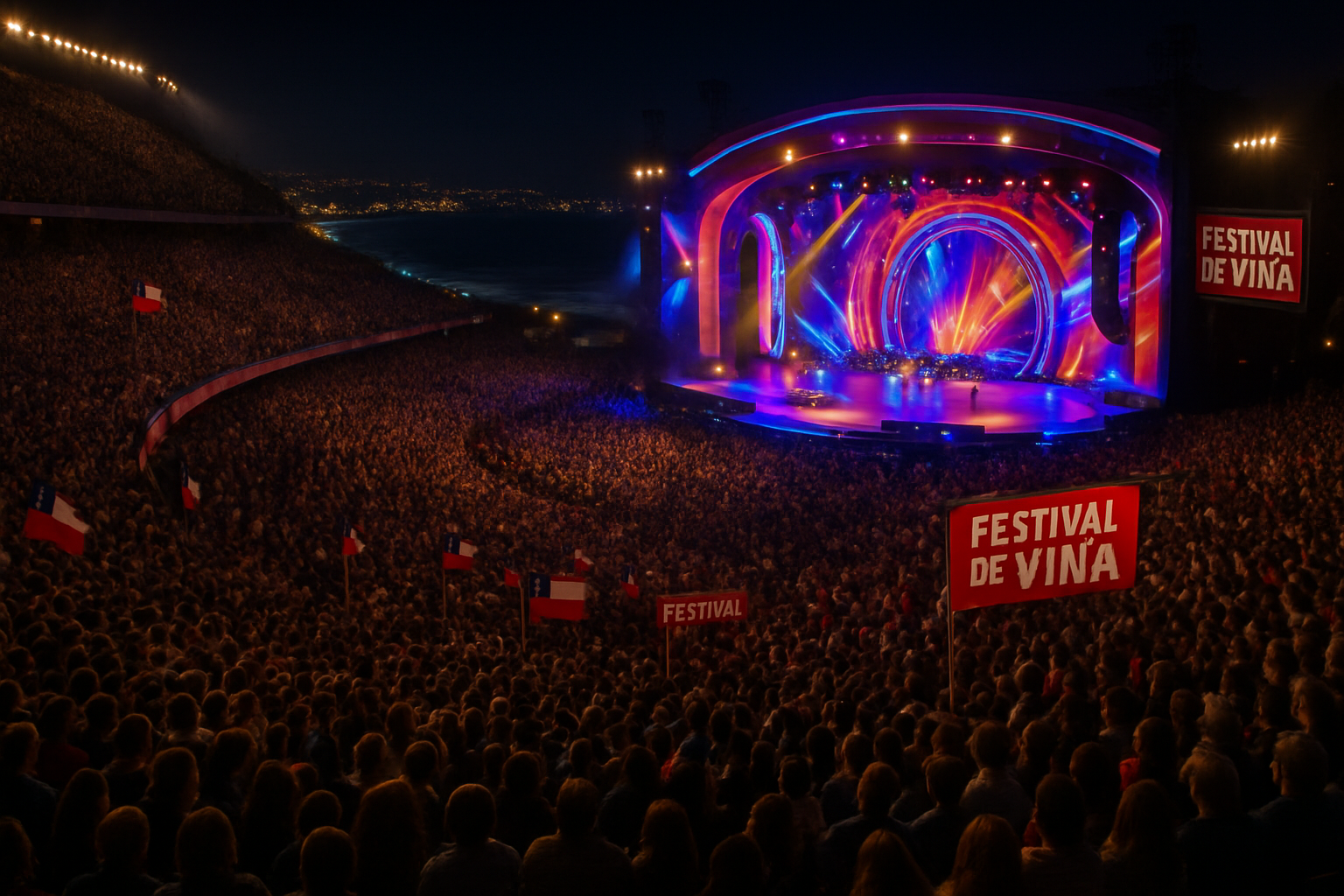
Chile's most prestigious cultural event, the Festival de Viña del Mar 2026, delivered unforgettable moments during its glamorous gala ceremony, featuring emotional tributes, political statements, and the return of beloved television personalities to one of Latin America's most significant musical gatherings.
The annual festival, recognized as one of the world's largest Latin American cultural celebrations, took center stage in February 2026 with a gala that will be remembered for both its artistic achievements and poignant human stories. The event showcased the unique blend of entertainment, politics, and cultural significance that has made Viña del Mar a cornerstone of South American artistic expression.
Miguel "Negro" Piñera's Final Curtain Call
The most emotionally charged moment of the evening came with Miguel "Negro" Piñera's return to the stage, marking his first public performance since being diagnosed with leukemia months earlier. The veteran musician, brother of the late President Sebastián Piñera, delivered a moving live performance alongside the festival's orchestra, creating what would tragically become his final televised appearance just one week before his death.
"The presentation was prepared during weeks by the production team, representing the last great night of Negro's career,"
— Festival Production Team
The performance served as both a celebration of Piñera's musical legacy and a touching tribute to his brother, the former Chilean president. Festival organizers revealed that the tribute had been meticulously planned for weeks, understanding the significance of what might be Piñera's final major public appearance. The emotional weight of the moment was palpable as the audience witnessed a living legend performing despite his battle with cancer.
Pablo Chill-E's Visual Protest
Urban artist Pablo Chill-E made headlines with his striking burgundy suit, deliberately designed with bullet hole markings as a visual statement against street violence and war. The powerful imagery served as a dedication to fallen friends and innocent victims of violence, demonstrating how artists continue to use major platforms to address social issues.
Despite his willingness to make social statements through fashion and interviews, Chill-E, who will serve as a festival jury member, explicitly stated he would not use the main stage for political commentary. His reasoning reflected the delicate balance artists must maintain between personal expression and commercial considerations in high-profile entertainment settings.
"Since I started my career, I've always given my opinion, but I think doing it on stage would be stupid... that space would close doors for me,"
— Pablo Chill-E, Festival Jury Member
Tonka Tomicic's Triumphant Return
Television personality Tonka Tomicic made a spectacular comeback to the entertainment scene as co-host of the festival gala alongside José Antonio Neme. Her return featured elaborate choreography with professional dancers, marking a significant moment in Chilean television as she reclaimed her position as one of the country's most recognizable media figures.
The hosting duo managed the red carpet proceedings with Neme welcoming guests while Tomicic, joined by fashion expert Marcelo Marocchino, provided detailed analysis of the evening's fashion choices. This arrangement highlighted the festival's commitment to both entertainment value and fashion commentary, elements that have become integral to the Viña del Mar experience.
Sports Celebrities and Last-Minute Changes
The gala also featured prominent Chilean athletes, with Olympic champion Francisca Crovetto addressing political developments regarding Natalia Duco's future as Sports Minister. Crovetto diplomatically stated she would support whoever the president-elect designated for the position, demonstrating the intersection of sports and politics that often characterizes major Chilean cultural events.
Tennis star Nicolás Jarry made a discreet appearance at the Sporting venue alongside volleyball player Esteban Grimalt and former footballer Luis Jiménez. However, the evening saw a notable last-minute cancellation when Marcelo Díaz withdrew due to commitments with Universidad de Chile, highlighting how professional obligations sometimes conflict with entertainment appearances.
Cultural Significance and Global Context
The Festival de Viña del Mar has evolved far beyond a simple music competition to become a cultural institution that reflects Chilean society's complexities, aspirations, and artistic achievements. The 2026 edition demonstrated this evolution through its blend of entertainment, social commentary, and political awareness.
As one of Latin America's most watched cultural events, the festival continues to serve as a platform where entertainment meets social consciousness. The gala's diverse programming—from emotional tributes to political statements to fashion analysis—reflects the multifaceted nature of contemporary Chilean culture and its place in the global entertainment landscape.
Legacy and Impact
The 2026 Viña del Mar gala will be remembered not just for its entertainment value, but for the profound human stories it showcased. Miguel "Negro" Piñera's final performance created a bittersweet moment that honored both his musical legacy and his family's impact on Chilean history. Meanwhile, Pablo Chill-E's visual protest demonstrated how contemporary artists navigate the balance between social activism and commercial success.
The festival's ability to attract diverse personalities—from urban artists to Olympic champions to television veterans—reinforces its position as Chile's premier cultural gathering. As the festival continues through February 27, these gala moments have set the tone for an event that promises to blend artistic excellence with meaningful social commentary.
The success of the 2026 festival gala underscores Viña del Mar's continued relevance in an increasingly globalized entertainment landscape, proving that regional cultural events can maintain their authentic character while addressing universal themes of loss, resilience, and artistic expression.