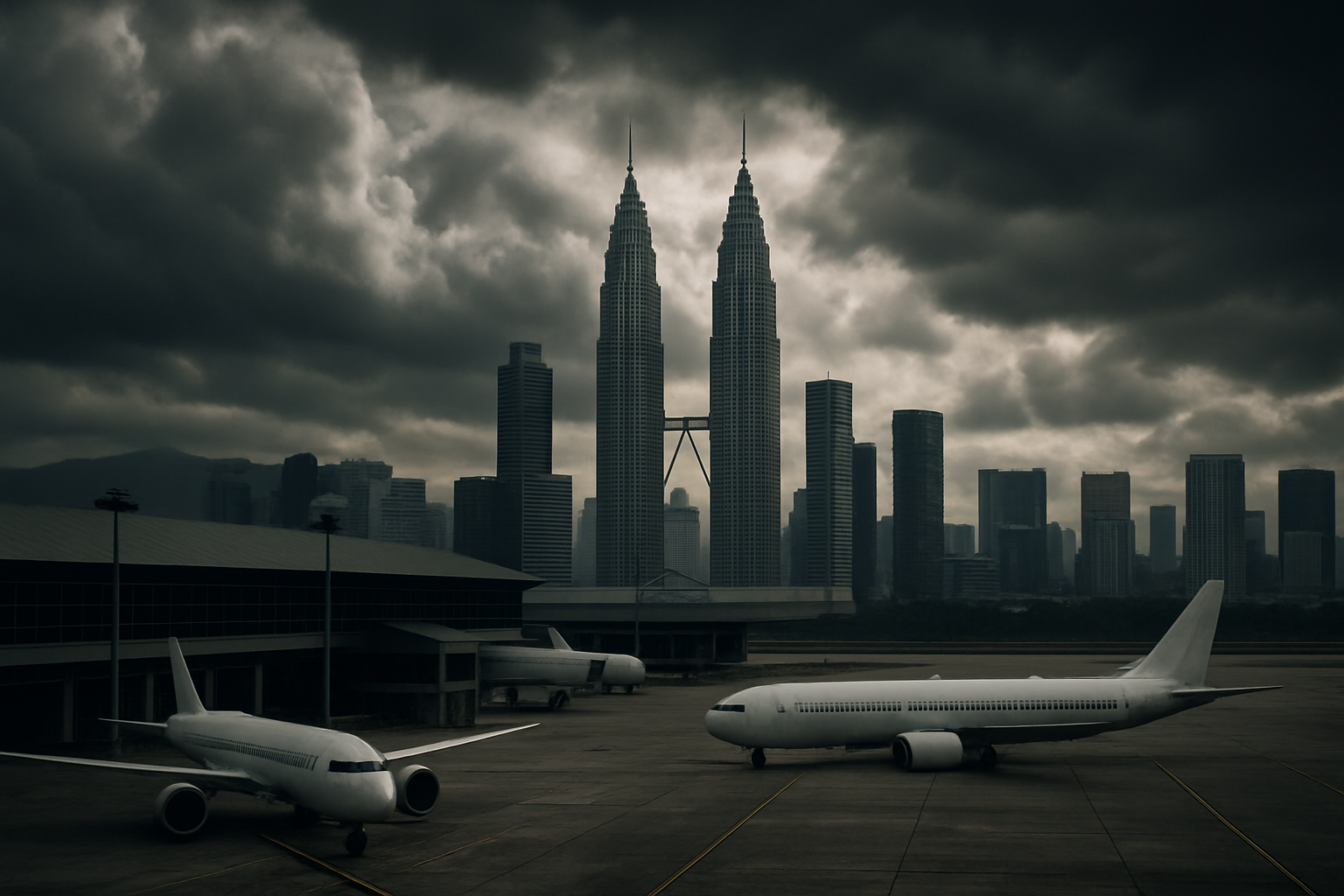
Malaysia's ambitious Visit Malaysia 2026 tourism campaign faces an unprecedented crisis as the escalating Iran war has created the most extensive global aviation disruption since COVID-19, forcing thousands of would-be visitors to abandon their travel plans and leaving the tourism industry scrambling for alternatives.
The crisis has reached Malaysian shores in unexpected ways, with travelers like 22-year-old Romanian Julia discovering that her dream spring break to Kuala Lumpur's skyline and the jungles of Sarawak has transformed into an expensive nightmare. Her original Emirates itinerary, transiting through Dubai or Abu Dhabi, became impossible when the Middle East war upended global aviation networks.
"I just can't afford that," Julia told This Week in Asia, facing flight costs that had skyrocketed to €3,000 (US$3,440) as alternative routes became scarce and expensive.
Aviation Crisis Reaches Critical Scale
The conflict's impact on Malaysia's tourism ambitions cannot be overstated. Over 18,000 flights have been cancelled worldwide since the crisis began in March 2026, making it the most extensive aviation disruption since the COVID-19 pandemic. Eight Middle Eastern countries—Iran, Iraq, Israel, UAE, Qatar, Syria, Kuwait, and Bahrain—have simultaneously closed their civilian airspace, creating an unprecedented regional blackout.
Dubai International Airport, the world's busiest with over 86 million passengers annually, remains completely shut down after sustaining missile damage during Iranian retaliation strikes. Emirates and Etihad Airways, critical connectors between Europe and Southeast Asia, have suspended operations indefinitely, severing vital links that Malaysia's tourism strategy heavily relied upon.
"This represents the most comprehensive regional disruption in modern aviation history, affecting not just Middle Eastern destinations but global connectivity patterns that destinations like Malaysia depend on."
— Aviation Industry Analyst
Malaysia's Tourism Strategy Under Pressure
The timing couldn't be worse for Malaysia's tourism sector. The Visit Malaysia 2026 campaign was designed to position the country as a premier Southeast Asian destination, capitalizing on its unique blend of modern cities, pristine jungles, and cultural diversity. The campaign specifically targeted European travelers who traditionally transit through Middle Eastern hubs to reach Southeast Asia.
Malaysia's tourism industry had been recovering strongly from the pandemic, with visitor numbers steadily climbing toward pre-2020 levels. The country's strategic location and diverse offerings—from Kuala Lumpur's iconic Petronas Twin Towers to the biodiversity of Malaysian Borneo—made it an attractive proposition for international visitors seeking both urban sophistication and natural wonders.
However, the current crisis has exposed the vulnerability of Malaysia's tourism infrastructure to global geopolitical shocks. The heavy reliance on Middle Eastern aviation hubs for European connectivity has become a critical weakness as these traditional routes have become impassable.
Economic and Human Impact
The financial implications extend far beyond individual travelers like Julia. Swedish travel agencies report being "busiest since COVID crisis" as "every call is an emergency." Travelers are facing extreme costs for alternative routing—one Swedish traveler paid 6,000 SEK ($560) for alternative routing from Paris to Australia, demonstrating the premium required for non-Middle Eastern connections.
The crisis has created cascading effects throughout Malaysia's tourism ecosystem. Hotels, tour operators, and local businesses that had prepared for the Visit Malaysia 2026 surge are now facing massive cancellations and uncertainty. The energy crisis parallel—with oil prices surging 10% past $80 per barrel and natural gas increasing 24% in Europe—has also driven up operational costs for airlines and tourism businesses.
Travel insurance gaps have been brutally exposed, with standard policies excluding war-related cancellations. This has driven a shift toward package tours over independent travel, as tour operators develop comprehensive coverage frameworks while individual travelers remain financially exposed.
Regional Tourism Realignment
While Malaysia faces challenges, the crisis is creating a dramatic realignment in regional tourism patterns. Countries positioning themselves as safer alternatives are seeing unexpected benefits. Croatia is benefiting as travelers seek European alternatives, while Spain, with 513.6 million tourist nights annually, is capturing redirected demand from traditional Middle East-connected destinations.
Southeast Asian countries are experiencing mixed fortunes. While some destinations positioned as alternatives are benefiting, others heavily dependent on Middle Eastern hub connectivity face similar challenges to Malaysia. The crisis has accelerated discussions about route diversification and reducing dependency on single regional hubs.
Hong Kong travelers have shown adaptation patterns that Malaysia could learn from, with 10-30% demand increases for Japan, South Korea, China, and Australia—destinations that avoid long-haul Middle East routes. This shift demonstrates how quickly travel patterns can change when traditional routes become unavailable.
Industry Transformation and Adaptation
The crisis is forcing fundamental changes in how the aviation industry operates. Airlines are implementing emergency protocols including enhanced fuel loading to avoid refueling in affected zones, complex rerouting through alternative corridors, and dramatically increased costs passed on to consumers.
For Malaysia, this means working more closely with airlines to develop alternative routing strategies. The crisis has highlighted the need for enhanced security screening, mandatory conflict-coverage insurance, and pre-approval systems for high-risk destinations becoming standard throughout the industry.
"Unlike weather disruptions, geopolitical crises depend on military operations and diplomatic resolution. Airlines cannot schedule around closed airspace with predictable timelines."
— Tourism Crisis Management Expert
Malaysia's Strategic Response
Malaysian tourism authorities are being forced to pivot quickly. The country's natural advantages—political stability, world-class infrastructure, and diverse cultural offerings—become more valuable in a world where security-conscious travel decisions dominate.
The crisis may actually benefit Malaysia in some ways. As travelers seek destinations that can be reached through stable, secure routing, Malaysia's connections through Singapore, Bangkok, and other non-Middle Eastern hubs become more attractive. The country's reputation for safety and stability, combined with its Muslim-friendly tourism infrastructure, could appeal to travelers seeking alternatives to conflict-affected regions.
Tourism Malaysia is likely developing new marketing strategies that emphasize alternative routing options and position the country as a stable, secure destination amid global uncertainty. The focus may shift from pure volume to higher-value travelers willing to pay premiums for safe, reliable travel experiences.
Long-term Implications and Recovery
The recovery timeline remains uncertain, depending on military and diplomatic resolution rather than predictable patterns like weather disruptions. Even when flights resume, weeks will be required to clear passenger backlogs and cancelled bookings. This uncertainty makes long-term planning extraordinarily difficult for Malaysia's tourism sector.
The crisis represents a template-setting moment for 21st-century tourism crisis management. Enhanced security measures, flexible booking policies, and diversified routing strategies are likely to become permanent features of international travel. Malaysia's ability to adapt to these new realities will determine its success in the post-crisis tourism landscape.
The fundamental question facing Malaysia's tourism industry is whether the global travel system will maintain its interconnected nature or evolve toward more regionalized, security-conscious patterns. Malaysia's response to this crisis could position it as either a victim of global instability or a beneficiary of travelers seeking stable, accessible destinations.
Looking Ahead: Visit Malaysia 2027?
While Visit Malaysia 2026 faces unprecedented challenges, the crisis may ultimately strengthen Malaysia's position in the global tourism market. Countries that successfully navigate geopolitical turbulence while maintaining their appeal to international visitors often emerge with enhanced reputations and market share.
Malaysia's diverse transportation connections, political stability, and proven crisis management capabilities position it well for eventual recovery. The country's experience managing the COVID-19 pandemic demonstrated its ability to adapt tourism strategies to changing global conditions.
As the immediate crisis evolves, Malaysia's tourism industry faces the challenge of maintaining international confidence while developing new strategies for reaching traditional source markets. Success will depend on flexibility, innovation, and the ability to turn crisis-driven changes into long-term competitive advantages.
The story of Julia, the Romanian student whose spring break plans were derailed by geopolitical events thousands of miles away, reflects the complex interconnectedness of modern tourism. Malaysia's challenge is ensuring that when the current crisis resolves, visitors like Julia will still see the country as an accessible, attractive destination worth the journey—regardless of which route they take to get there.