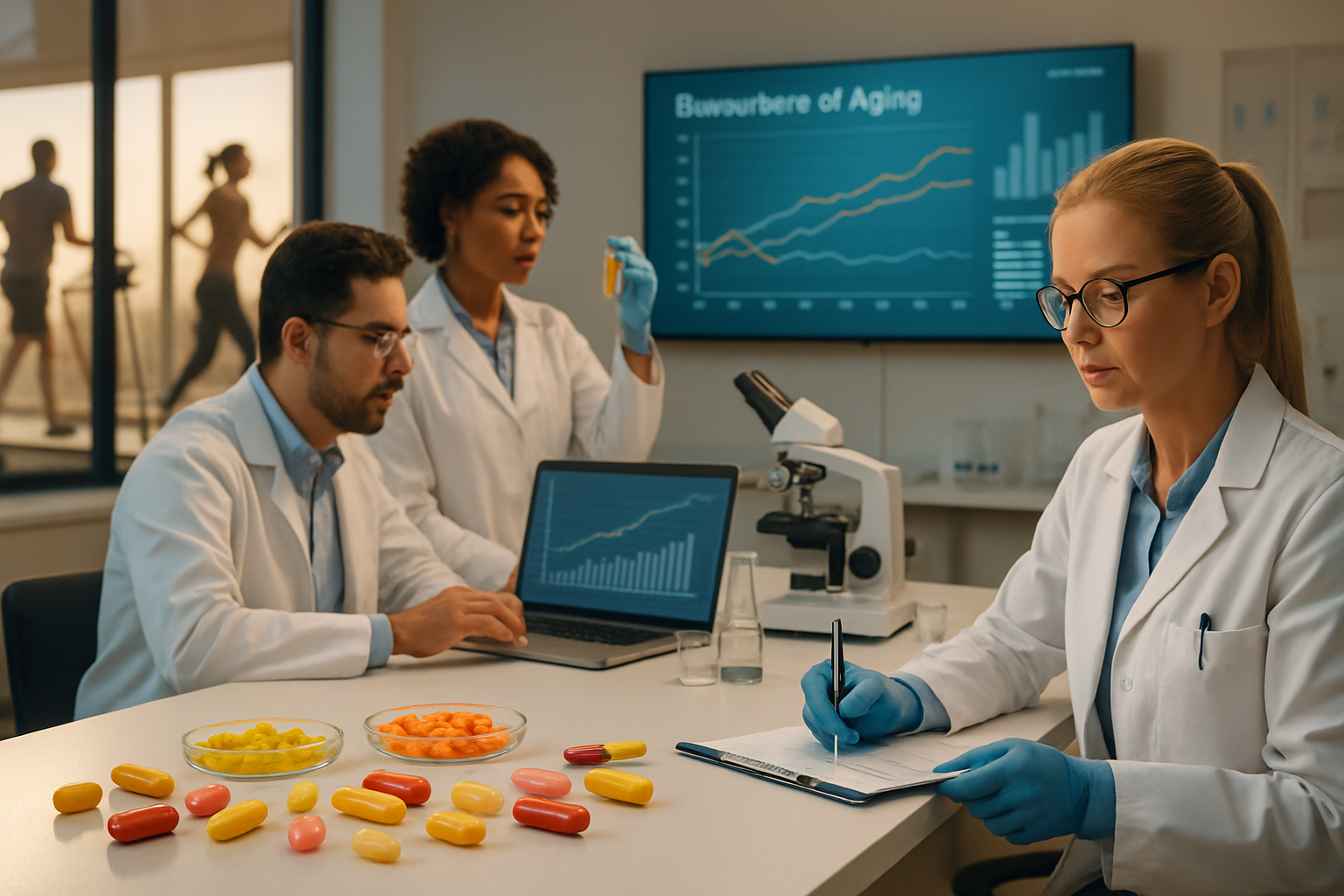
Revolutionary health and nutrition research findings from Denmark, Egypt, and Switzerland demonstrate that targeted vitamin supplementation may influence biological aging while minimal daily movement provides substantial longevity benefits, marking significant advances in preventive healthcare approaches.
A comprehensive Danish study published in March 2026 reveals that participants taking specific vitamin supplements daily over two years showed measurable changes in their biological age markers, providing the first concrete evidence that nutritional interventions can influence aging processes at the cellular level. The research builds upon emerging evidence in the global "Therapeutic Revolution of 2026" that emphasizes prevention-first healthcare strategies over reactive treatment models.
Breakthrough Findings in Biological Age Modification
Danish researchers conducted a rigorous two-year clinical trial examining the impact of daily vitamin supplementation on biological aging markers. Unlike chronological age, biological age reflects the actual physiological condition of the body's cells and systems, often varying significantly between individuals born in the same year.
The study participants, who took specialized vitamin formulations daily for the entire study period, demonstrated statistically significant changes in their biological age as measured through advanced biomarker analysis. This represents the first time researchers have documented that targeted nutritional intervention can measurably influence aging processes at the molecular level.
"The participants took the supplement daily for two years, and according to researchers, this could be observed in their biological age afterward."
— Danish Research Team, March 2026
This breakthrough aligns with broader 2026 research trends showing that simple, accessible interventions often provide more substantial health benefits than complex or expensive treatments. The findings challenge assumptions that aging is an inevitable, unmodifiable process and suggest that strategic nutritional approaches may offer practical tools for healthy aging.
Movement Medicine: Five Minutes That Add a Year to Life
Concurrent research from Switzerland provides compelling evidence that minimal daily physical activity yields extraordinary health returns. Swiss scientists discovered that as little as five minutes of targeted daily movement can add a full year to life expectancy, challenging conventional assumptions that require extensive gym commitments or dramatic lifestyle changes for health improvements.
The research emphasizes that "you don't have to become a competitive athlete to benefit" from physical activity, representing a paradigm shift toward sustainable, achievable wellness strategies. This finding supports the growing body of evidence from Slovakia showing that minutes of daily targeted activity can reduce mortality risk by 10%, particularly benefiting sedentary individuals.
This Swiss research contributes to the global understanding of "movement medicine" – the recognition that physical activity functions as one of the most powerful interventions available for health optimization. The study demonstrates that the human body responds positively to even modest increases in movement, making health improvements accessible to virtually everyone regardless of current fitness level.
The Science of Minimal Effective Movement
The Swiss findings reveal that the body's physiological systems respond to movement stimuli in ways that provide disproportionate benefits relative to the time investment. Key mechanisms include:
- Improved cardiovascular function through brief activity bursts
- Enhanced metabolic efficiency from regular movement patterns
- Strengthened immune response through moderate physical stress
- Better sleep quality and stress management
- Increased muscle engagement preventing age-related decline
Ramadan Health Considerations and Cultural Adaptation
Egyptian research provides important insights into nutrition-health interactions during religious fasting periods. Medical professionals documented that some individuals experience nausea during Ramadan fasting, either before or after breaking their fast, representing a significant health concern that requires culturally sensitive medical approaches.
This research exemplifies the 2026 healthcare trend toward cultural adaptation of evidence-based medicine, recognizing that optimal health strategies must account for religious practices, cultural traditions, and individual variation. The Egyptian findings contribute to developing comprehensive guidance for maintaining health during extended fasting periods while respecting religious observance.
Healthcare professionals emphasize that understanding the physiological impacts of fasting enables better support for individuals navigating religious practices while optimizing their health outcomes. This research represents the integration of traditional wisdom with modern medical understanding characteristic of contemporary healthcare approaches.
Prevention-First Healthcare Revolution
These research developments occur within the broader "Therapeutic Revolution of 2026," characterized by fundamental shifts from reactive treatment toward prevention-first healthcare strategies. Countries implementing comprehensive prevention programs consistently report superior cost-effectiveness through decreased crisis interventions while achieving better population health outcomes.
The economic implications of prevention-focused approaches extend beyond healthcare costs to include improved workforce productivity, enhanced community resilience, and reduced social service demands. This represents a fundamental reconceptualization of health systems from treating illness to maintaining wellness.
"Physical activity is healthy, and most people don't get enough of it. So much was known. A new analysis shows: You don't have to become a competitive athlete to benefit."
— Swiss Research Team, NZZ Health Column
The convergence of vitamin supplementation research, movement medicine findings, and culturally adapted nutritional guidance demonstrates the maturation of precision medicine approaches that acknowledge individual variation while providing robust general recommendations.
Practical Implementation Strategies
The research findings translate into accessible, evidence-based strategies that individuals can implement regardless of their current health status or economic circumstances:
Vitamin Supplementation Approach
While the Danish study demonstrates biological age modification potential, researchers emphasize the importance of professional guidance in supplement selection and monitoring. The findings suggest that targeted, consistent supplementation over extended periods may provide measurable anti-aging benefits.
Movement Integration
The Swiss research validates approaches that integrate minimal movement into daily routines rather than requiring separate exercise sessions. Five-minute movement breaks throughout the day, taking stairs instead of elevators, or brief walks during lunch breaks can provide the activity levels necessary for longevity benefits.
Cultural Sensitivity in Health Practices
The Egyptian research underscores the importance of adapting health recommendations to individual cultural and religious contexts. Healthcare providers increasingly recognize that sustainable health practices must align with personal values and traditional practices.
Global Cooperation in Health Research
These breakthrough studies exemplify the international cooperation driving 2026 healthcare advances despite funding challenges facing traditional global health organizations. Countries are developing bilateral partnerships and peer-to-peer knowledge sharing networks that accelerate research discovery while ensuring broader accessibility to life-saving interventions.
The distributed cooperation model allows for flexible, culturally responsive approaches that maintain evidence-based medical standards. This represents a potentially transformative approach to international health coordination that enables smaller nations to contribute research methodologies while larger countries offer technological innovations and implementation resources.
Future Implications and Research Directions
The March 2026 research findings represent a critical juncture in healthcare evolution, providing evidence that simple, accessible interventions can produce dramatic health improvements. The convergence of biological aging research, movement medicine, and cultural adaptation insights offers unprecedented opportunities for comprehensive wellness promotion.
Future research directions include expanding biological age modification studies to diverse populations, developing personalized movement protocols based on individual physiological responses, and creating culturally adapted health guidance that respects traditional practices while incorporating modern medical insights.
The success of these approaches depends on sustained political commitment to prevention-focused healthcare investment, comprehensive professional training in lifestyle medicine, and continued international cooperation in health research and implementation.
Economic and Social Transformation
The implications extend beyond individual health to encompass economic and social transformation. As prevention-first approaches demonstrate superior outcomes, healthcare systems worldwide are recognizing that investment in wellness infrastructure provides better returns than reactive treatment systems.
Countries implementing comprehensive prevention programs report improved international competitiveness, enhanced community resilience, and reduced healthcare expenditures that free resources for education, infrastructure, and economic development.
Conclusion: A New Era of Accessible Wellness
The revolutionary research from Denmark, Switzerland, and Egypt demonstrates that 2026 may be remembered as the year healthcare truly shifted from treating disease to maintaining wellness. The findings that vitamin supplements can influence biological aging, five minutes of daily movement adds a year to life, and culturally adapted nutrition guidance improves health outcomes represent transformative discoveries with global implications.
These studies exemplify the Therapeutic Revolution of 2026's core principles: accessible interventions often provide the most substantial benefits, prevention strategies offer superior outcomes to reactive treatments, and cultural adaptation enhances the effectiveness of evidence-based medicine.
As this research continues to influence healthcare policies and individual health decisions worldwide, it provides a foundation for organizing societies around human flourishing rather than merely treating illness – a fundamental change that could reshape how communities approach health and longevity for generations to come.