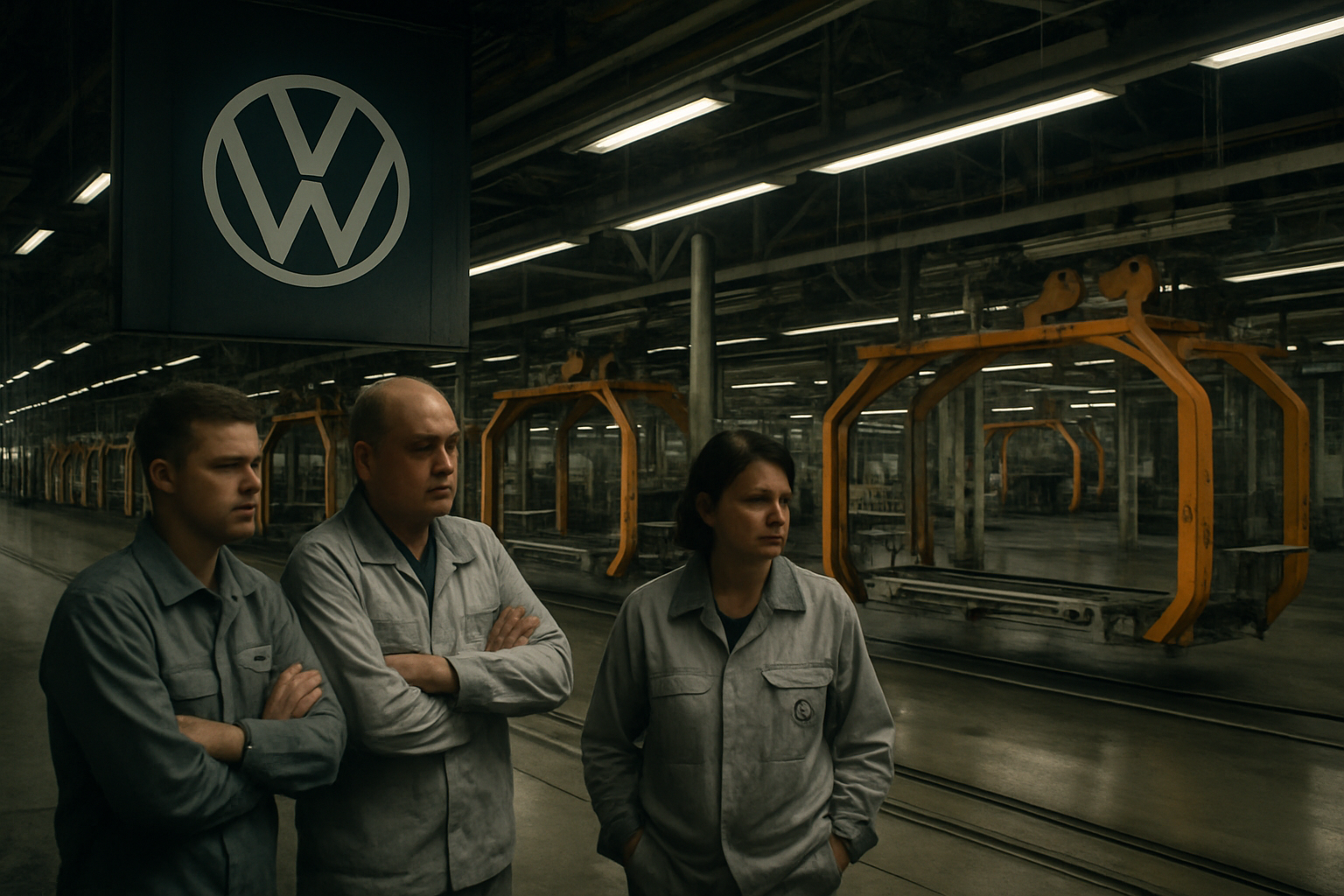
Volkswagen, Europe's largest automaker, announced plans to cut 50,000 jobs in Germany by 2030 as the company reported a devastating 44% profit decline for 2025, marking the worst financial performance since the diesel emissions scandal of 2016.
The German automotive giant saw its annual profit crash from €12.4 billion in 2024 to just €6.9 billion in 2025, representing the most dramatic corporate downturn in the company's recent history. The announcement sent shockwaves through the automotive industry, highlighting the deepening crisis facing traditional automakers amid intense global competition and rapidly shifting market dynamics.
Massive Workforce Reduction Planned
The planned elimination of 50,000 positions represents a significant escalation from previously anticipated job cuts, affecting multiple facilities across Germany over the next four years. The reduction will impact various divisions within the Volkswagen Group, from manufacturing to administrative roles, as the company implements what executives describe as necessary "belt-tightening" measures.
As part of the cost-cutting initiative, VW leadership will also face reduced bonus payments, demonstrating that the financial pain extends to the executive level. The company emphasized that the job reductions will be implemented gradually to minimize operational disruption while achieving substantial cost savings.
"We must adapt to new realities in the automotive market. These difficult decisions are necessary to ensure Volkswagen's long-term competitiveness and sustainability."
— Volkswagen Executive Statement
Multiple Crisis Factors Converge
The dramatic profit decline stems from a perfect storm of challenging market conditions. Company officials cited US tariffs as a primary factor undermining competitiveness in the crucial American market. Additionally, fierce competition from Chinese manufacturers has significantly eroded Volkswagen's market position in the world's largest automotive market.
The subsidiary Porsche has also faced substantial difficulties, contributing to the overall group's financial woes. Reports indicate that problems within the luxury sports car division have added pressure to the parent company's bottom line, compounding the challenges facing the broader Volkswagen Group.
Sales performance has been particularly weak in China and North America, two critical markets that the company had counted on for growth. The combination of tariff pressures and intensifying competition has created an increasingly difficult operating environment for the German manufacturer.
Industry-Wide Transformation Pressures
Volkswagen's crisis reflects broader challenges facing the global automotive industry during a period of unprecedented transformation. The shift toward electric vehicles has required massive capital investments while traditional combustion engine sales continue to decline in key markets.
The company joins other major automotive manufacturers in implementing significant workforce reductions. Earlier in 2026, multiple industry players announced similar restructuring plans as they adapt to changing consumer preferences, regulatory pressures, and technological disruption.
Memory chip shortages have also complicated production planning, with semiconductor prices experiencing sixfold increases that are expected to persist until 2027. These supply chain constraints have added operational complexity and cost pressures across the industry.
German Economic Implications
The scale of Volkswagen's job cuts will have significant implications for the German economy, where the automotive sector remains a crucial industrial pillar. The planned reductions represent one of the largest single corporate workforce adjustments in recent German history, potentially affecting entire regional economies dependent on automotive manufacturing.
German economic observers note that while the broader economy showed resilience in Q4 2025 with 0.3% growth driven by domestic demand and construction investment, major corporate restructuring at companies like Volkswagen could dampen future economic prospects.
The announcement comes amid a broader pattern of corporate restructuring across Europe, with companies from various sectors implementing cost-cutting measures to maintain competitiveness in challenging global markets.
Historical Context and Future Outlook
The current crisis represents Volkswagen's most significant challenge since the diesel emissions scandal that erupted in 2016, which resulted in massive fines, legal settlements, and reputational damage. The 2025 profit level of €6.9 billion marks a return to the financial stress levels experienced during that period.
Industry analysts point to the fundamental restructuring occurring across the automotive sector as traditional manufacturers struggle to balance investments in electric vehicle technology with maintaining profitability in existing operations. The transition period has proven more challenging and expensive than many companies anticipated.
Looking ahead, Volkswagen's ability to successfully implement its restructuring plan while maintaining technological competitiveness will be crucial for its long-term survival. The company's response to current challenges may serve as a template for how traditional automakers navigate the ongoing industry transformation.
Global Automotive Market Dynamics
The crisis at Volkswagen reflects broader shifts in global automotive markets, where Chinese manufacturers have gained significant market share through competitive pricing and rapid innovation, particularly in electric vehicle technologies. This has forced traditional Western automakers to reassess their strategies and cost structures.
US trade policies, including tariffs on imported vehicles, have created additional challenges for companies with significant export operations. The combination of trade tensions and market competition has compressed profit margins across the industry.
The planned job cuts at Volkswagen represent more than just corporate restructuring—they signal a fundamental shift in how the automotive industry is adapting to 21st-century market realities. As the company implements these dramatic changes, the broader implications for workers, communities, and the global automotive landscape will continue to unfold throughout 2026 and beyond.