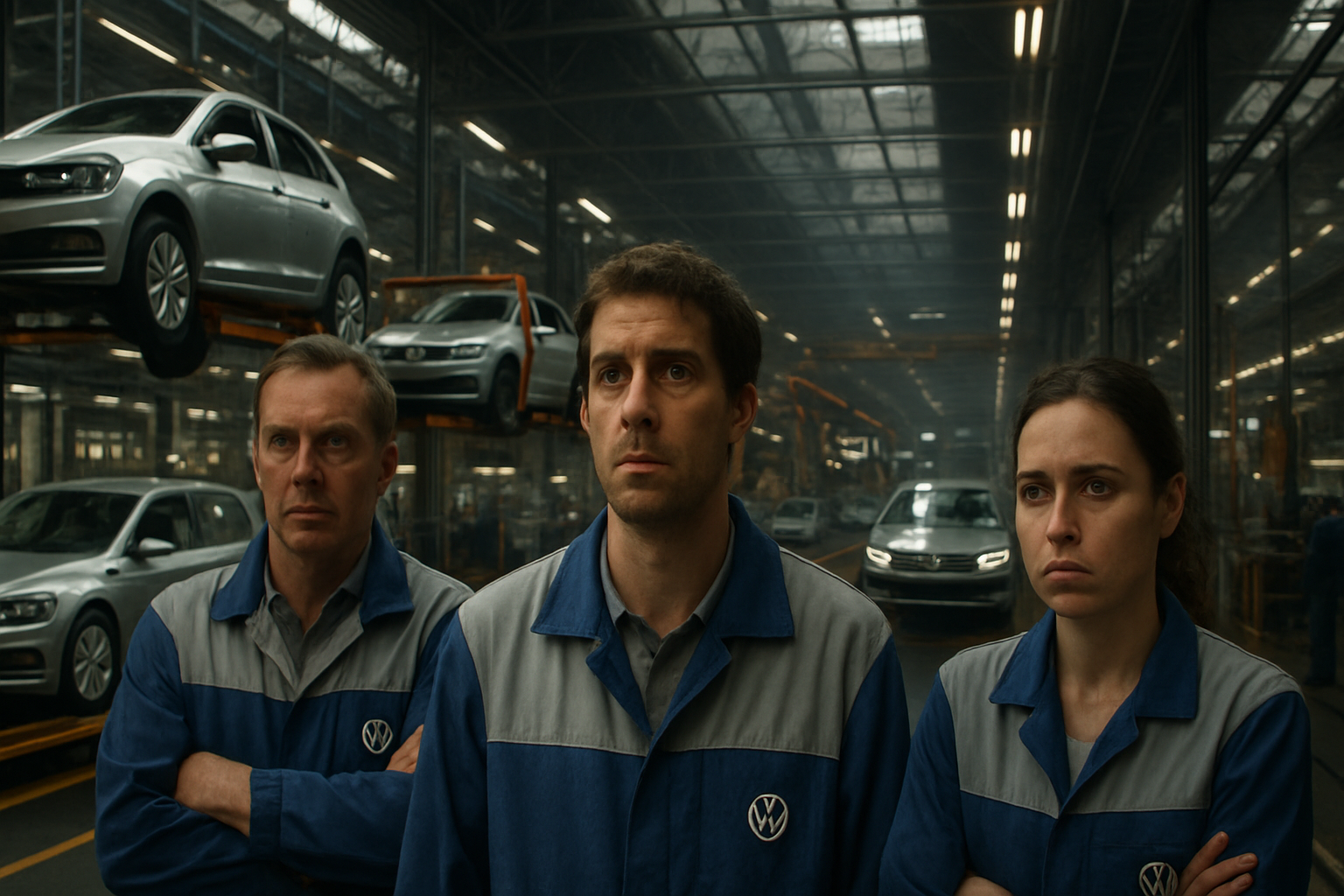
Volkswagen Group announced in its fourth-quarter 2025 press release that it plans to reduce its workforce in Germany by approximately 50,000 jobs by 2030 as part of a comprehensive restructuring program, marking one of the most significant corporate workforce adjustments in recent German history.
The announcement, delivered during Tuesday's quarterly results presentation, represents a dramatic response to mounting pressures facing Europe's largest automaker. The decision affects what multiple international media outlets describe as the automotive industry's most comprehensive crisis since the 2008 financial meltdown.
Financial Crisis Drives Restructuring
According to comprehensive analysis from memory archives, Volkswagen's workforce reduction comes following a catastrophic 44% profit decline from €12.4 billion in 2024 to €6.9 billion in 2025 - the company's worst performance since the 2016 diesel emissions scandal. The financial deterioration has been attributed to multiple converging factors that have fundamentally altered the automotive landscape.
The company faces fierce competition from Chinese manufacturers who have gained significant market share through aggressive pricing strategies and technological innovation. Simultaneously, US tariffs have undermined Volkswagen's competitiveness in key North American markets, while the company's Porsche subsidiary has encountered unexpected difficulties that have contributed to overall group performance decline.
"We are implementing controlled and gradual workforce adjustments over four years to minimize disruption while achieving necessary cost savings."
— Volkswagen Executive Statement
Industry-Wide Transformation Pressures
The German automaker's decision reflects broader challenges facing traditional automotive manufacturers as they navigate the transition to electric vehicles amid supply chain constraints. Memory chip shortages have driven semiconductor prices to increase sixfold, creating bottlenecks expected to persist until 2027 when new fabrication facilities come online.
This crisis occurs within what analysts term the "SaaSpocalypse" - a phenomenon where artificial intelligence and automation systems are replacing conventional manufacturing and operational processes. The automotive sector faces particular pressure as Chinese manufacturers leverage cost advantages and technological innovation to capture market share from established Western brands.
Gradual Implementation Strategy
Volkswagen executives have emphasized that the job cuts will be implemented through a "controlled and gradual" approach over the four-year timeline to minimize operational disruption. The company has also announced that senior executives will take reduced bonuses as part of the cost-reduction measures, demonstrating shared sacrifice across organizational levels.
The restructuring plan represents part of a broader European corporate adjustment pattern. Other major companies including Heineken (6,000 job cuts), WiseTech Global (2,000 positions), and numerous technology firms have announced significant workforce reductions as they adapt to changing market conditions and technological disruption.
Regional Economic Impact
The scale of Volkswagen's workforce reduction will have profound implications for regional economies across Germany that depend heavily on automotive manufacturing. The announcement affects communities where Volkswagen facilities serve as primary employers, creating ripple effects throughout supplier networks and local service industries.
Germany's automotive sector remains crucial to the nation's industrial economy, making Volkswagen's restructuring a significant test of the country's ability to maintain manufacturing leadership during the global transition to electric vehicles and digitalized production systems.
Competitive Landscape Challenges
The job cuts reflect Volkswagen's struggle to compete with Chinese automotive manufacturers who have achieved remarkable success through strategic pricing and rapid innovation cycles. Chinese companies have captured significant global market share while traditional Western automakers face the costly challenge of retooling manufacturing facilities for electric vehicle production.
US trade policies have further complicated Volkswagen's position, with tariffs affecting the company's competitiveness in crucial North American markets. The combination of trade tensions and supply chain disruptions has created an operating environment that demands fundamental business model adjustments.
Template for Industry Adaptation
Volkswagen's approach to workforce reduction may serve as a template for how traditional automakers navigate the industry transformation while balancing profitability demands with social responsibilities. The four-year implementation timeline and executive compensation adjustments demonstrate attempts to manage the transition responsibly.
The success or failure of Volkswagen's restructuring will likely influence approaches taken by other major automotive manufacturers facing similar pressures from technological disruption, changing consumer preferences, and intensified global competition.
Future Implications
The Volkswagen announcement represents a critical moment for Germany's automotive industry and the broader European manufacturing sector. The company's ability to successfully execute this restructuring while maintaining technological competitiveness will be closely watched by industry analysts, policymakers, and competing manufacturers.
As the automotive industry continues its historic transformation toward electrification and digitalization, Volkswagen's massive workforce adjustment signals the profound changes required for traditional manufacturers to remain viable in an increasingly competitive and technologically sophisticated global marketplace.
The coming months will determine whether Volkswagen's restructuring provides the foundation for renewed competitiveness or whether additional adjustments will be necessary as the automotive industry continues its rapid evolution in response to technological innovation and shifting global market dynamics.