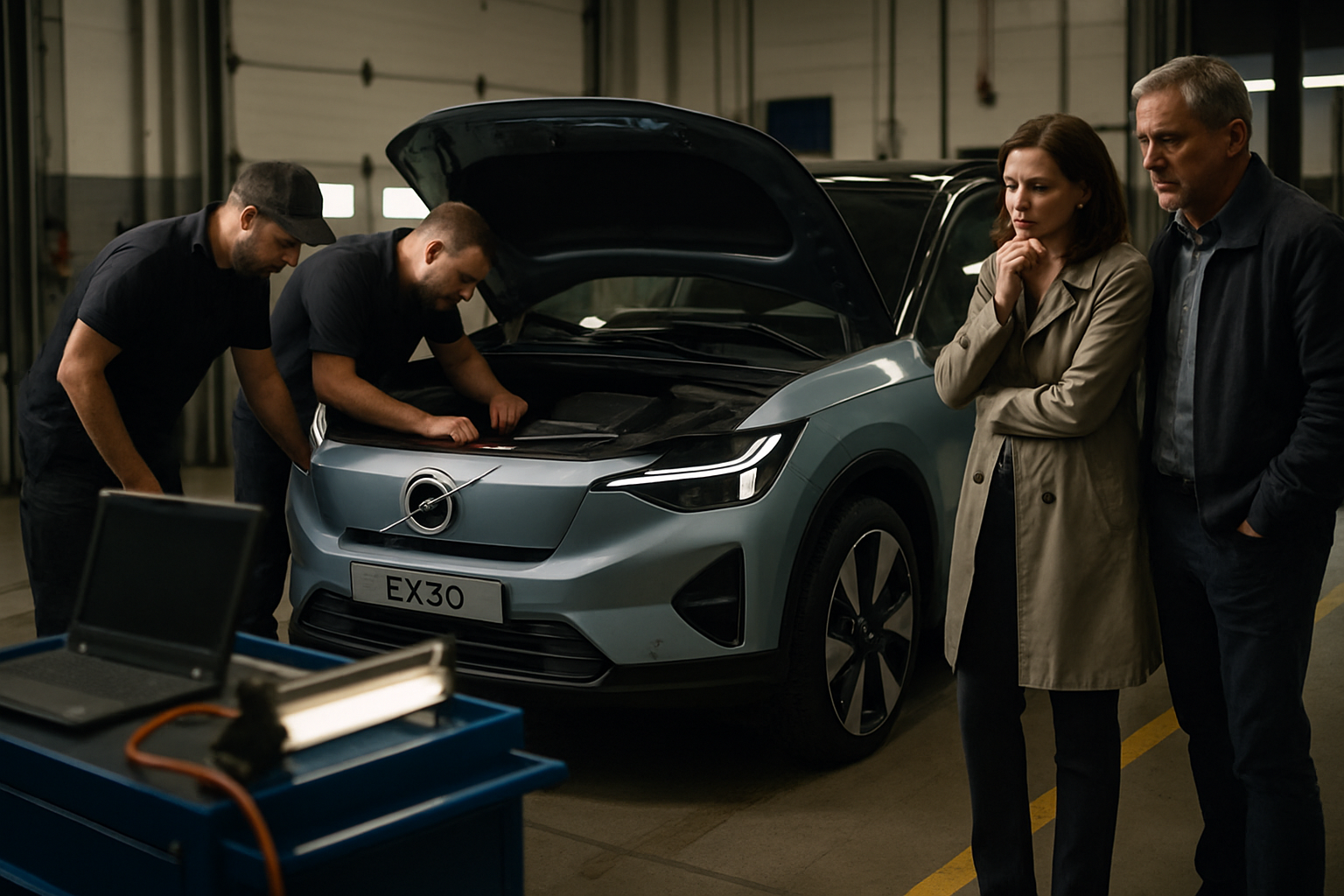
Volvo Cars has announced a major safety recall of approximately 40,000-40,300 EX30 electric vehicles due to critical battery overheating risks that could potentially lead to vehicle fires, marking one of the most significant electric vehicle safety recalls in recent months.
The Swedish automaker confirmed the recall affects the compact EX30 electric SUV model, with battery packs at risk of dangerous overheating that poses serious safety hazards to drivers and passengers. According to reports from multiple Nordic sources, the recall was issued after identifying thermal management system failures that could cause battery temperatures to exceed safe operating parameters.
Scope and Geographic Impact
The recall encompasses over 40,000 vehicles across European markets, though initial reports indicate Norway is not affected by the recall action. Swedish automotive sources report that approximately 40,300 units are involved in the safety action, representing a substantial portion of EX30 vehicles delivered since the model's market introduction.
The EX30, positioned as Volvo's entry-level electric vehicle, has been a key component of the company's electrification strategy. The compact SUV was designed to make electric mobility more accessible to a broader market segment, making this recall particularly significant for Volvo's EV ambitions.
Technical Details and Safety Concerns
According to automotive safety experts, battery overheating in electric vehicles presents multiple hazards including potential thermal runaway events, where battery cells can reach critical temperatures leading to fire, explosion, or toxic gas release. The specific technical failure mechanism in the EX30's battery system has not been fully disclosed by Volvo, but industry analysis suggests issues with the thermal management system that regulates battery temperature during charging and operation.
"Battery overheating represents one of the most serious safety concerns in electric vehicle technology. When thermal management systems fail, the consequences can be catastrophic."
— European Automotive Safety Analyst
The recall comes amid broader industry concerns about electric vehicle safety, particularly regarding battery systems. Recent incidents involving other manufacturers have highlighted the critical importance of robust thermal management in EV design, especially as automakers push for higher energy density and faster charging capabilities.
Industry Context and Broader Implications
This recall occurs during a period of intense scrutiny over electric vehicle safety standards and battery technology reliability. The automotive industry has been grappling with various EV-related challenges, from charging infrastructure limitations to supply chain constraints affecting critical materials like lithium and cobalt.
Volvo's recall decision demonstrates the proactive safety approach that established automakers are taking as they transition to electric powertrains. However, it also underscores the technical complexities involved in EV development, particularly in managing the sophisticated systems required for safe battery operation.
The recall timing is particularly sensitive given the broader context of automotive transformation. Recent industry developments include memory chip shortages affecting vehicle control systems, supply chain vulnerabilities with China controlling significant portions of critical material production, and evolving regulatory frameworks for electric vehicle safety.
Consumer Response and Market Impact
EX30 owners are advised to contact Volvo dealerships immediately for inspection and potential battery system repairs or replacements. The company has not disclosed the specific remedy for the overheating issue, though industry experts expect comprehensive battery pack inspections and potential software updates to thermal management systems.
The recall represents a significant cost for Volvo, potentially running into hundreds of millions of dollars when accounting for parts, labor, and potential customer compensation. More importantly, it may impact consumer confidence in the EX30 model and Volvo's broader electric vehicle lineup.
Regulatory and Safety Framework
European automotive safety regulators have been increasingly vigilant about electric vehicle battery safety following several high-profile incidents across the industry. The Volvo recall falls under strict European Union automotive safety regulations that require immediate action when critical safety defects are identified.
This recall follows recent regulatory developments including China's comprehensive ban on hidden door handles in vehicles effective January 2027, reflecting the evolving safety priorities in modern automotive design. The incident highlights the ongoing challenge of balancing innovative technology with fundamental safety requirements.
Looking Forward
The EX30 recall serves as a reminder of the technical challenges inherent in the electric vehicle transition. While the automotive industry has made remarkable progress in EV technology, incidents like this demonstrate that safety must remain the paramount concern as manufacturers scale up electric vehicle production.
For Volvo, addressing this recall effectively will be crucial for maintaining its reputation as a safety-focused brand while continuing its electric vehicle expansion. The company's response to this challenge may set important precedents for how established automakers handle safety issues during the critical transition to electric mobility.
As the investigation and recall process unfolds, industry observers will closely monitor both the technical resolution and the broader implications for electric vehicle safety standards across the automotive sector.