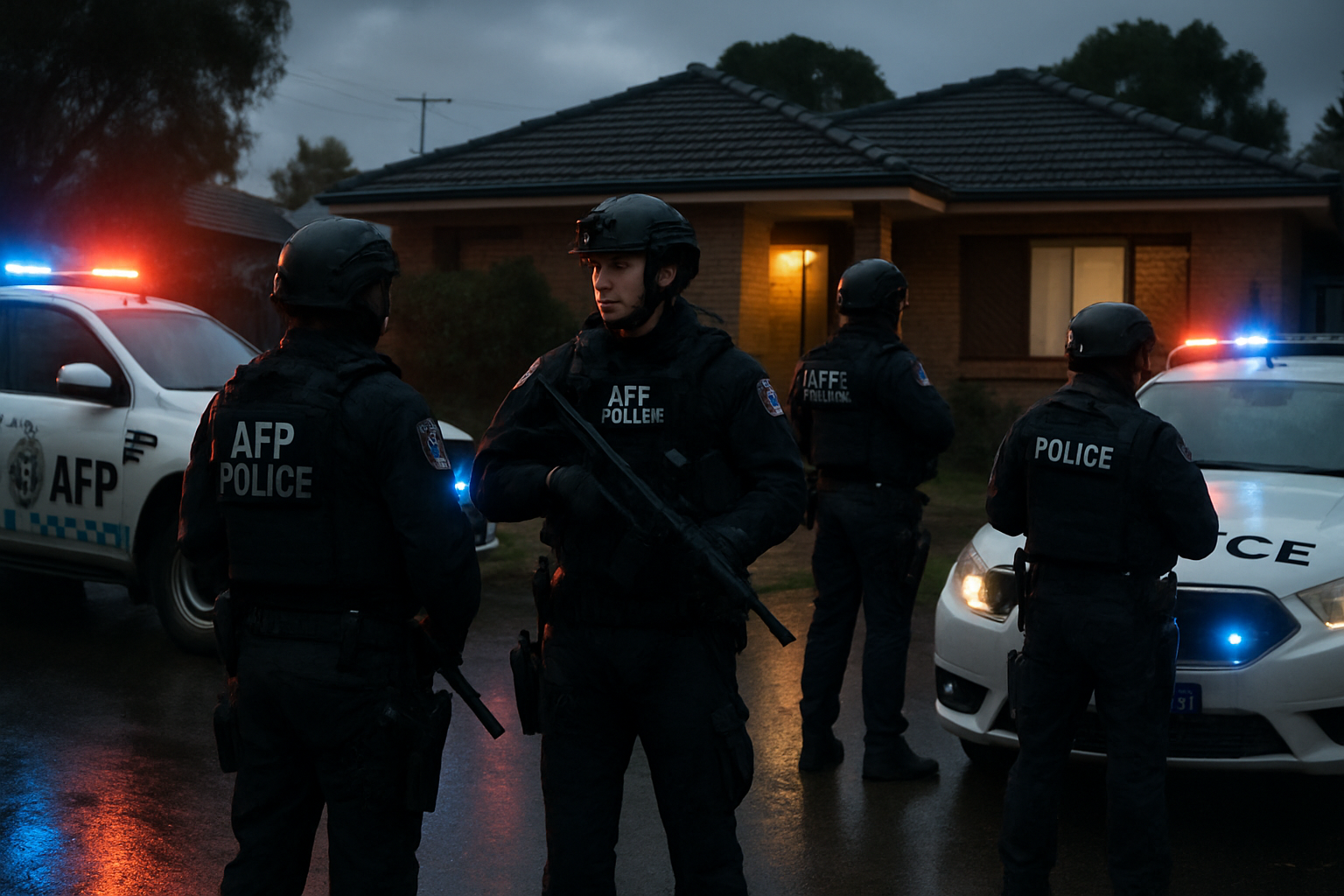
A 20-year-old Western Australian man has been charged with preparing a terrorist act after allegedly planning coordinated attacks targeting Parliament House, police headquarters, and Muslim places of worship in Perth, marking a significant domestic terrorism arrest in the state.
Australian Federal Police and Western Australian authorities arrested the Sunnybank man following an extensive investigation that uncovered what police describe as a planned "mass casualty event" motivated by white supremacist ideology. The arrest represents the latest in a concerning pattern of domestic extremism targeting religious and political institutions across Australia.
Seized Weapons and Manifesto
During the arrest operation, police seized guns and knives from the suspect, along with what Australian Federal Police Superintendent Peter Hatch described as a "manifesto-style document outlining plans for an ideologically motivated attack of violent extremism involving mass casualties."
The investigation revealed the suspect had allegedly written detailed plans for using bombs and firearms to carry out attacks, with specific targeting of Parliament House and police headquarters alongside Muslim places of worship. Police allege the man was motivated by white supremacist ideology and had conducted significant planning for the coordinated assault.
Defence Minister analysis suggests the bomber was stopped at the mosque entrance by security guards, though he had managed to position himself in the "last row" among more than 400 worshippers present during the planned attack. The security breach highlights vulnerabilities in protecting religious institutions from vehicle-based attacks.
Concerning Pattern of Domestic Extremism
This arrest occurs against the backdrop of escalating threats against Australia's religious communities, particularly following the December 14, 2025 Bondi Beach Hanukkah festival attack that killed 15 people and recent incidents targeting Jewish institutions. The February 21, 2026 Brisbane Synagogue ramming attack by a 32-year-old man using a Toyota Hilux demonstrates the continued threat from vehicle-based assaults on religious facilities.
The case also follows the February 5, 2026 Perth Terror Attack during the Invasion Day rally, which resulted in the first terrorism charges ever laid in Western Australia's history. That incident involved a self-radicalised suspect with nationalist ideologies specifically targeting Indigenous Australians and supporters during the annual protest.
"Police allege the man was motivated by a white supremacist ideology and planned to use bombs and firearms to carry out a mass casualty event."
— Australian Federal Police Statement
Enhanced Security Measures
The arrest comes amid heightened security protocols across Australian religious institutions and government buildings. NSW Police have established a new armed response command with 250+ specialist officers equipped with long-arm rifles, while Operation Shelter (anti-hate crime unit) has been made permanent following its development after October 7 to respond to antisemitism and Islamophobia.
Intelligence-led patrols of high-risk areas, places of worship, major events, and protests have been implemented across multiple states, with significant resource commitments despite government reluctance to disclose specific costs.
International Context and Methodology
The planned attack methodology mirrors tactics seen in international white supremacist terrorism, including the March 15, 2019 Christchurch mosque attacks that killed 51 Muslim worshippers. That attack's perpetrator, Australian Brenton Tarrant, is currently appealing his conviction and life sentence without parole through New Zealand courts as of February 2026.
Security experts note the sophisticated planning evident in the Perth case, including the creation of manifesto documents, weapons procurement, and target selection that demonstrates advanced knowledge of attack methodologies. The combination of firearms and explosives planning indicates a level of preparation that required sustained effort and ideological commitment.
Community Impact and Response
Muslim community leaders have expressed serious concerns about the escalating pattern of threats, particularly during Ramadan when religious observance is heightened. The targeting of mosques specifically during Friday prayers reflects calculated timing designed to maximize casualties among worshippers.
Jewish community representatives also noted the troubling parallel between this case and recent antisemitic attacks, suggesting a broader pattern of religious minority targeting by domestic extremists. Community safety protocols have been enhanced across multiple faiths, with increased security presence during religious services and community events.
Legal Proceedings and Investigation
The suspect faces multiple serious charges including preparing a terrorist act, with additional charges likely as the investigation continues. Queensland Police described the case as a "targeted attack" but stopped short of full terrorism classification, citing "other factors" behind the incident that remain under investigation.
The case will be closely watched as it tests Australia's terrorism legislation and prosecution capabilities for domestic extremism cases. Legal experts note the significance of manifest evidence in establishing ideological motivation, which is crucial for terrorism convictions under Australian law.
Broader Security Implications
This arrest highlights the evolving nature of Australia's terrorism threat landscape, which has increasingly shifted from international terrorism to domestic extremism motivated by various ideologies. The combination of targets - government buildings, law enforcement, and religious institutions - represents a comprehensive threat to democratic institutions and community safety.
Counter-terrorism experts emphasize the importance of community reporting and intelligence gathering in preventing such attacks. The successful intervention in this case demonstrates the effectiveness of coordinated law enforcement response when credible threats are identified before attacks can be carried out.
As Australia continues to grapple with rising domestic extremism, this case underscores the urgent need for continued vigilance, community engagement, and robust security measures to protect vulnerable institutions and religious communities from ideologically motivated violence.