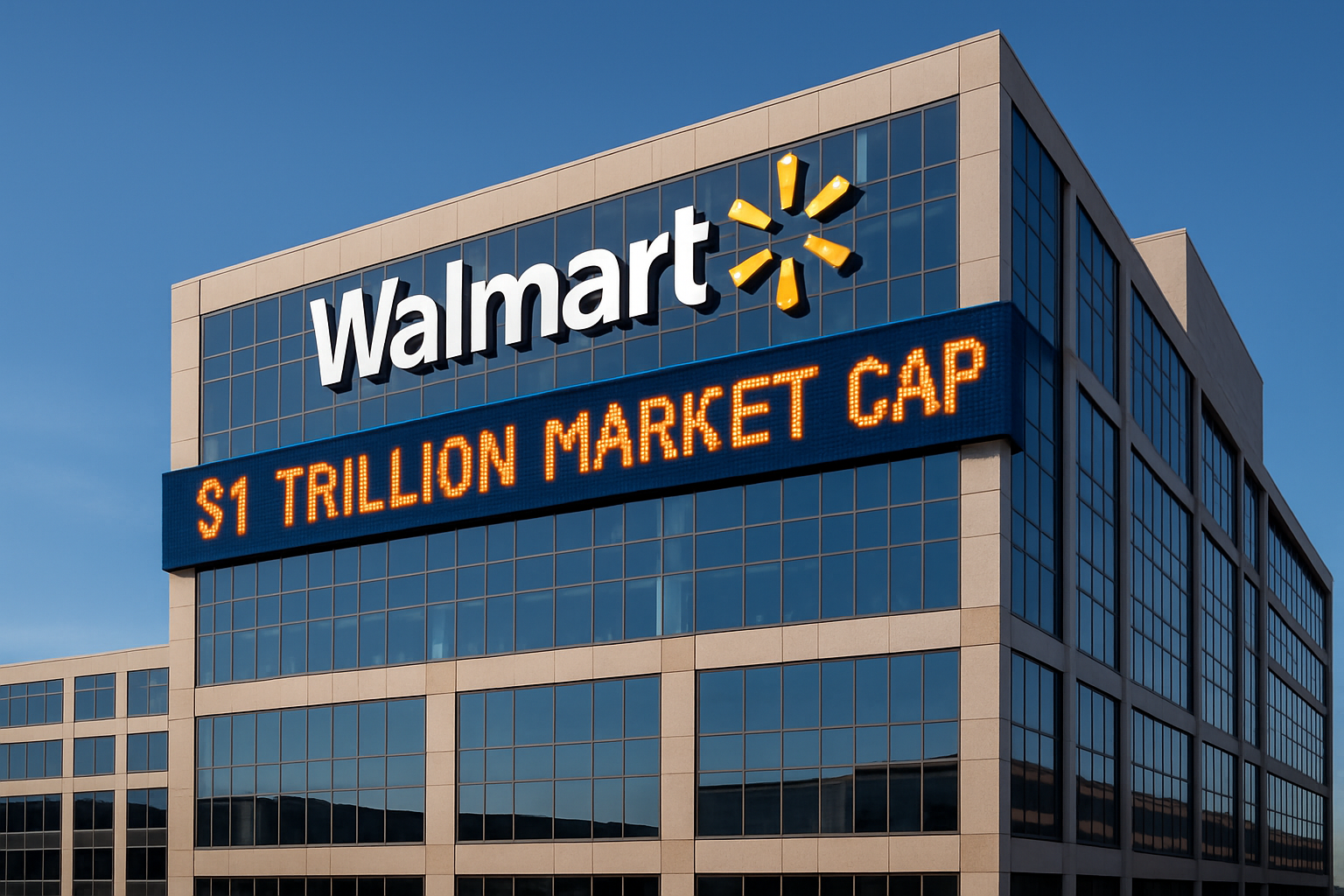
Walmart has become the first traditional retailer to achieve a $1 trillion market capitalization, marking a historic milestone that places the Arkansas-based giant alongside tech industry titans in an exclusive valuation club.
The achievement reflects the remarkable transformation of the world's largest brick-and-mortar retailer, as Wall Street enthusiastically responds to Walmart's strategic investments in artificial intelligence, booming e-commerce operations, and its success in attracting price-conscious shoppers across income brackets.
Walmart's share price surged more than 3% on Tuesday, February 4, 2026, pushing the company's market value over the psychological $1 trillion threshold. This places Walmart in an elite group previously dominated by technology companies including Nvidia, Alphabet, Apple, Microsoft, and Amazon.
Digital Transformation Drives Growth
The milestone comes as Walmart undergoes a comprehensive digital transformation, positioning itself as an emerging "AI giant" in commerce. The company's recent partnership with Google has further solidified its technological ambitions, demonstrating how traditional retailers can successfully compete in an increasingly digital marketplace.
According to sources familiar with the company's strategy, Walmart's early adoption of artificial intelligence technologies across its operations has been a key factor driving investor confidence. The retailer has implemented AI solutions for inventory management, supply chain optimization, and personalized customer experiences, allowing it to operate more efficiently while improving customer satisfaction.
The company's e-commerce division has experienced remarkable growth, with its speedy home-delivery service attracting customers across all income levels. This digital expansion has been crucial in competing with e-commerce leaders like Amazon while leveraging Walmart's extensive physical retail network.
Economic Trends Favor Value Retailers
Walmart's achievement comes at a time when economic conditions have created a favorable environment for value-oriented retailers. As the job market shows signs of cooling and inflation persists, higher-income consumers are increasingly "trading down" to lower-priced alternatives, a trend that has directly benefited Walmart's low-price positioning.
"Walmart has successfully capitalized on changing consumer behavior, attracting shoppers across income brackets who are seeking value in an uncertain economic environment."
— Market Analyst
The company's ability to maintain its reputation for low prices while simultaneously investing in cutting-edge technology has created a powerful combination that resonates with both value-conscious consumers and growth-oriented investors.
Leadership and Strategic Vision
The timing of this milestone is particularly significant given recent leadership developments at Walmart. The company's new CEO has made it clear that he is willing to implement significant changes to modernize operations, with the notable exception of maintaining Walmart's core commitment to low prices – the foundation that built the company's market dominance.
This balanced approach to innovation and tradition has reassured investors that Walmart can evolve with changing market conditions while preserving the fundamental value proposition that has made it America's largest retailer.
Historical Context and Market Impact
Walmart's entry into the $1 trillion market cap club represents more than just a financial milestone – it symbolizes the successful evolution of traditional retail in the digital age. While many brick-and-mortar retailers have struggled to adapt to e-commerce competition, Walmart has demonstrated that physical retail networks, when combined with digital innovation, can create significant competitive advantages.
The company's massive scale, with thousands of stores across the United States and internationally, provides unique advantages in last-mile delivery and inventory management that pure-play e-commerce companies cannot easily replicate.
Competitive Positioning
Walmart's achievement places it in direct competition with technology giants that have traditionally dominated high-valuation discussions. However, unlike pure technology companies, Walmart's valuation is supported by substantial physical assets, consistent cash flows, and a proven business model that has weathered numerous economic cycles.
The retailer's integration of artificial intelligence into its operations has essentially created a technology company with massive physical distribution capabilities, a combination that investors find increasingly attractive in today's market environment.
Future Prospects and Challenges
As Walmart celebrates this historic milestone, the company faces the challenge of maintaining its growth trajectory while managing investor expectations. The $1 trillion valuation creates new performance pressures and raises questions about the company's ability to continue delivering the growth rates that drove its recent stock price appreciation.
Industry analysts point to several factors that could support continued growth, including further expansion of e-commerce capabilities, deeper integration of AI technologies, and potential international market opportunities. However, the company must also navigate challenges including increased competition, supply chain complexities, and evolving consumer preferences.
The success of Walmart's AI initiatives and Google partnership will be closely watched as indicators of the company's ability to maintain its technological edge. Additionally, the company's performance in attracting and retaining customers across different income segments will be crucial for sustaining long-term growth.
Implications for the Retail Industry
Walmart's achievement sends a powerful signal to the broader retail industry about the importance of digital transformation and technological innovation. The milestone demonstrates that traditional retailers can successfully compete with technology companies when they embrace change while leveraging their unique physical advantages.
Other major retailers are likely to accelerate their own digital transformation efforts, potentially leading to increased competition and innovation across the industry. Walmart's success may also attract increased investor attention to retail stocks, particularly those companies demonstrating strong e-commerce growth and AI implementation.
As the first traditional retailer to reach this valuation milestone, Walmart has set a new benchmark for success in the evolving retail landscape, proving that the combination of scale, technology, and value pricing can create extraordinary shareholder value in the modern economy.