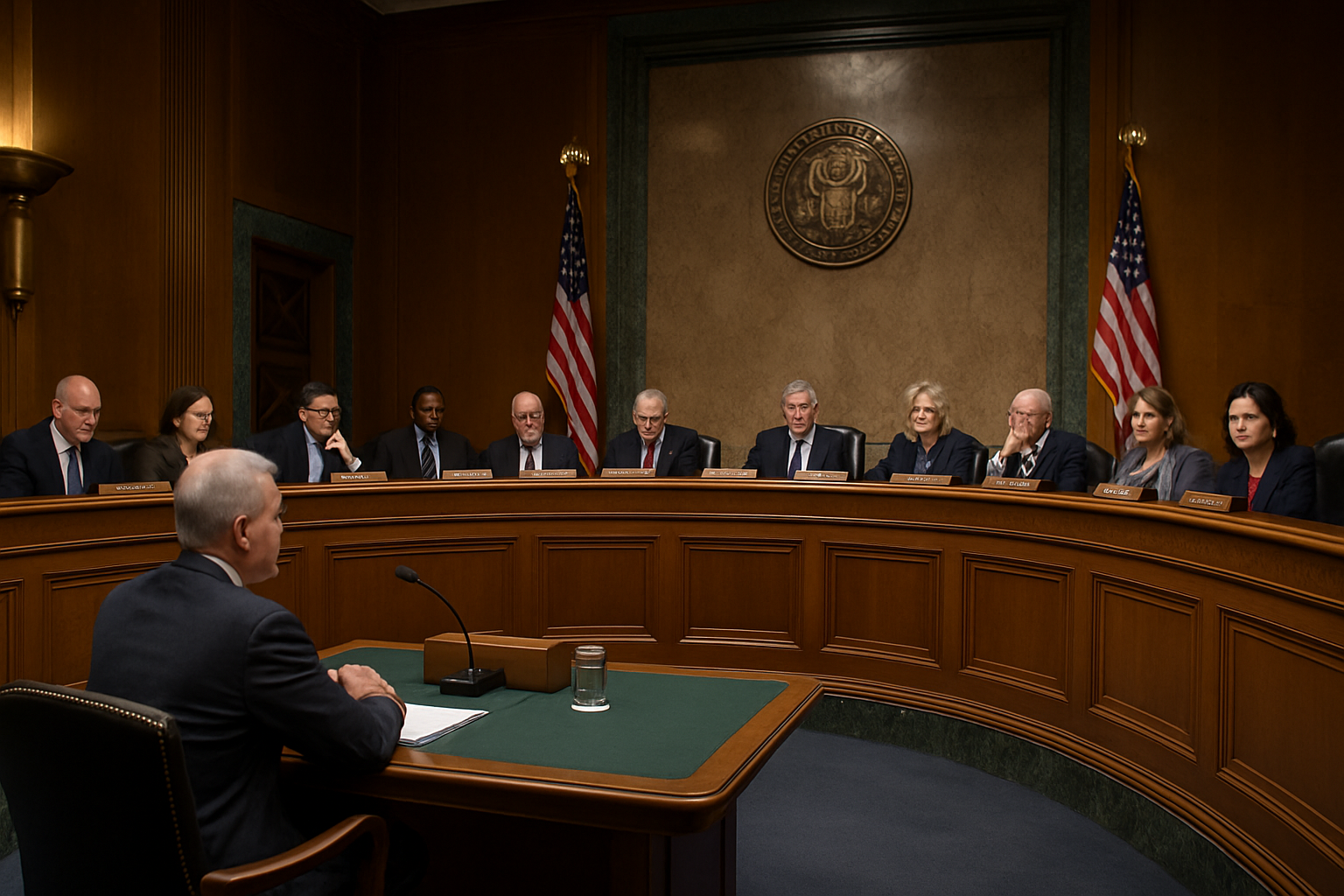
Kevin Warsh, President Trump's nominee to lead the Federal Reserve, faced intense bipartisan questioning during Senate Banking Committee confirmation hearings as he outlined plans for sweeping "regime change" at the nation's central bank while simultaneously pledging to maintain its independence from political pressure.
Warsh's confirmation hearing revealed the complex balancing act facing Trump's pick to replace Jerome Powell as Federal Reserve Chairman. While promising to act independently if confirmed, Warsh simultaneously called for fundamental reforms to the central bank's approach to monetary policy, inflation control, and public communications.
Calls for "Regime Change" at Federal Reserve
In his most striking comments during the hearing, Warsh explicitly called for "regime change" at the Federal Reserve, outlining a comprehensive overhaul that would include new approaches to controlling inflation and a communications strategy that may discourage Fed officials from making frequent public statements about monetary policy direction.
The former Fed governor's reform agenda represents what he termed a "robust" transformation of the central bank's operations, though key details about implementation remained unresolved during questioning. Warsh's vision would fundamentally alter how the Fed conducts monetary policy and communicates with markets and the public.
"Independence is crucial," Warsh emphasized during testimony, even as he outlined plans for sweeping institutional changes.
— Kevin Warsh, Federal Reserve Nominee
The nominee's reform proposals come at a critical juncture for monetary policy, with the Fed navigating complex economic challenges including persistent inflation pressures, energy market volatility, and ongoing geopolitical tensions affecting global financial markets.
Bipartisan Skepticism Emerges
Republican Senator Thom Tillis used his entire questioning time to explain why he would not support Warsh's nomination, representing significant opposition within Trump's own party. This unexpected resistance highlights the challenges facing the nominee's confirmation path.
Swedish media reports noted that Warsh's independence from Trump regarding interest rate commitments became a focal point, with the nominee stating that Trump "never asked me to commit" to interest rate cuts. This assertion aimed to address concerns about political interference in monetary policy decisions.
The hearing left several key questions about Warsh's nomination unresolved, particularly regarding how he would balance his reform agenda with maintaining Fed independence and market confidence.
Historical Context of Fed Independence
Warsh's confirmation hearing occurs against the backdrop of previous tensions between the Trump administration and Fed independence. Court records show a federal judge blocked Justice Department subpoenas targeting Jerome Powell in March 2026, ruling the investigation was "politically motivated harassment" designed to pressure Powell into lowering interest rates.
The judicial ruling found prosecutors produced "essentially zero evidence" to justify their investigation while identifying "a mountain of evidence" that the primary purpose was to pressure Powell. This precedent underscores the importance of Fed independence that Warsh now pledges to maintain.
Market analysts note that any perceived threat to Fed independence could trigger significant financial market volatility, particularly given recent cryptocurrency market crashes and ongoing global economic uncertainties.
Reform Agenda Details
While specific details remain limited, Warsh's reform vision encompasses several key areas:
- New approaches to inflation targeting and monetary policy implementation
- Restructured communications strategy limiting Fed officials' public statements
- Modified policy frameworks for economic data interpretation
- Enhanced coordination mechanisms within the Federal Reserve system
French media coverage highlighted concerns about how these reforms would affect international monetary policy coordination, particularly given ongoing global financial market stress and energy price volatility affecting multiple economies simultaneously.
Market and International Reactions
Financial markets have shown mixed reactions to Warsh's nomination, with some analysts welcoming potential policy clarity while others express concern about institutional disruption during a period requiring stable monetary policy.
Singapore-based analysts noted that Warsh's emphasis on independence could help stabilize expectations, though the scope of his proposed reforms continues to generate uncertainty among international observers.
The nomination comes as global central banks face unprecedented coordination challenges, with the European Central Bank maintaining a 2% deposit rate while Australia's Reserve Bank operates at 3.85%, creating complex currency dynamics that require careful Fed navigation.
Confirmation Timeline and Challenges
The Senate Banking Committee's questioning revealed significant hurdles for Warsh's confirmation, with bipartisan concerns about both his reform agenda and his ability to maintain Fed independence under political pressure.
Committee members pressed Warsh on how he would implement sweeping changes while preserving market confidence and institutional credibility. His responses emphasized a measured approach but provided limited specifics about timeline or methodology.
The confirmation process occurs during a particularly sensitive period for monetary policy, with inflation concerns, energy market disruptions, and international tensions requiring steady central bank leadership.
Looking Ahead
Warsh's confirmation hearing represents a critical juncture for Federal Reserve governance and monetary policy direction. His vision of "regime change" coupled with independence pledges creates a complex dynamic that senators must evaluate.
The nominee's ability to balance institutional reform with market stability will likely determine his confirmation prospects and, if confirmed, his effectiveness as Fed Chairman during a period of significant economic challenges.
As the Senate Banking Committee continues its evaluation, the broader implications of Warsh's reform agenda for American monetary policy, financial markets, and international economic coordination remain key factors in the confirmation debate. The outcome will shape Federal Reserve operations and monetary policy approach for years to come.