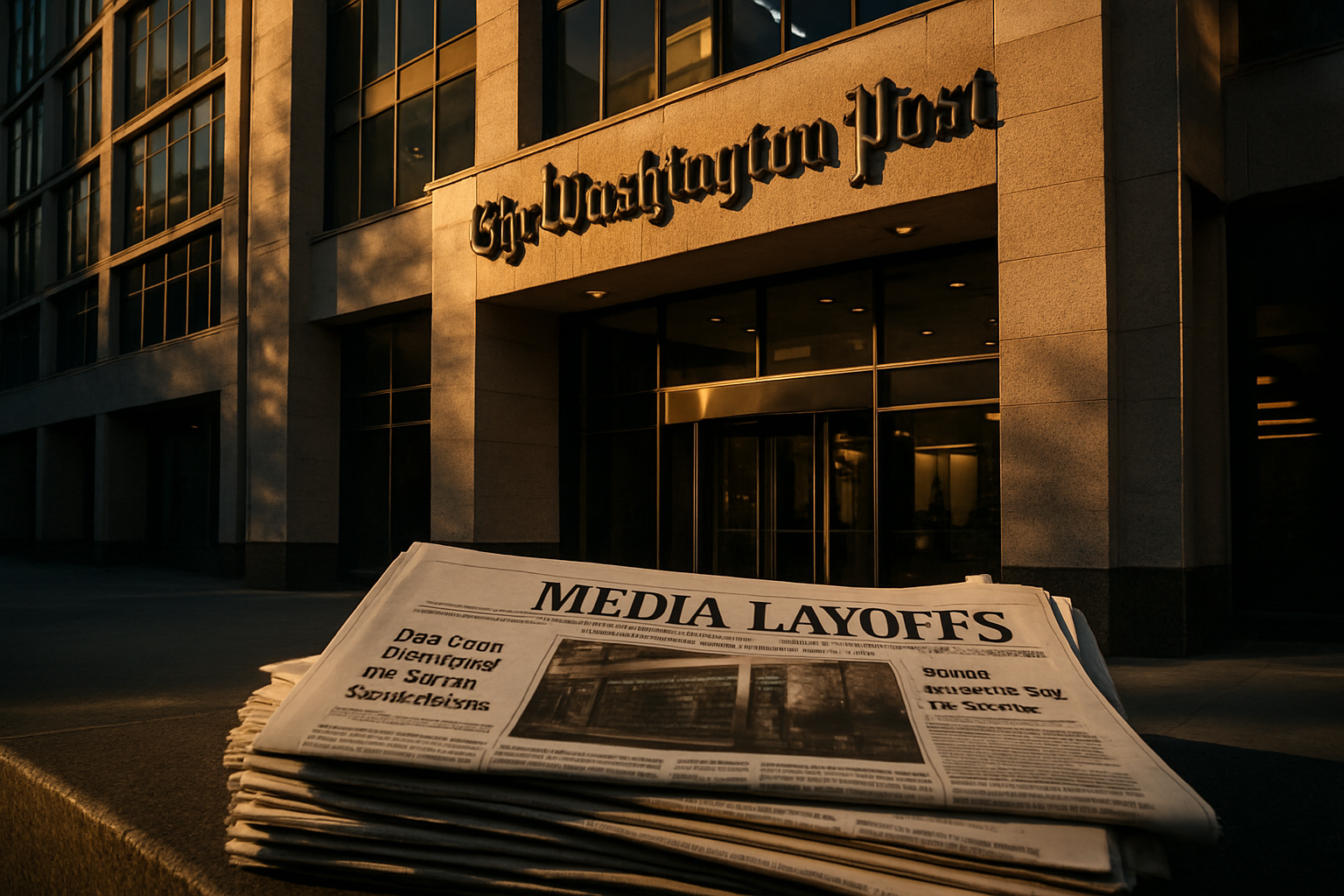
Washington Post CEO and publisher Will Lewis announced his resignation on Saturday, February 8, 2026, ending his tumultuous two-year tenure just three days after presiding over massive layoffs that eliminated approximately 300 journalists—one-third of the newspaper's workforce.
The 54-year-old British executive acknowledged making "difficult decisions" during what has been described by international media as a period of "near-instant, self-inflicted brand destruction" at one of America's most prestigious newspapers. Jeff D'Onofrio, the current chief financial officer and former Tumblr executive director, has been appointed as his immediate replacement.
The Final Straw: Mass Layoffs Devastate Newsroom
Lewis's downfall came after announcing sweeping cuts on Wednesday, February 5, that fundamentally altered the character of the 145-year-old institution. The layoffs eliminated entire departments, including the complete closure of the sports division, the shuttering of the entire Middle East bureau, and the termination of popular columnist Ishaan Tharoor's WorldView newsletter, which boasted 500,000 subscribers.
Executive Editor Matt Murray positioned the cuts as a strategic transformation from being "everything to everyone" toward a narrower focus on political and government coverage. However, the timing and scope of the layoffs drew widespread condemnation from journalism industry leaders and international observers.
"This represents one of the darkest days in the newspaper's 145-year history. Jeff Bezos is betraying democratic values by ingratiating himself with President Trump."
— Martin Baron, Former Executive Editor of The Washington Post
Controversy and Criticism Mount
Lewis faced particular criticism for his apparent detachment during the crisis. He was photographed attending NFL Honors in San Francisco on the same day that Washington Post journalists protested outside the newspaper's headquarters with "Democracy Dies" signs—referencing the Post's own motto "Democracy Dies in Darkness."
The German news outlet Tagesschau reported that approximately one-third of the workforce was eliminated, while union representatives described Lewis's departure as "overdue." The Washington Post Guild had been calling for public pressure on owner Jeff Bezos to reverse the decision or sell the publication.
International Reaction and Industry Impact
European media outlets used stark language to describe the developments, with terms like "bloodbath" and descriptions of an "assault on a legendary American institution" appearing across multiple international news sources. The crisis has been viewed as a potential inflection point for American journalism, with industry analysts concerned about the precedent it might set for other struggling news organizations.
The layoffs created what union representatives called "critical information voids in international reporting," particularly with the closure of foreign bureaus that had provided independent American access to international journalism for decades.
Financial Pressures and Subscriber Exodus
The cuts came against a backdrop of significant financial challenges for the newspaper. The Washington Post had already lost approximately 250,000 subscribers following a controversial 2024 decision not to endorse a presidential candidate—a departure from the paper's traditional editorial stance.
The combination of subscriber losses and what sources describe as political considerations influenced the dramatic restructuring. The eliminated positions represented decades of institutional knowledge and journalistic expertise that will be difficult to replace.
D'Onofrio Takes the Helm
Jeff D'Onofrio's appointment represents a shift from traditional media leadership toward technology and finance expertise. His background includes significant experience at Tumblr and his role as CFO since joining the Post in 2025. He faces the challenging task of rebuilding confidence among remaining staff while addressing fundamental questions about the newspaper's mission and editorial independence.
The new leadership will need to navigate what critics describe as a tension between maintaining democratic journalism functions and operating under the concentrated media ownership of Jeff Bezos, particularly given perceptions of political influence in recent decisions.
A Symbol of Broader Media Industry Struggles
Lewis's resignation and the preceding layoffs highlight broader challenges facing the American journalism industry. The crisis at the Washington Post—long considered a pillar of American democracy alongside The New York Times—raises questions about the sustainability of comprehensive news coverage under wealthy individual ownership.
The situation has drawn comparisons to similar struggles at other major news organizations, with press freedom advocates concerned about the implications for editorial independence when business decisions appear to be politically motivated.
Looking Forward: Uncertain Times for American Journalism
As the Washington Post enters a new chapter under D'Onofrio's leadership, the broader implications of this crisis continue to reverberate through the journalism industry. The layoffs eliminated not just positions but specialized coverage areas that had served readers for decades, from comprehensive sports reporting to in-depth international coverage.
The 300 journalists who lost their positions represent more than job cuts—they constitute a significant loss of institutional knowledge and reporting expertise that took years to develop. The question now facing the Post and the industry at large is whether prestigious news organizations can maintain their democratic functions while adapting to new financial realities and ownership structures.
The crisis at the Washington Post serves as a stark reminder of the fragility of democratic institutions, particularly those responsible for holding power accountable and informing the public. As D'Onofrio assumes leadership, he inherits not just a newspaper but a critical test of whether American journalism can maintain its independence and comprehensive coverage in an era of concentrated media ownership and political polarization.