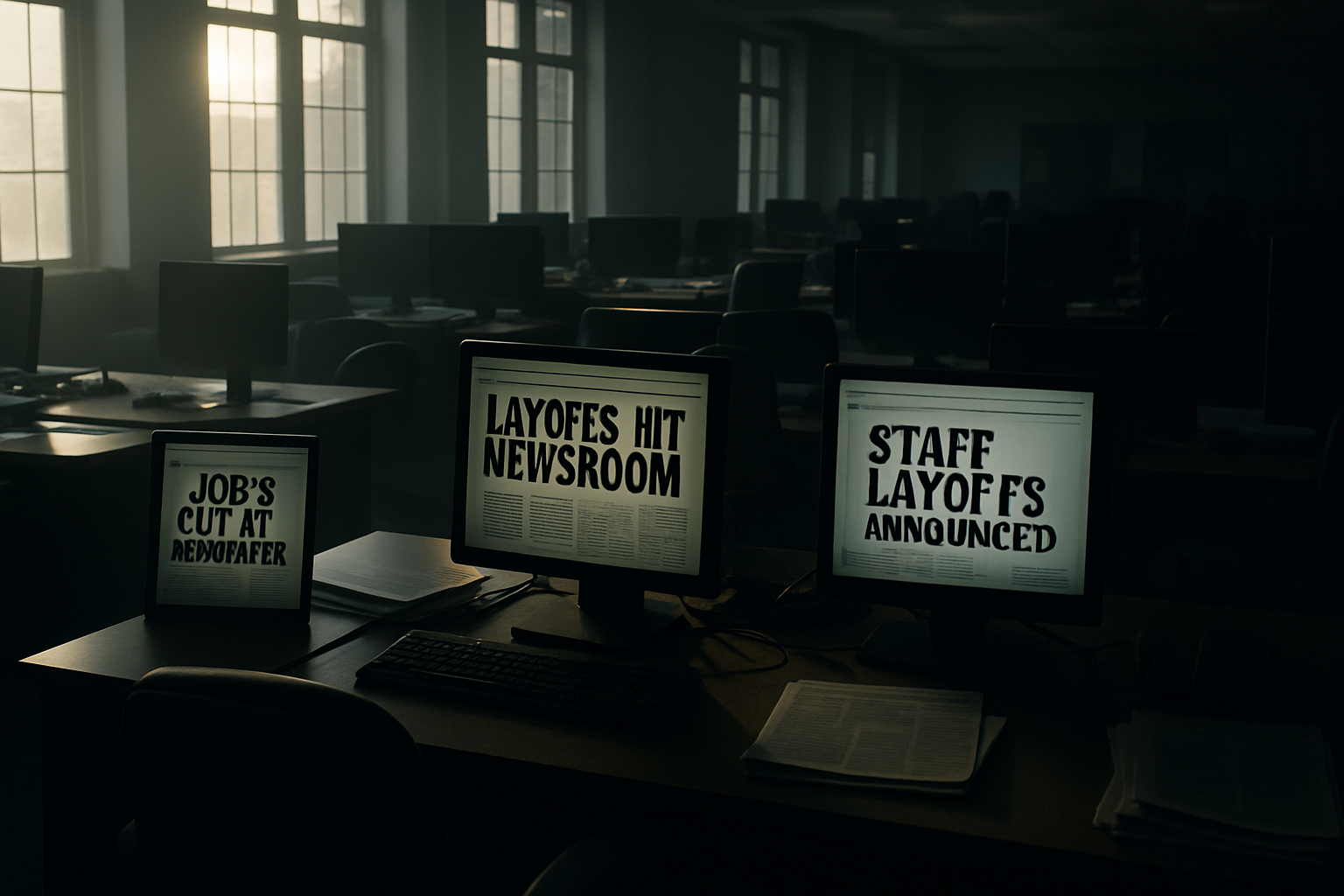
The Washington Post began widespread layoffs on Wednesday, February 4, 2026, that will drastically shrink the storied newspaper by approximately one-third of its workforce, affecting all departments in what industry observers are calling one of the most severe contractions in American journalism history.
Executive Editor Matt Murray informed staff during a company-wide video call that the cuts would impact roughly 300 of the newspaper's 800-member editorial staff, spanning international bureaus, editing desks, metro coverage, and sports departments. The layoffs come amid mounting financial losses and declining subscriber numbers at the influential newspaper owned by Amazon founder Jeff Bezos.
"For too long, we've operated with a structure that's too rooted in the days when we were a quasi-monopoly local newspaper," Murray said during the call, according to a recording shared with Reuters. "We need a new way forward and a sounder foundation."
Unprecedented Scope of Cuts
The layoffs represent the most dramatic downsizing in the newspaper's 145-year history, affecting key areas that have defined The Post's global influence. Among the most significant casualties:
- The complete elimination of the sports section "in its current form"
- Closure of the entire Middle East bureau, including Cairo Bureau Chief Claire Parker
- Layoffs of foreign correspondents and international editors
- Cuts to the metro desk covering Washington D.C. area news
- Elimination of the Amazon beat reporter Caroline O'Donovan, despite Bezos's ownership of the tech giant
One Post reporter, speaking on condition of anonymity, described the situation as a "bloodbath." The timing is particularly striking, occurring just days after the newspaper scaled back its coverage of the 2026 Winter Olympics in Milan amid the financial crisis.
Financial Pressures Mount
The drastic cuts come as The Washington Post grapples with severe financial challenges that have intensified since Bezos acquired the newspaper in 2013 for $250 million. The newspaper reportedly lost approximately 250,000 subscribers following its controversial decision not to endorse a candidate in the 2024 presidential election, a move that sparked widespread backlash from readers and staff.
The financial strain has been evident in recent operational decisions, including the reduction of Olympics coverage and the broader restructuring now underway. Murray's comments suggest the newspaper is pivoting away from its comprehensive national coverage model toward a more focused approach centered on political journalism.
"Politics and government coverage remains central to engagement and subscriber growth."
— Matt Murray, Executive Editor
Industry Crisis Deepens
The Washington Post's mass layoffs represent the most severe example of the broader crisis facing American journalism. The newspaper, which gained legendary status for its Watergate investigation and has been a pillar of democratic accountability, now faces questions about its ability to maintain its watchdog role with drastically reduced resources.
The cuts eliminate decades of institutional knowledge, particularly in international coverage where The Post has maintained bureaus and correspondents across multiple continents. The closure of the Middle East bureau is especially significant given the region's ongoing importance in global news coverage.
International media outlets have covered the story extensively, with European and global news organizations highlighting the decline of one of America's most prestigious journalistic institutions. The layoffs occurred while some staff members were covering the Olympics in Milan, described by Canadian media as a "smaller, sad drama" playing out against the backdrop of international competition.
Leadership Under Fire
Former Executive Editor Martin Baron, who led The Washington Post for eight years, issued a scathing statement calling the layoffs among the "darkest days" in the newspaper's history. Baron, who guided the paper through its Pulitzer Prize-winning coverage of the 2016 election and beyond, accused Bezos of betraying the newspaper's values.
The criticism extends beyond former leadership to current operations, with the newspaper's staff union calling for public pressure on Bezos to reverse course. The union has characterized the cuts as unnecessary given Bezos's vast wealth and Amazon's continued profitability.
Strategic Pivot
The layoffs appear to represent a fundamental strategic shift for The Washington Post, moving away from its comprehensive national newspaper ambitions toward a more focused model centered on political coverage and government accountability. This pivot abandons the broad-based journalism that has characterized major American newspapers for decades.
The decision to completely eliminate the sports section marks a historic first for a major American newspaper, reflecting the changing media landscape where sports coverage increasingly moves to specialized platforms and streaming services. Similarly, the closure of international bureaus signals a retreat from global coverage that has been a hallmark of premier American newspapers.
Broader Implications
The Washington Post's crisis reflects broader challenges facing the newspaper industry, including declining revenues, competition from digital platforms, and the difficulty of transitioning from traditional print-based business models to sustainable digital operations. The newspaper's struggles are particularly notable given Bezos's resources and previous statements about his commitment to the institution.
The timing of the layoffs, coming during a period of intense political coverage and international developments, raises questions about the newspaper's ability to maintain its role in holding government accountable. The reduction in reporting capacity occurs as major stories continue to unfold across politics, international affairs, and other areas traditionally covered by The Post.
Industry analysts describe the situation as representing "near-instant, self-inflicted brand destruction" that could have lasting implications for American journalism. The layoffs eliminate not just individual positions but entire coverage areas that will be difficult to rebuild if conditions improve.
Looking Forward
As The Washington Post moves forward with its reduced staff, questions remain about the newspaper's long-term viability and mission. The layoffs represent more than personnel changes—they signal a fundamental reimagining of what the newspaper will be and what role it will play in American media and democracy.
The staff members affected by the layoffs represent decades of journalistic experience and institutional knowledge that will be lost to the industry. Many are expected to face challenges finding equivalent positions in a contracting media landscape, potentially representing a permanent loss of journalistic capacity.
The crisis at The Washington Post serves as a stark reminder of the challenges facing American journalism in the digital age, even for institutions with significant resources and prestigious histories. As the newspaper attempts to chart a new course with a dramatically smaller staff, its experience may serve as a cautionary tale for other media organizations navigating similar pressures.