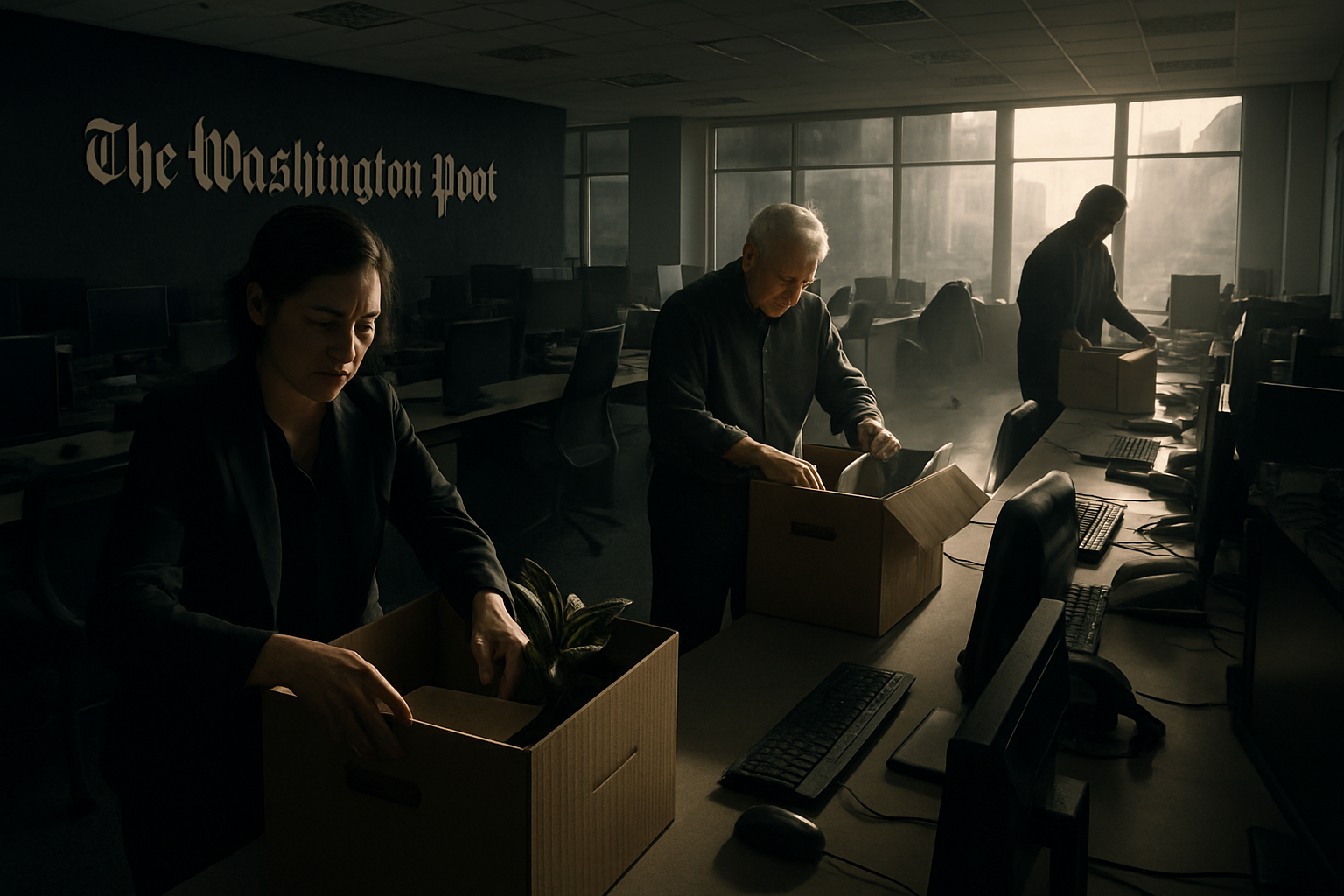
The Washington Post eliminated one-third of its workforce on Wednesday in what industry leaders are calling one of the most devastating mass layoffs in American journalism history, with approximately 300 of the newspaper's 800 journalists losing their jobs in a sweeping restructuring ordered by owner Jeff Bezos.
Executive Editor Matt Murray announced the cuts during a company-wide Zoom meeting, delivering news that shocked employees and sent reverberations throughout the global media industry. The layoffs represent far more than routine downsizing—they signal a fundamental retreat from the comprehensive coverage model that has defined prestigious American newspapers for generations.
Complete Elimination of Key Departments
The cuts were particularly brutal in their scope, with entire departments facing complete elimination. The newspaper's sports section was shuttered "in its current form," making The Washington Post the first major American newspaper to completely abandon sports coverage. The decision eliminates decades of institutional knowledge and relationships that took generations to build.
Foreign coverage bore equally devastating cuts, with the complete closure of the Middle East bureau, including the elimination of positions held by Cairo Bureau Chief Claire Parker and all Middle East correspondents and editors. International staff were laid off while actively covering the 2026 Winter Olympics in Milan, underscoring the abrupt nature of the decision.
Other casualties included the literature and book review section, which was discontinued entirely, and Ishaan Tharoor's WorldView newsletter, despite its 500,000 subscribers and substantial global diplomatic readership. The elimination of such a widely-read international affairs publication drew sharp criticism from diplomatic circles worldwide.
Strategic Shift Toward Political Focus
Murray positioned the cuts as part of a strategic transformation, moving the newspaper away from being "everything to everyone" toward a narrower focus on political and government coverage. He described this political journalism concentration as "central to engagement and subscriber growth," effectively abandoning the Post's ambitions as a comprehensive national newspaper.
This strategic pivot comes after The Washington Post lost approximately 250,000 subscribers following its controversial decision not to endorse a candidate in the 2024 presidential election. The non-endorsement decision, widely attributed to Bezos' influence, created a cascade of problems that culminated in Wednesday's mass layoffs.
The timing has drawn particular scrutiny, coming at a moment when investigative journalism has proven its vital importance through recent high-profile revelations. Critics argue that retreating from investigative capacity precisely when such reporting is most needed represents a betrayal of the newspaper's democratic mission.
International Reaction and Industry Impact
The layoffs have generated intense international coverage, with European media outlets using terms like "bloodbath" and describing the cuts as "murder" of a legendary American institution. International observers have expressed alarm at seeing one of America's most respected newspapers retreat from global coverage at a time of increasing international complexity.
Former Executive Editor Martin Baron delivered a scathing statement calling Wednesday "one of the darkest days" in the newspaper's 145-year history. Baron accused Bezos of betraying democratic values "by ingratiating himself with President Trump," directly linking the layoffs to the owner's political calculations rather than purely business considerations.
The Washington Post Guild, representing newspaper staff, has called for public pressure on Bezos, describing what they term "near-instant, self-inflicted brand destruction." The union's response reflects broader industry concerns about the precedent these layoffs set for other struggling news organizations.
Financial Pressures and Digital Transition
The newspaper has faced mounting financial losses amid intense competition from digital media platforms and changing consumer news consumption habits. The 250,000-subscriber loss following the non-endorsement controversy significantly worsened the publication's already challenging financial position.
Industry analysts note that The Washington Post's struggles reflect broader challenges facing traditional newspapers as they attempt to transition to sustainable digital business models. However, the severity and scope of Wednesday's cuts go far beyond typical industry downsizing, representing what many view as an abandonment of the newspaper's core mission.
The decision occurs during a critical period for the American journalism industry, with many news organizations facing similar pressures but looking to The Washington Post's response as a potential model. The success or failure of this dramatic restructuring will likely influence how other prestigious news organizations respond to comparable financial and political pressures.
Implications for Democratic Journalism
The elimination of specialized coverage areas creates significant information gaps in critical regions and topics where The Washington Post previously provided authoritative reporting. The shuttering of foreign bureaus particularly concerns press freedom advocates, who note that such closures reduce American news consumers' access to independent international reporting.
Critics argue that the layoffs test whether prestigious news brands can maintain their democratic functions while navigating the dual pressures of financial sustainability and wealthy individual ownership. The controversy raises fundamental questions about editorial independence when business decisions appear influenced by the owner's political considerations.
The Washington Post's retreat from comprehensive coverage represents a potential inflection point for American journalism. If successful, it could establish a troubling precedent of newspapers abandoning their traditional role as comprehensive information sources in favor of narrower, politically-focused coverage designed to satisfy ownership interests rather than public information needs.
Looking Forward
As the immediate shock of Wednesday's announcement subsides, attention turns to how The Washington Post will implement its new strategic direction and whether its remaining staff can maintain the newspaper's reputation for quality journalism with dramatically reduced resources.
The layoffs have already begun reshaping conversations about media ownership, editorial independence, and the future of American journalism. Industry observers will closely monitor whether other major newspapers follow The Washington Post's lead in retreating from comprehensive coverage, or whether this dramatic restructuring proves to be an isolated response to unique circumstances.
For the 300 journalists who lost their jobs Wednesday, the immediate concern involves finding new positions in an increasingly challenged industry. Many possess decades of expertise and institutional knowledge that will be difficult for any news organization to replace, representing a broader loss to American journalism that extends far beyond The Washington Post's newsroom walls.